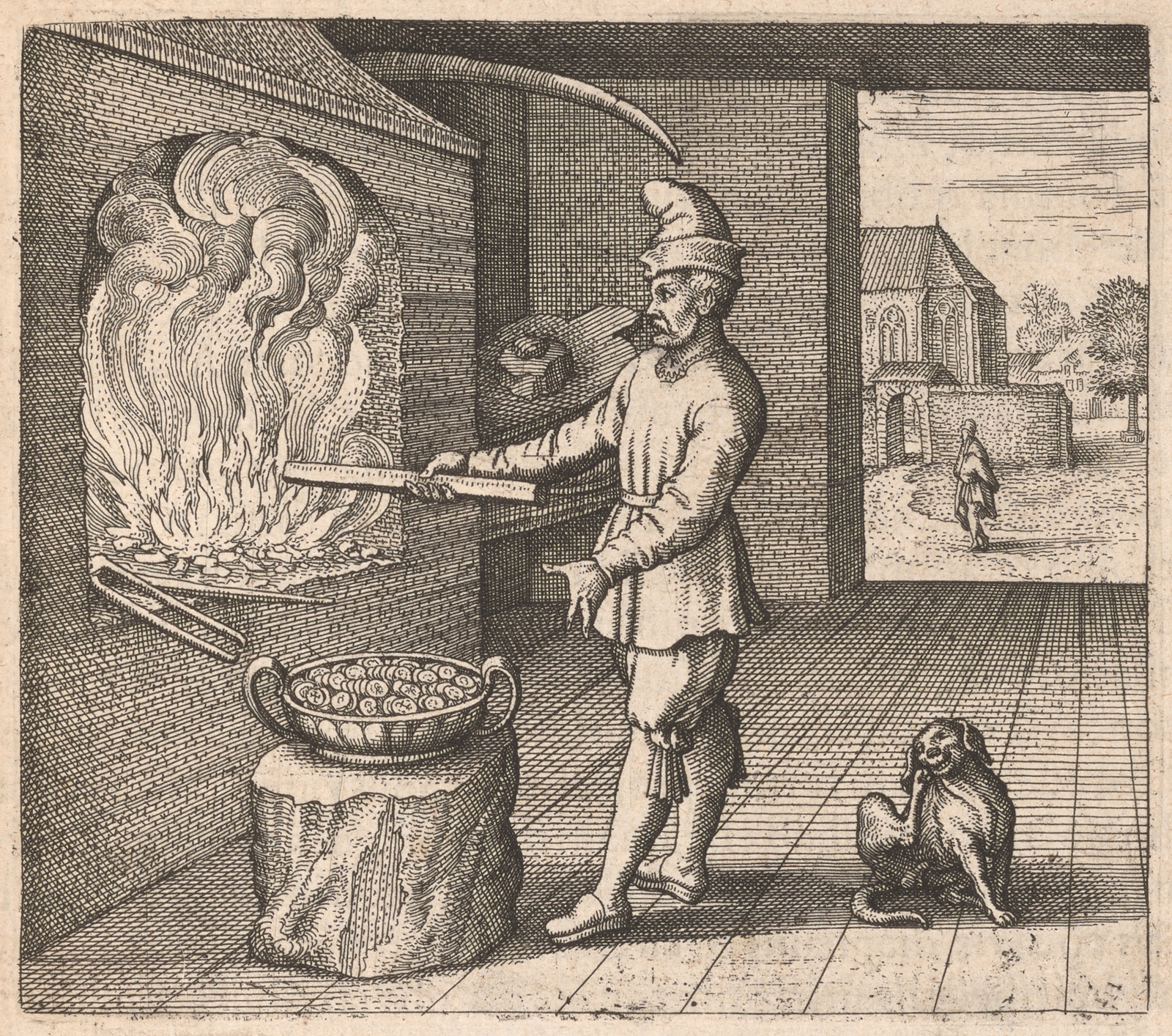
The Emblems According to Maier
Each of the fifty emblems of Atalanta Fugiens is accompanied by a Latin epigram
and a two-page prose discourse in which Maier develops the alchemical meaning of the emblem's
visual allegory. Here we present each emblem with its verse and a scholarly summary of the
discourse argument, as Maier intended them to be encountered: image and text together,
inviting the reader to meditate on the secrets of Nature.
51 emblems · Click any image for the full scholarly analysis
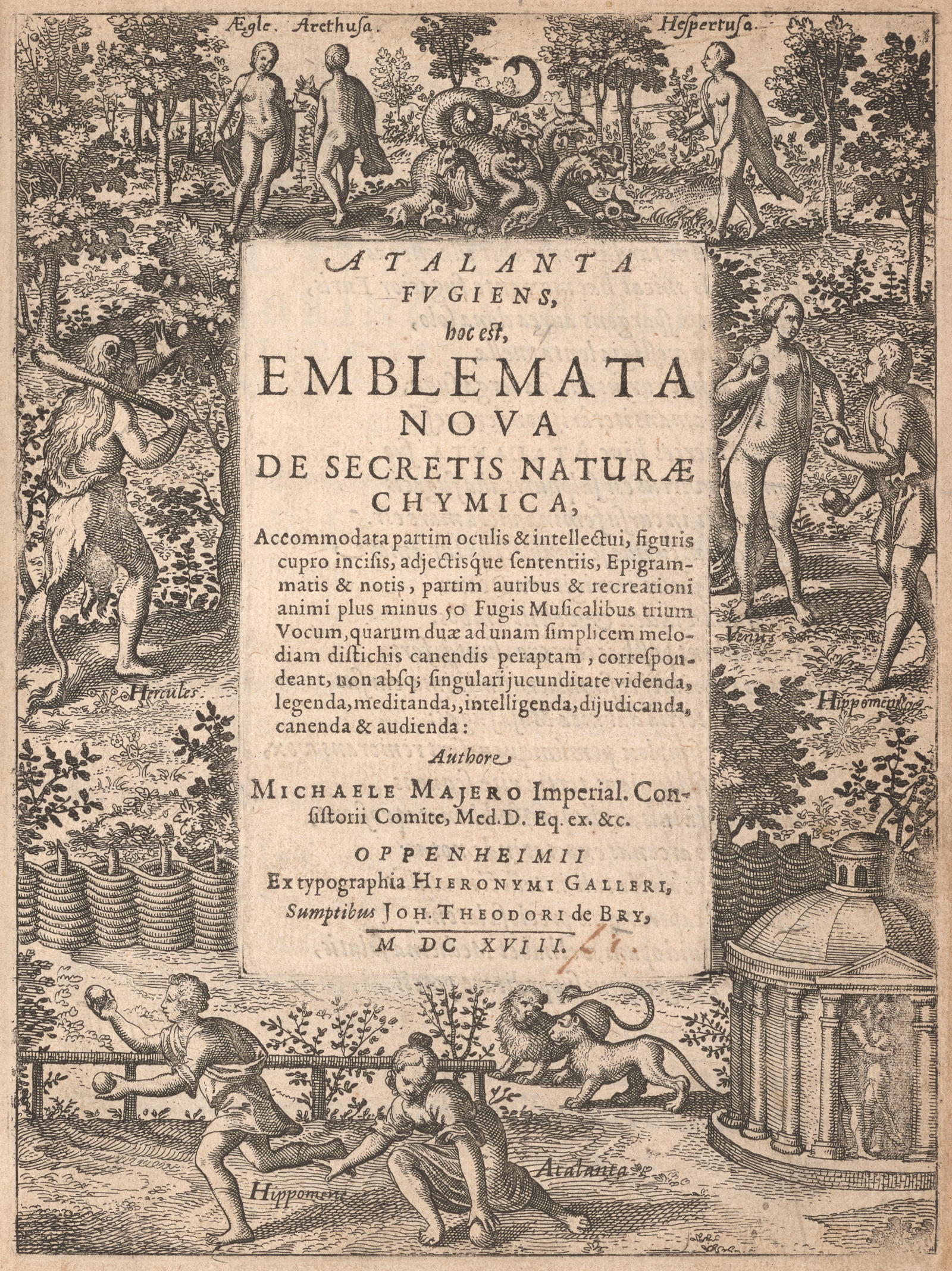
Frontispiece — The Fleeing Atalanta
Maier's Discourse
Maier's introductory apparatus presents Atalanta Fugiens as an exercise in multi-sensory pedagogy: the subtitle promises emblems for the eyes, fugues for the ears, and epigrams for the intellect, engaging sight, he a ring, and reason simultaneously in the pursuit of Nature's secrets. The myth of the footrace serves as a heuristic model for the reader's own engagement — just as Hippomenes must distract the swift Atalanta with golden apples to win the race, the reader must use the sensory enticements of image, music, and verse to catch the fleeting truths of alchemical philosophy. De Jong characterizes this as Maier's 'lusus serius' or serious game, a Renaissance pedagogical strategy in which play, meditation, and intellectual pursuit are fused into a single practice of discovery. The frontispiece thus functions not merely as decoration but as an instruction manual for how to read the fifty emblems that follow — each a puzzle requiring the reader to chase meaning across multiple registers.
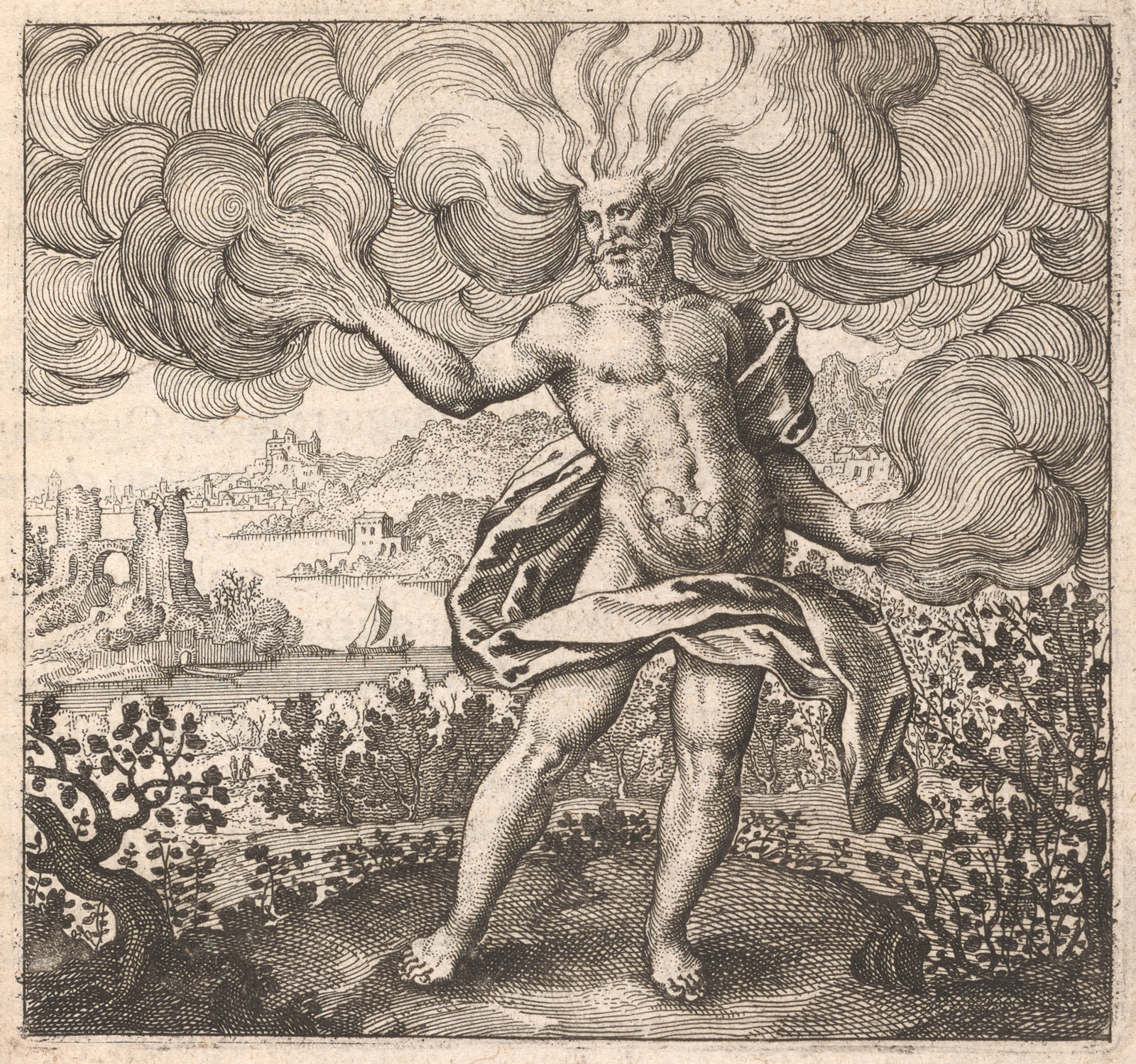
Emblem I — His nurse is the EarthNIGREDO
Nutrix ejus terra est
The wind carried it in its belly.
Epigram
Romulus is said to have been nursed at the coarse udders of a wolf,
And Jupiter to have been nursed by a goat, and these facts are said to be believed:
Should we then wonder if we assert
That the earth suckles the tender Child of the Philosophers with its milk?
Maier, Examen Fucorum Pseudo-Chymicorum, 41:
If an insignificant animal nursed such great heroes,
Shall not the Terrestrial Globe be a nurse?
Maier's Discourse
Maier develops the Tabula Smaragdina's declaration that 'the wind carried it in its belly' into an extended analogy between alchemical generation and natural gestation. He argues that the philosophical substance must first be conceived in air (the volatile spirit) before being nourished by earth (the fixed body), just as an embryo is carried in the womb before being nursed after birth. The discourse draws on Peripatetic natural philosophy to assert that nourishment must share the nature of what it feeds, establishing the principle that the Stone requires earth — that is, a fixed, corporeal substrate — as its nurse. Maier cites Hermes Trismegistus as the ultimate authority for this teaching.
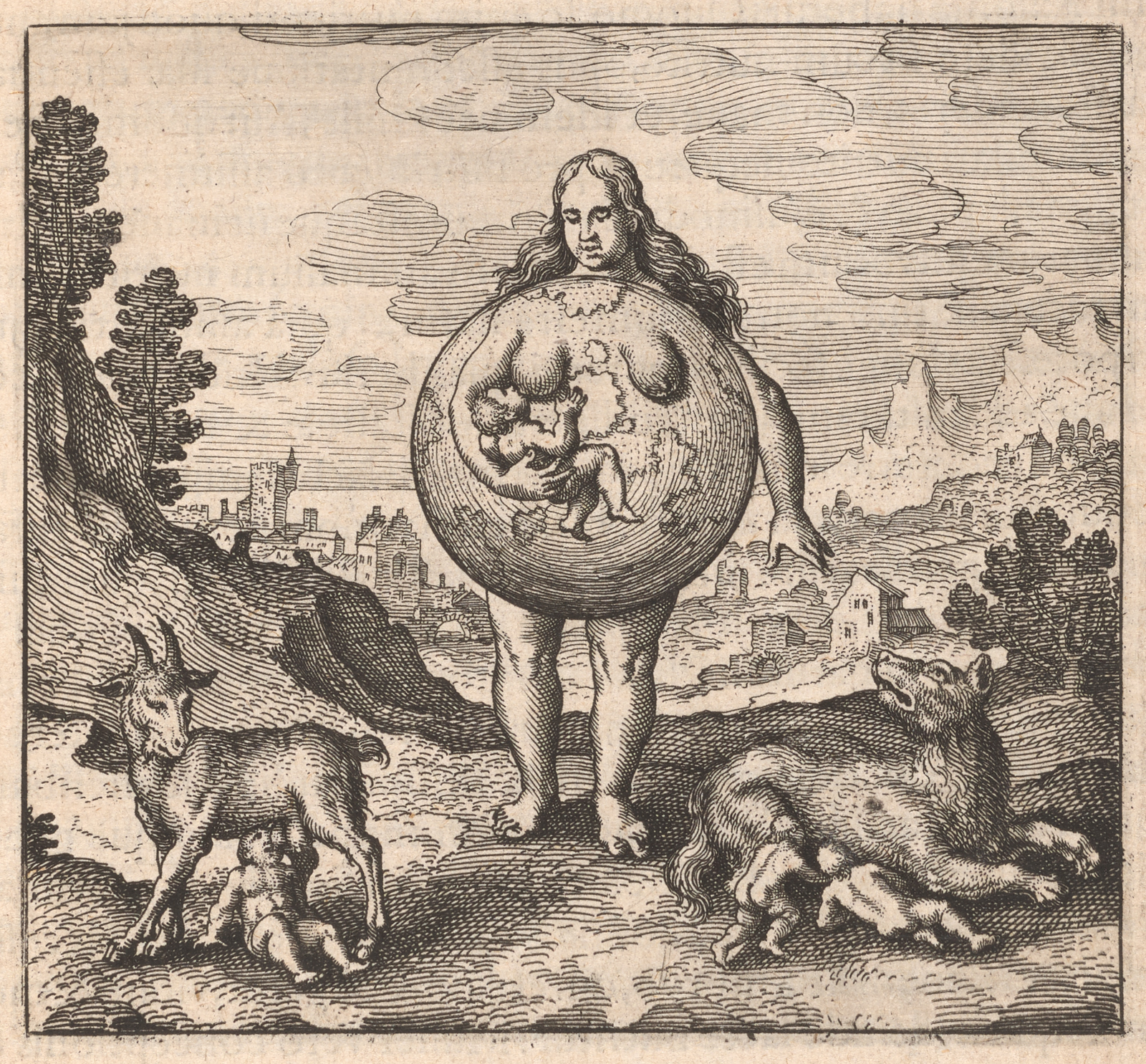
Emblem II — Its nurse is the EarthNIGREDO
Its nurse is the Earth.
Epigram
Romulus is said to have been nursed at the coarse udders of a wolf,
And Jupiter to have been nursed by a goat, and these facts are said to be believed:
Should we then wonder if we assert
That the earth suckles the tender Child of the Philosophers with its milk?
If an insignificant animal nursed such great heroes,
Shall not the Terrestrial Globe be a nurse?
Maier's Discourse
Maier continues the the me of
Emblem I, now emphasizing that the earth is specifically the nurse, not the mother, of the philosophical substance. He distinguishes between generation (which occurs through the volatile principle, the wind) and nourishment (which requires the fixed, earthy body). The discourse argues that just as human food must be converted into the substance of the body it feeds, so the alchemical earth must be assimilated into the growing Stone. Maier draws a careful analogy between the stages of infant feeding — blood in utero, milk after birth, solid food later — and the progressive fixation of the volatile philosophical substance.
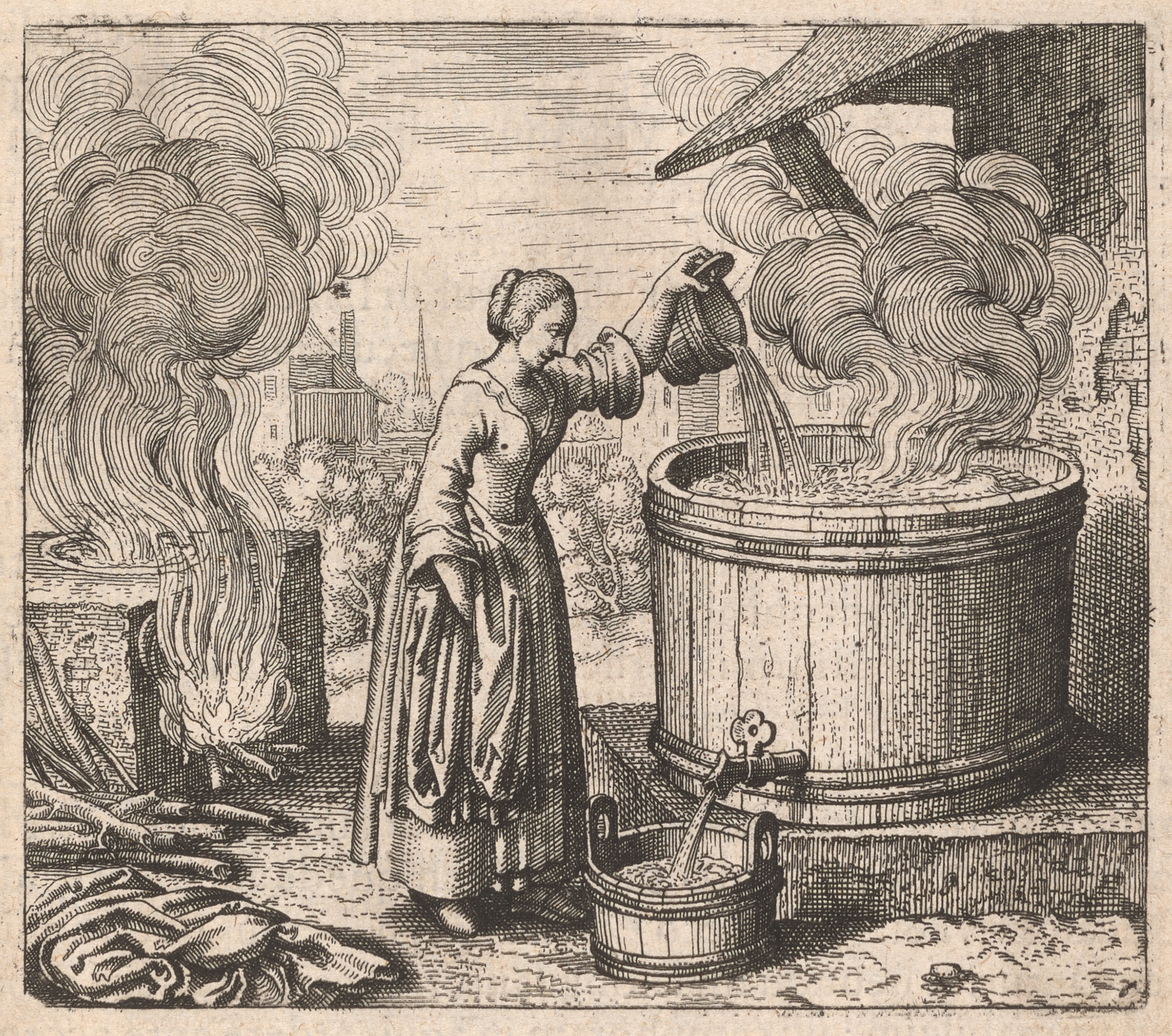
Emblem III — Go to the woman who washes the sheetsALBEDO
Go to the woman who washes the sheets and do as she does.
Epigram
Go to the woman who washes the sheets and do as she does.
She moistens the dirty linen with warm water;
Imitate her, and you will not go wrong in your art.
For the water washes the blackness from the body,
And what was stained by dirt becomes white through repeated washing,
Drenched by rain, dried by sun-warmth.
Maier's Discourse
Maier argues that the alchemical purification process mirrors the everyday work of washing dirty linen: just as earth-stains on fabric are removed by water and then dried by sun and wind, so the impurities of the philosophical substance must be cleansed through repeated washing and exposure to the elements. The discourse develops the principle that what comes from earth is cleaned by the next element in the sequence — water purifies earth, air dries what water has cleaned. Maier presents the was her woman as a figure for the alchemist who must patiently repeat the cycle of dissolution and drying, an operation the tradition calls the albedo or whitening stage.
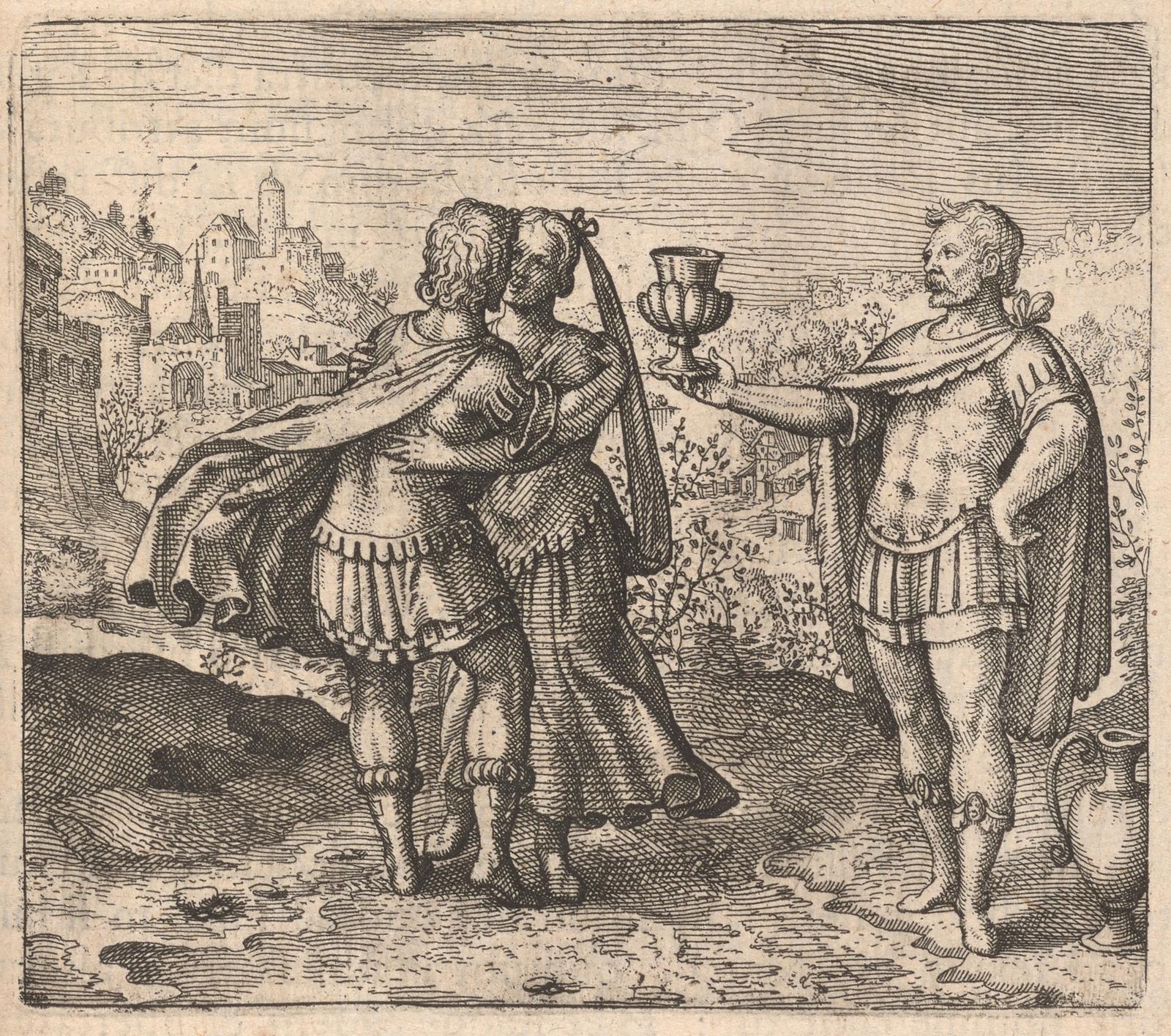
Emblem IV — Join brother and sisterNIGREDO
Join brother and sister and give them the cup of love.
Epigram
From her own father, Myrrha received the beautiful Adonis.
As a marriage of brother and sister they unite:
Give them the cup of love, let them drink,
And bring forth from the work of their union
A nobler offspring than was ever produced
By the embraces of Mars and Venus.
Maier's Discourse
Maier frames the alchemical coniunctio as a marriage between brother and sister — the masculine and feminine principles of the same substance — who must be united by the 'cup of love,' the solvent that dissolves both into a single new body. He draws on Oedipus's unwitting marriage to his mother Jocasta as an analogy for the paradoxical union of opposites that share a common origin. The discourse argues that the philosophical work is fundamentally gendered labor: the masculine role is to beget and govern, the feminine to conceive and nourish. Maier cites both classical mythology and Arabic alchemical sources to establish that this conjunction of fixed and volatile is the central operation of the entire art.
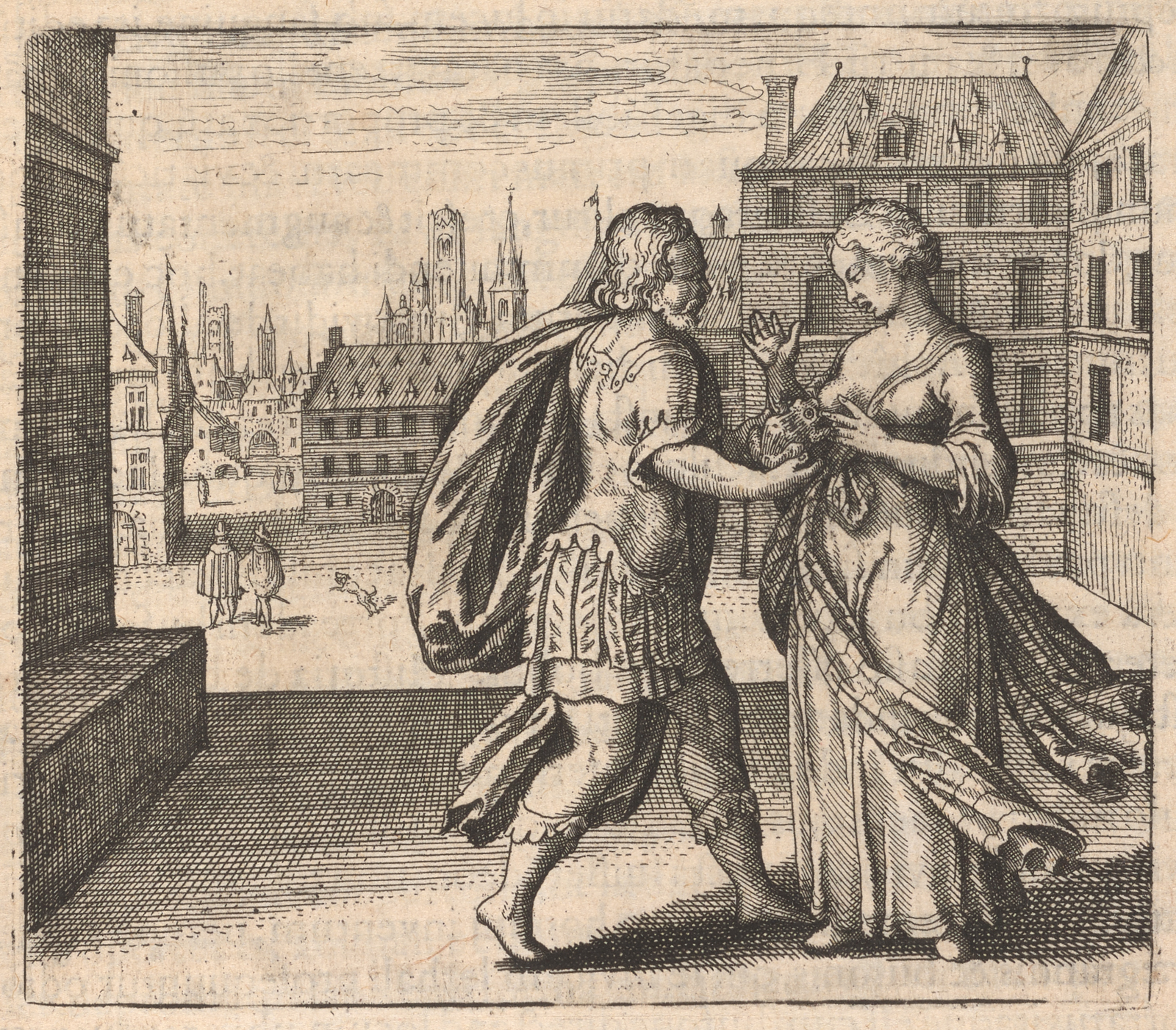
Emblem V — Woman suckling the toadNIGREDO
Put a toad to the breasts of a woman, that she may suckle it, and the woman may die and the toad grow big from the milk.
Epigram
Put a cold toad at the breast of a woman,
So that it may drink from the source of milk like a child.
Let it swell into a large growth,
And let the woman become ill and die.
Make a noble medicine from it,
Which drives the poison out of the human heart and takes away destruction.
Maier's Discourse
Maier frames the alchemical operation as gendered labor, arguing that the masculine principle be gets and governs while the feminine conceives, bears, and nourishes. He develops the toad as a figure for the volatile, poisonous agent that must be fed by the maternal body of the prima materia — a feeding that kills the nurse but matures the product. Maier draws the analogy to Cleopatra's death by asp-venom, suggesting that the transfer of vital essence from woman to toad mirrors the fixation of the volatile sulphur through prolonged contact with a liquid menstruum. The discourse cites the Pseudo-Aristotelian Tractatulus de Practica Lapidis as the source of this toad-nursing imagery.
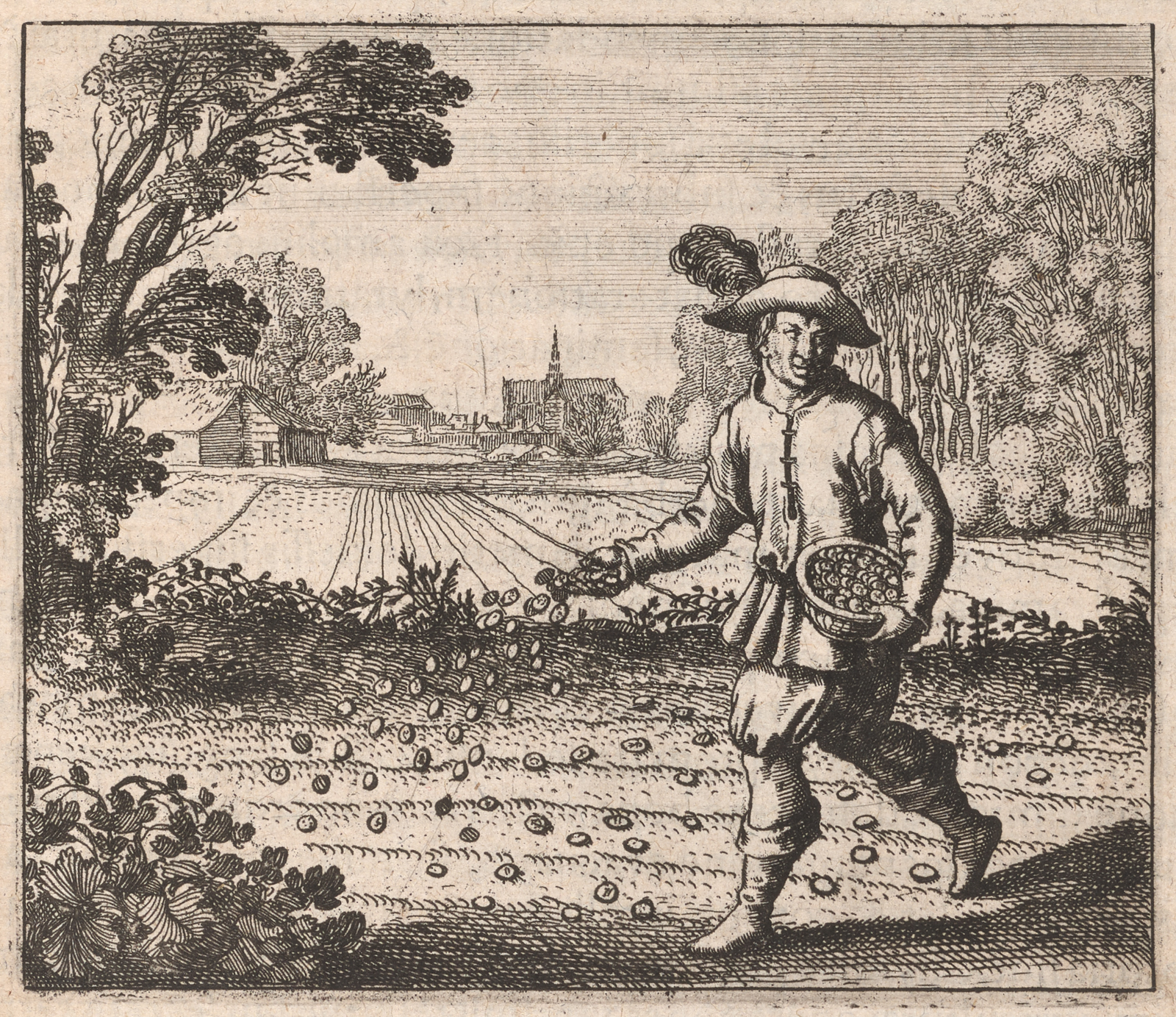
Emblem VI — Sow your gold in the white foliated earthALBEDO
Sow your gold in the white foliated earth.
Epigram
The farmers entrust their seed to the fat earth,
After having foliated it with the ploughshare;
Sow your gold in the white foliated earth,
Which will yield you fruit with interest.
If you do this, you will rejoice in a rich harvest,
When the grain has multiplied in good soil.
Maier's Discourse
Maier develops an extended agricultural analogy: just as the farmer must sow grain in prepared soil to reap a harvest, the alchemist must 'sow' philosophical gold in 'white foliated earth' — a specially prepared mercurial substrate — to produce the Stone. Drawing on Plato's division of the civic body into physicians and farmers, Maier argues that the alchemist combines both roles, healing metals while cultivating them. The discourse establishes a key principle: the seed (gold) must be of the same species as what it produces, and the earth (mercury) must be receptive and properly tempered. The white, foliated quality of the earth indicates the albedo stage, where the purified substrate is ready to receive the active seed.
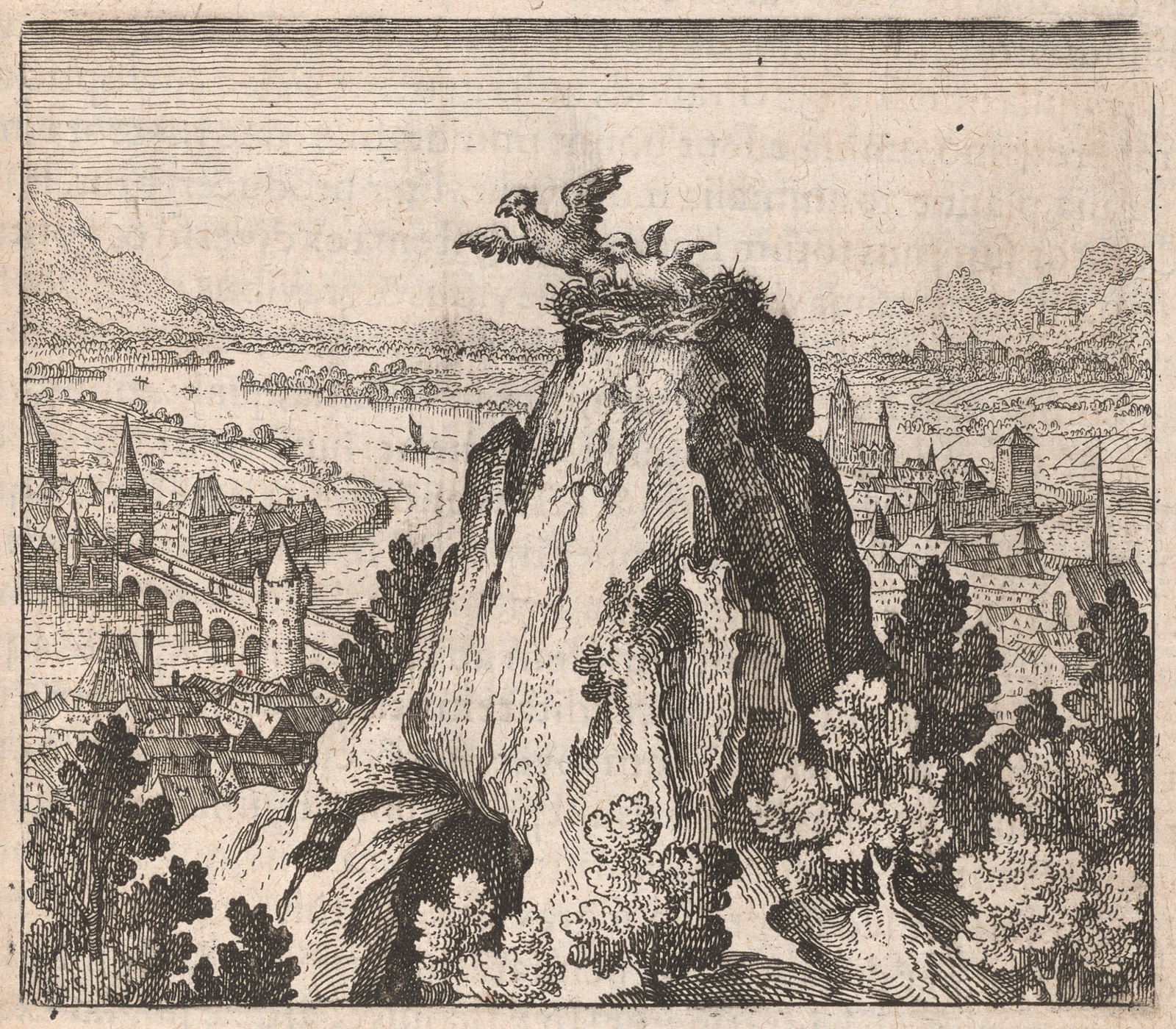
Emblem VII — Young bird flying from nest and falling backCITRINITAS
A young bird flies up from the nest and falls back into the nest again.
Epigram
The eagle had built a nest in a hollow rock,
In which it hid and fed its young:
One of them, trying to fly, fell back into the nest,
For the feathers were not yet fully grown.
The bird rises again, and falls back, until
Its wings have grown strong enough to sustain flight.
Maier's Discourse
Maier describes a species of bird that flies upward from its nest only to fall back again repeatedly, developing this as an analogy for the alchemical process of sublimation and condensation. He argues that the volatile philosophical substance must be repeatedly driven upward (sublimated) and allowed to fall back (condensed) until it is sufficiently matured to sustain it self. The discourse connects this to the broader principle that Nature works through cyclical repetition rather than linear progress. Maier suggests that the bird's eventual success in flight corresponds to the moment when the volatile spirit is finally fixed and can maintain its elevated state.
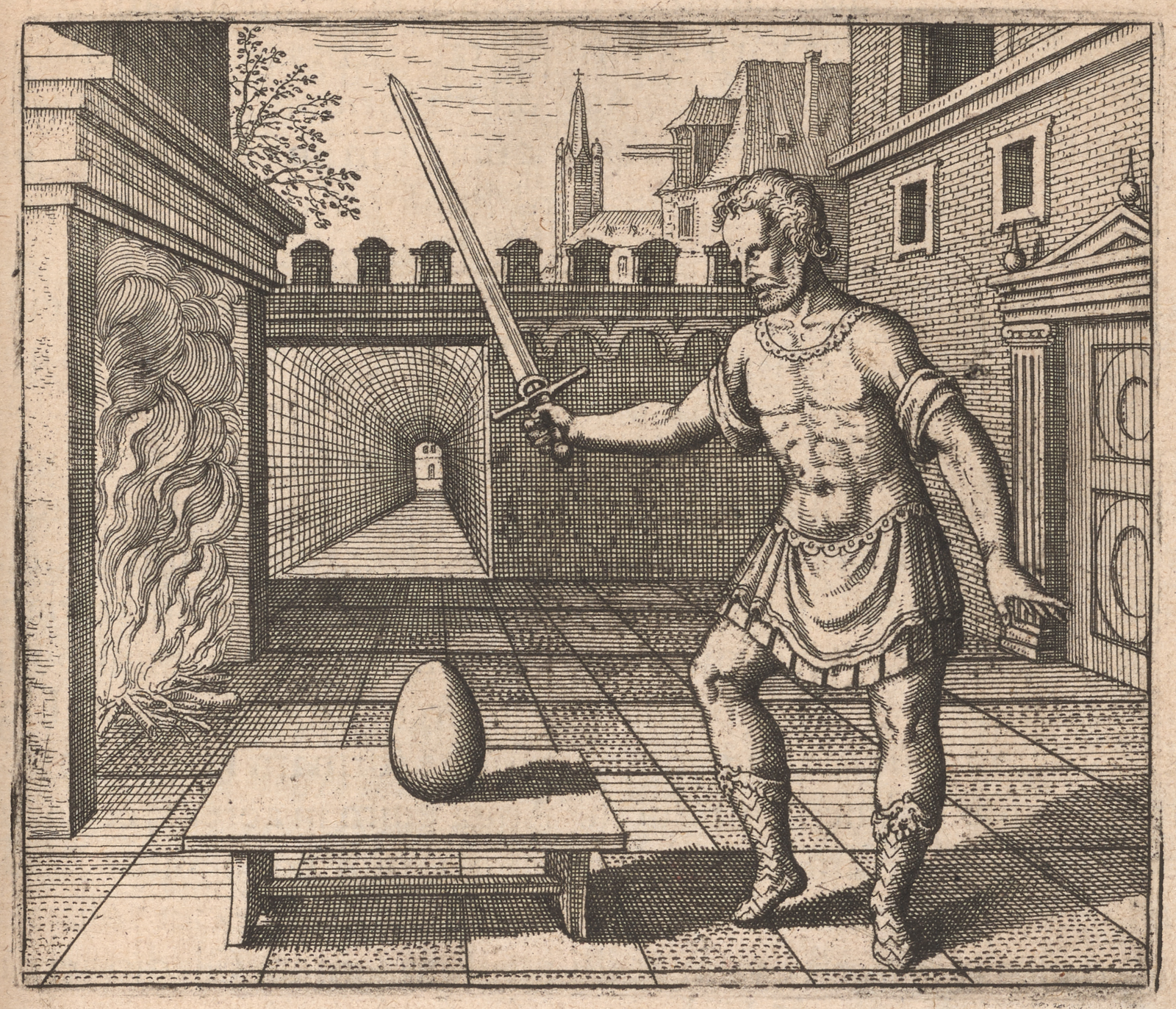
Emblem VIII — Emblem VIIINIGREDO
Take the egg and pierce it with a fiery sword.
Epigram
There is a bird in the world, more sublime than all,
Whose egg to search for is your only care.
A soft white surrounds the yellow yolk;
Strike it cautiously with a fiery sword, as is the custom.
Let Mars lend his aid to Vulcan: the chick thence arising
Shall be the conqueror of iron and fire.
Maier's Discourse
Maier develops the egg as a figure for the sealed vessel containing the prima materia, arguing that it must be pierced — that is, opened to the action of fire — with a fiery sword to release and transform its contents. The discourse draws on the widespread alchemical tradition of the philosophical egg (ovum philosophicum), where the shell represents the vessel, the white the mercury, and the yolk the sulphur. Maier argues that the sword of fire must be applied with precision — too little heat fails to open the egg, too much destroys the embryonic substance within. The operation described is calcination, the controlled application of heat to break down the initial form of the material.
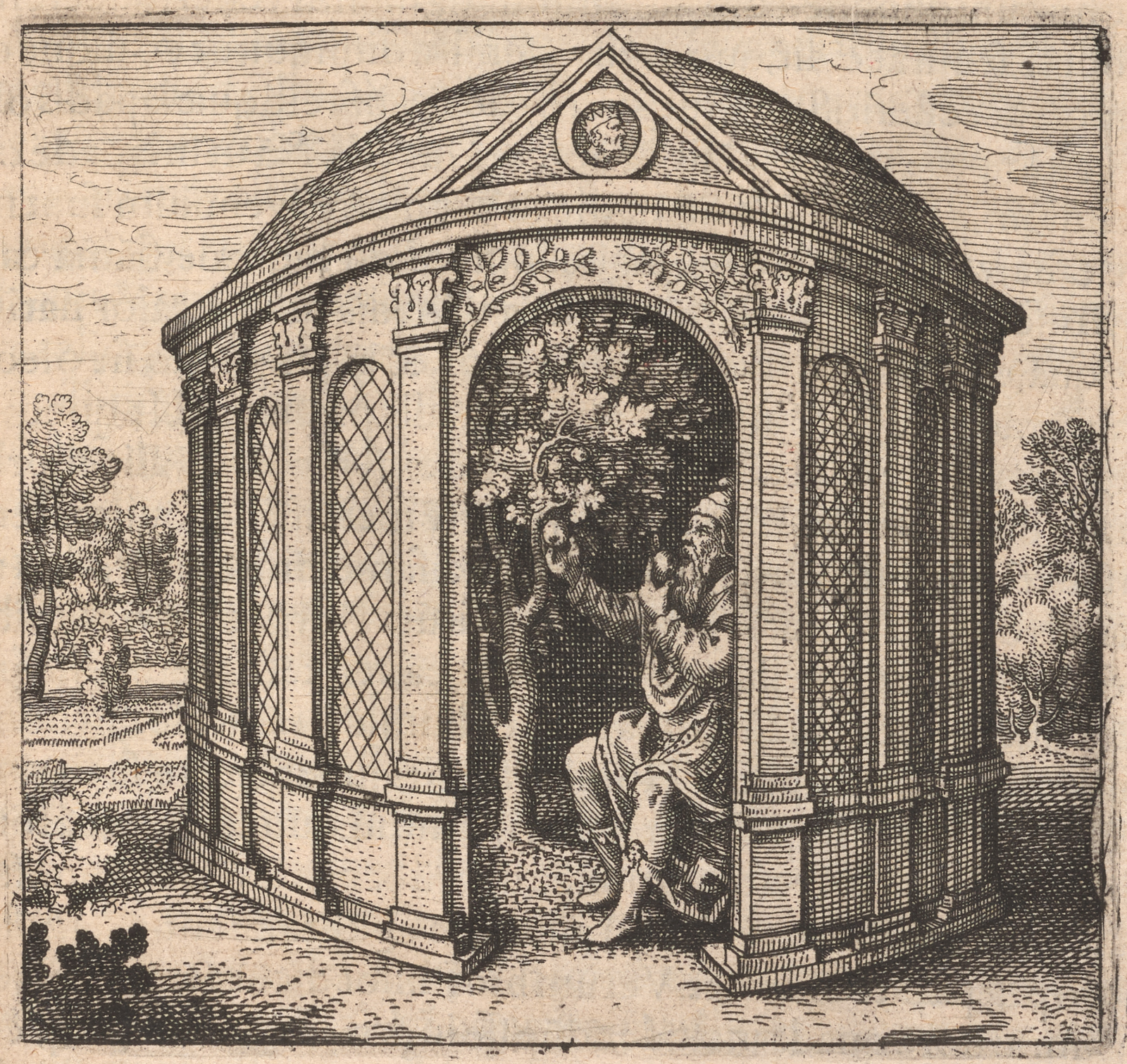
Emblem IX — Emblem IXNIGREDO
Fix the old man to the tree in the garden of the dew, and the old man becomes young again.
Epigram
Fix the old man to the tree
In the garden of celestial dew,
And the old man will become young again,
Rejuvenated by the moisture from above.
The tree gives its fruit to him who tends it,
And the aged one grows young with the tree.
Maier's Discourse
Maier argues that the old man represents the fixed, aged substance of the philosophical body that must be rejuvenated through exposure to celestial dew — the volatile, purifying spirit descending from above. He develops a parallel between this image and classical accounts of rejuvenation through divine intervention, including the myth of Aeson restored to youth by Medea. The discourse emphasizes that the tree functions as the apparatus of fixation: the old body is held in place while the volatile moisture penetrates and renews it. Maier cites the Turba Philosophorum and the pronouncement of Balgus as authorities for this doctrine of rejuvenation through the marriage of fixed and volatile.
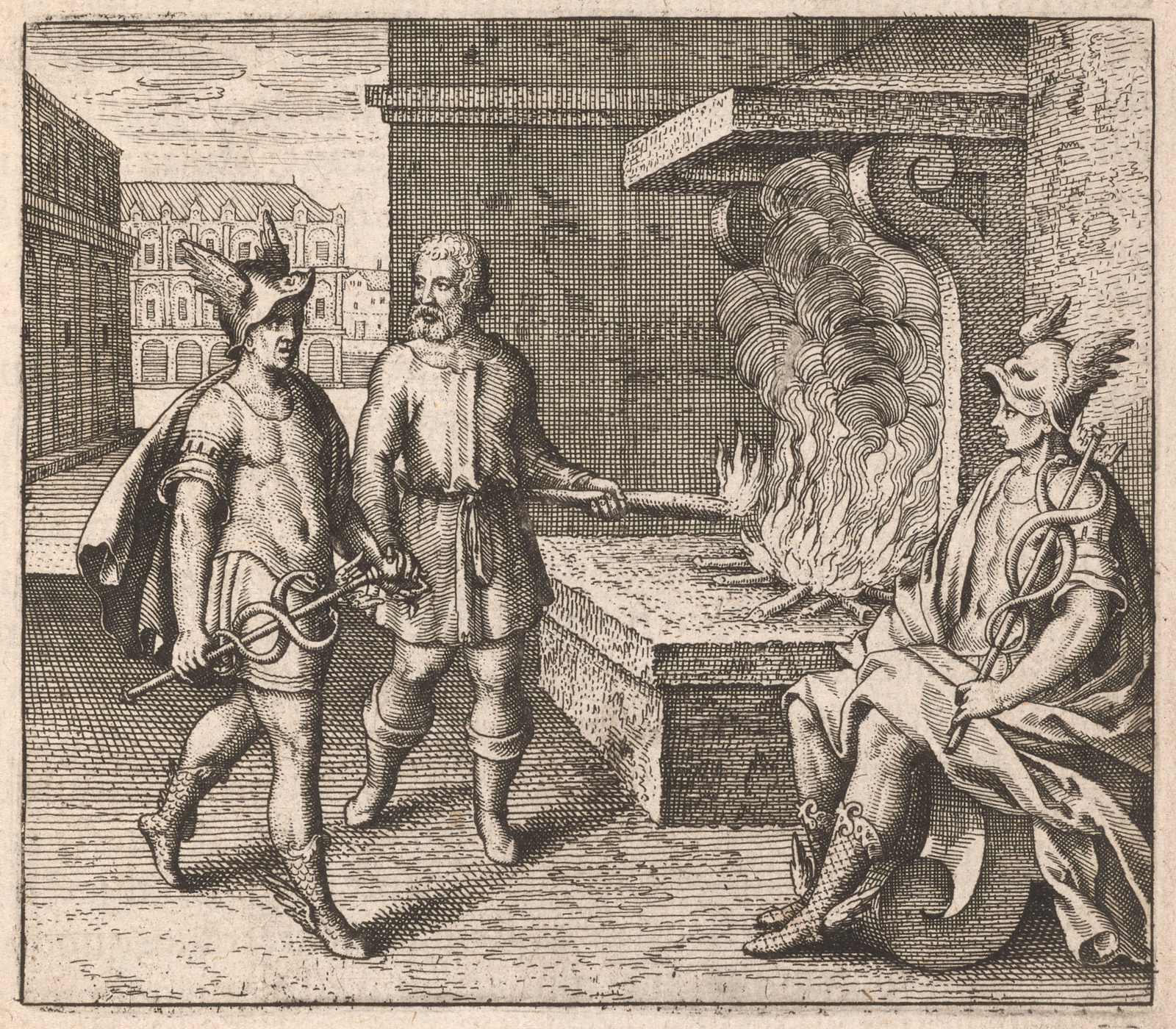
Emblem X — Emblem XCITRINITAS
Give fire to fire, Mercury to Mercury, and that is enough for you.
Epigram
You want to know the reason why so many poets sing of Helicon,
And say that everybody must try to reach the top of it?
At its summit a Stone has been placed as a souvenir,
The Stone that was devoured and spat out by Saturn.
Give fire to fire, Mercury to Mercury,
And that is enough for you.
Maier's Discourse
Maier develops the principle that like produces like: fire must be added to fire, and mercury to mercury, for the philosophical work to succeed. He argues against the common error of mixing incompatible substances, insisting that the alchemist must recognize the common nature hidden beneath different appearances. The discourse draws on the allegory of Saturn devouring his children, which Maier interprets as the dissolution of metals back into their mercurial prima materia. He cites the Turba Philosophorum's dictum that the Stone is nourished only by its own kind, establishing the principle of philosophical homogeneity that governs the entire citrinitas stage.
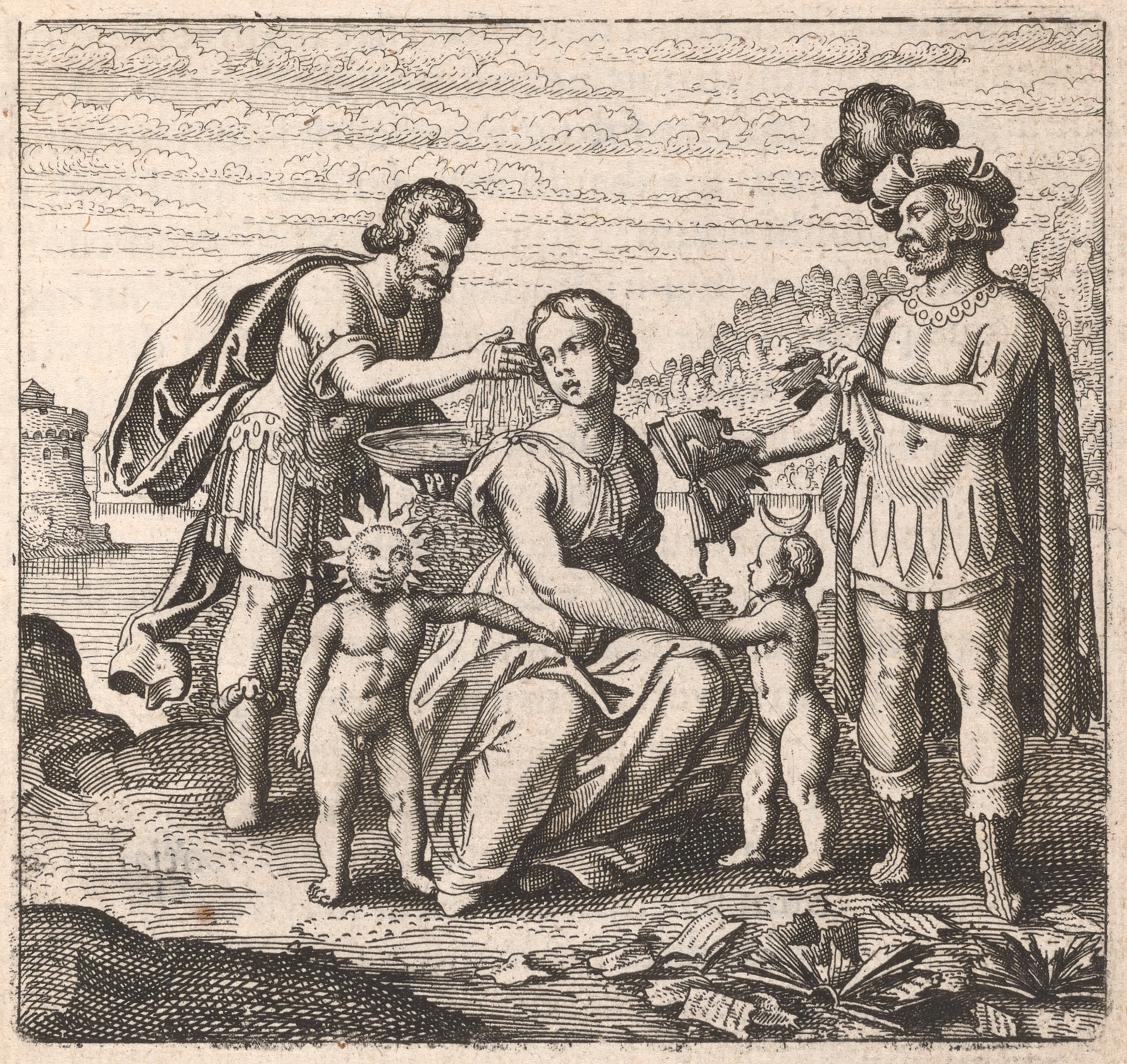
Emblem XI — Emblem XIALBEDO
Make Latona white and tear up the books.
Epigram
Only one thing of little value is found in the world,
Which is the key to the whole Work.
Make Latona white and tear up the books,
That your heart may not be rent asunder.
For knowledge without practice is worth nothing;
Practice without knowledge stumbles in darkness.
Maier's Discourse
Maier commands two simultaneous actions: whiten Latona and tear up the books. He develops Latona as a figure for the imperfect philosophical body — an alloy of Sol and Luna stained with black impurities — that must be purified through the albedo. De Jong traces the name Latona to 'laton,' meaning electrum or yellow silver, connecting the mythological goddess to the metallurgical process of whitening a dark alloy. The instruction to destroy books signals Maier's insistence that neither theory alone nor book-learning can substitute for practical laboratory work — the alchemist must act on matter directly, not merely read about it. The discourse argues that both intellect and manual labor are necessary, but that practice takes precedence.
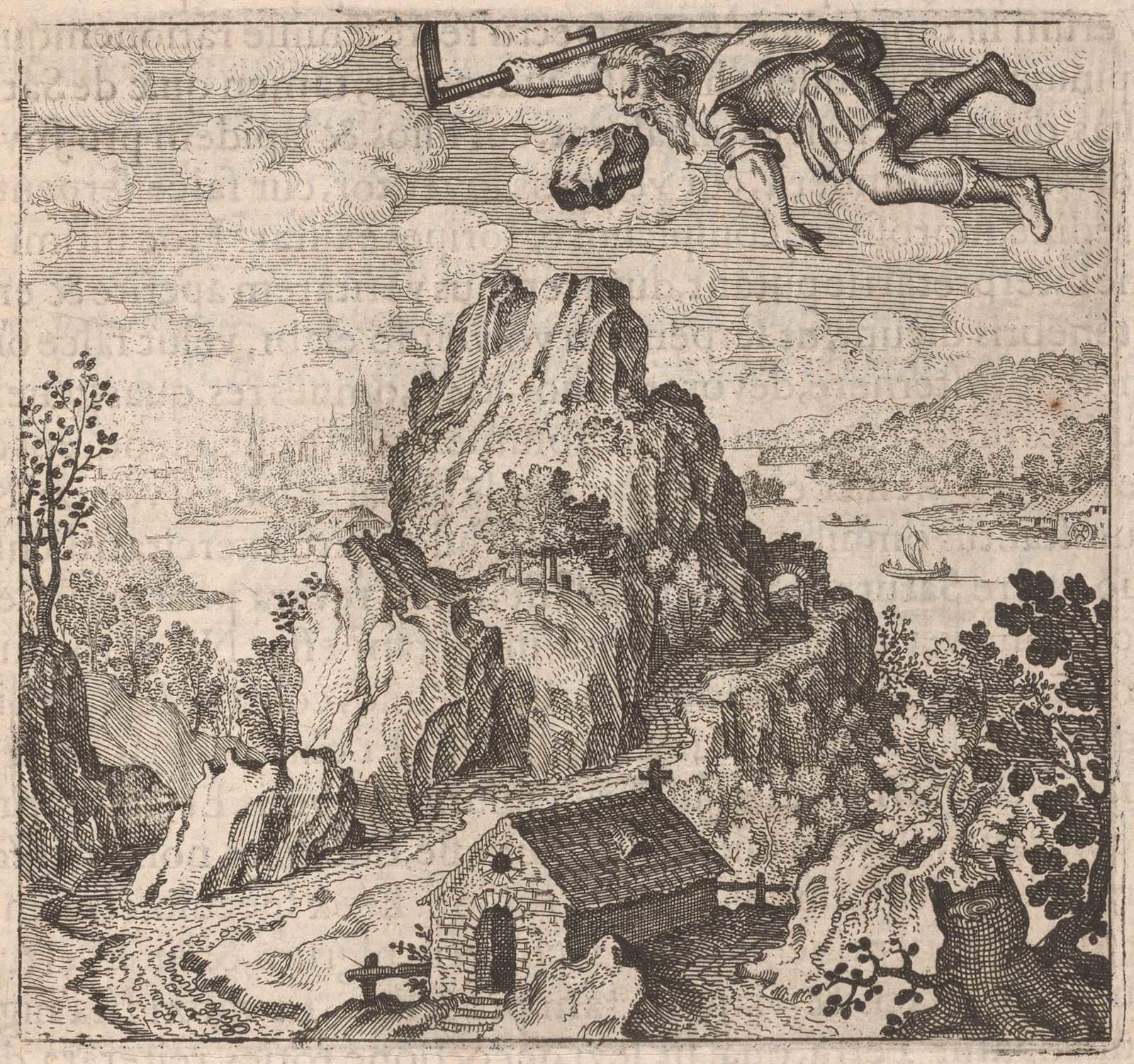
Emblem XII — Emblem XIIALBEDO
Make Latona white and tear up the books.
Epigram
Make Latona white and tear up the books,
So that your hearts may not be torn apart;
For she who is bright-skinned is whiter in the Stone,
And out of white lead originates red lead,
Which is the beginning and the end.
Without this process, the art is in vain.
Maier's Discourse
Maier continues the argument of
Emblem XI, now emphasizing the bewildering variety and obscurity of alchemical writings as the reason books must be abandoned. He argues that the sheer volume of contradictory texts drives seekers to despair, and that the only path forward is direct engagement with the material. The discourse develops the Latona allegory further: she is an impure body of mixed Sol and Luna that must be found in a humble place, immersed in dung where she becomes white lead, from which red lead originates. Maier presents this as the beginning and end of the opus — the albedo whitening that initiates the final reddening toward the rubedo.
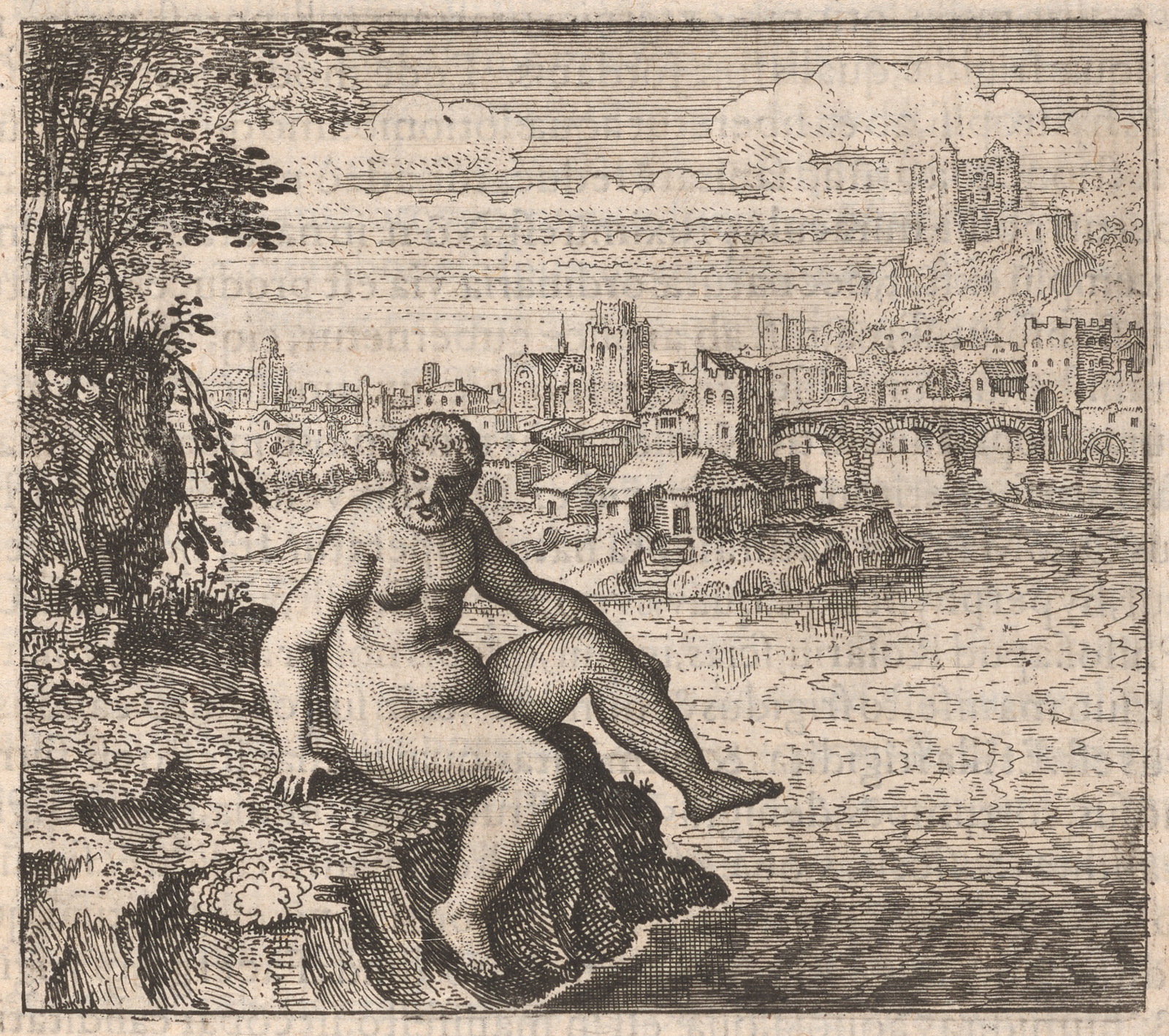
Emblem XIII — Dropsical ore washed in JordanALBEDO
The ore of the philosophers is dropsical and wants to be washed seven times in the river, just as Naaman the leper washed in the Jordan.
Epigram
The ore of the philosophers is dropsical
And wants to be washed seven times in the river,
Just as Naaman the leper washed in the Jordan.
Then the leprosy departs, and the body becomes clean,
As white as snow, more precious than gold,
If you understand what the wise men mean.
Maier's Discourse
Maier draws on the biblical story of Naaman the leper, healed by washing seven times in the Jordan, as an allegory for the purification of the philosophical ore. He argues that the 'dropsical' stone — swollen with impurities — must undergo repeated washing to be cleansed, just as Naaman's leprosy was cured only through sevenfold immersion. The discourse connects this to the albedo purification and to the sacramental symbolism of baptism as a prefiguration of alchemical cleansing. Maier cites the Clangor Buccinae as the source of the dropsical ore metaphor, linking it explicitly to the Latona-whitening sequence of the preceding emblems.
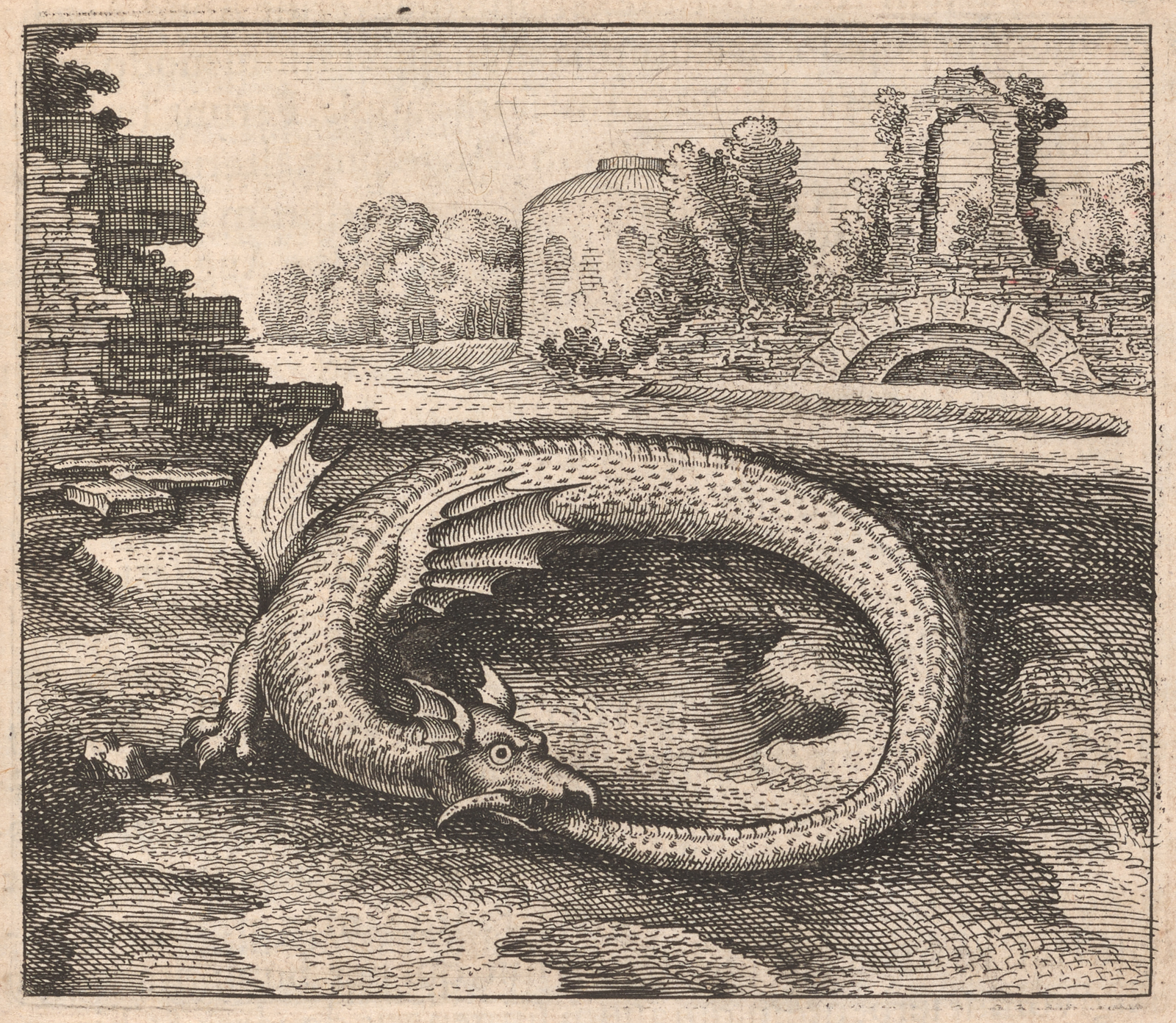
Emblem XIV — Emblem XIVNIGREDO
This is the dragon that devours its own tail.
Epigram
This is the dragon that devours its own tail,
The serpent of the philosophers,
Which bites itself and generates itself,
Dissolving and coagulating itself.
A serpent that devours another serpent becomes a dragon;
This is the secret of the wise.
Maier's Discourse
Maier develops the ancient image of the serpent devouring another serpent to become a dragon, an allegory for the dissolution of one metallic substance by another of similar but more active nature. He argues that in antiquity the serpent represented both poison and medicine — the pharmakon — and that the alchemical dragon born from this mutual consumption combines the properties of both parents. The discourse cites classical accounts of dragon-generation and connects them to the Hermetic principle that the Stone is produced when like consumes like. Maier emphasizes that this is a nigredo operation: the death of both serpents precedes the birth of the more powerful dragon.
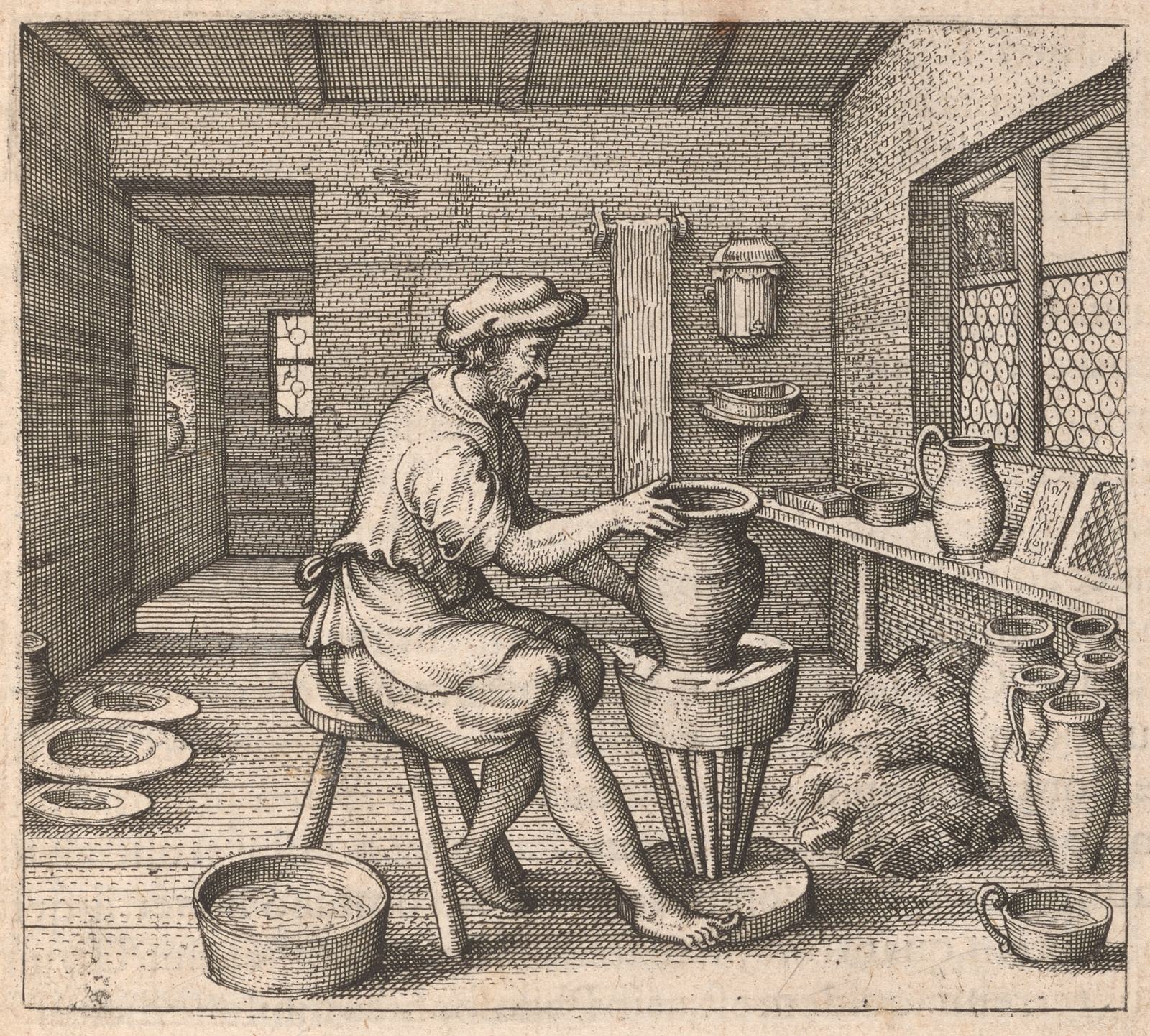
Emblem XV — Emblem XVALBEDO
Let the work of the potter, consisting of dry and wet, teach you.
Epigram
Let the work of the potter, consisting of dry and wet, teach you.
He moistens the clay with water,
Shapes it with his hands upon the wheel,
Then dries it in the sun and fires it in the kiln.
So should you work with your substance:
Moisten, shape, dry, and fire.
Maier's Discourse
Maier presents the potter's craft as a model for the alchemical work, arguing that the artisan who shapes clay from wet and dry elements teaches the principles governing the philosophical operation. He develops the analogy between the potter's sequence — moistening, forming, drying, firing — and the alchemist's manipulation of the mercurial and sulphurous components through successive stages. The discourse emphasizes that Nature provides the model, but art must apply it: the potter does not invent the properties of clay but learns to work with them. Maier cites this as evidence that alchemical skill is a techne learned through observation of natural processes.
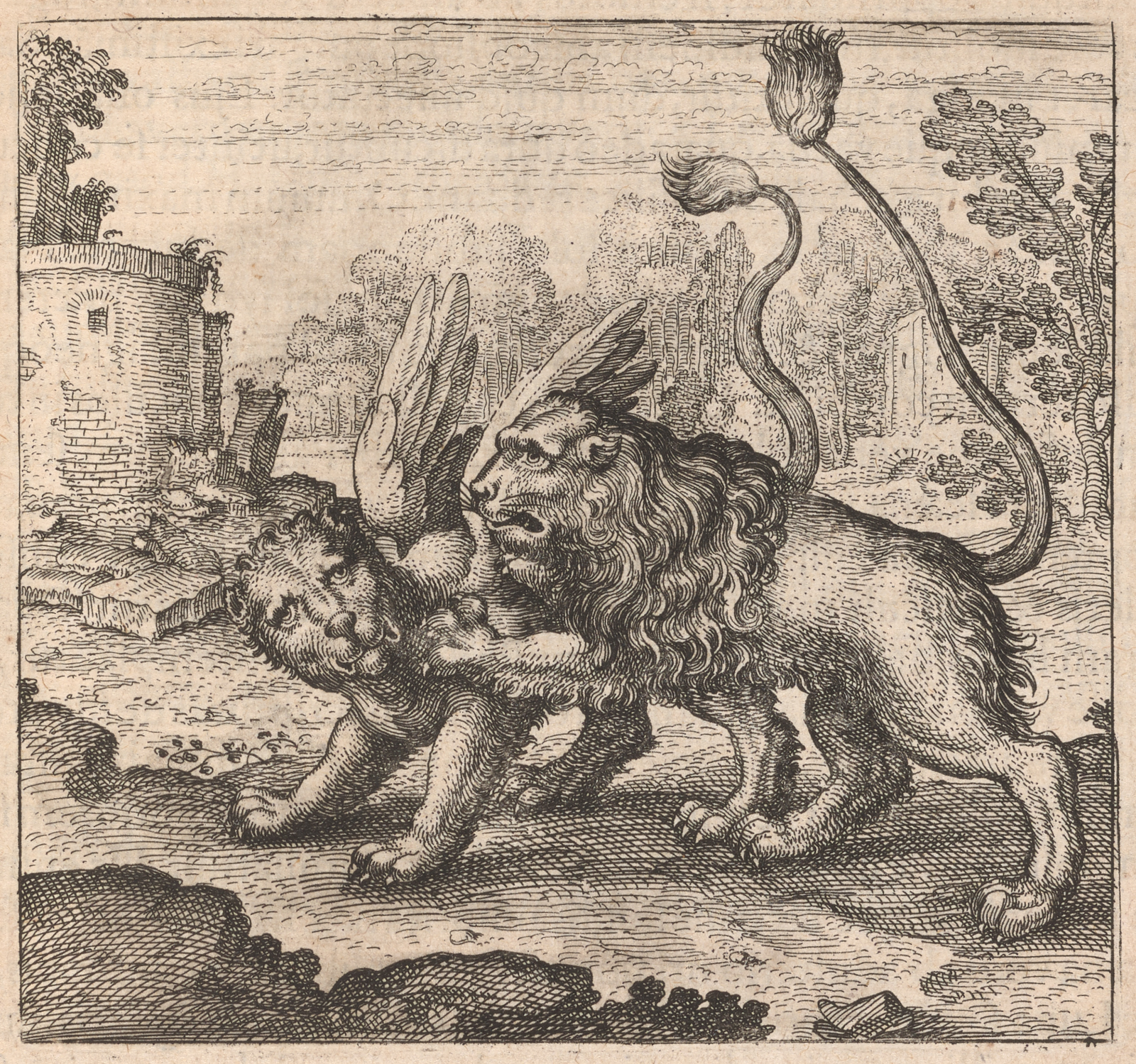
Emblem XVI — Winged and wingless lionCITRINITAS
The feathers one lion has not, the other has.
Epigram
Two lions engage in battle:
One has wings, the other has none.
The winged one is volatile and swift,
The wingless one is fixed and strong.
Unite them, and from their conjunction
The Stone of the philosophers is born.
Maier's Discourse
Maier develops the two lions as figures for the volatile and fixed principles of the alchemical work. The winged lion represents the philosophical mercury — fugitive, aerial, unstable — while the wingless lion is the philosophical sulphur — earthy, fixed, enduring. He argues that mastery requires capturing the winged lion and joining it to its wingless counterpart, producing a stable union of volatile and fixed. The discourse connects the lion's magnanimity in classical natural history to the nobility of the alchemical substances, and draws on the solar symbolism of the lion as the king of beasts to establish its connection to gold and the citrinitas stage of yellowing.
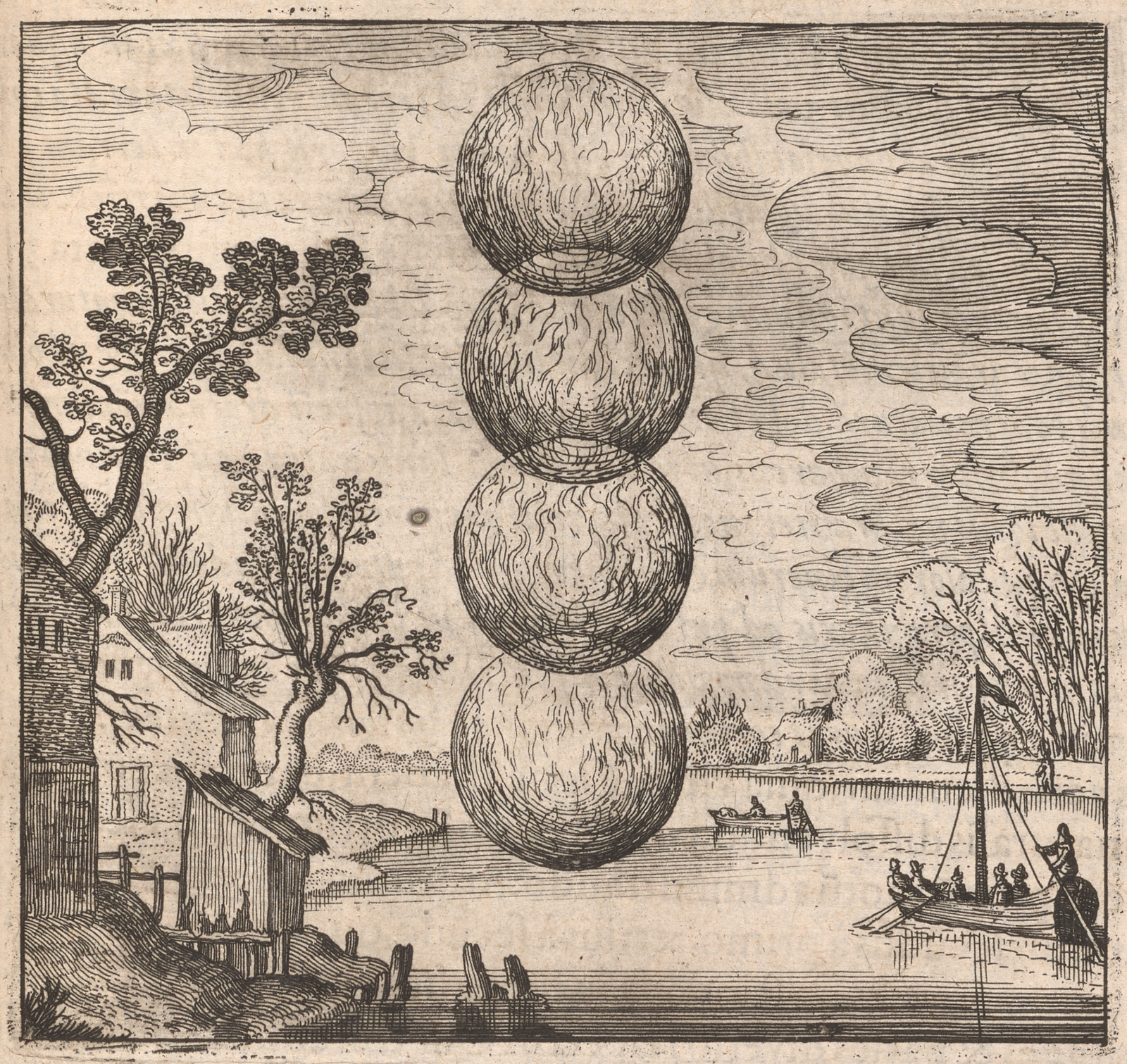
Emblem XVII — Fourfold fire-ballCITRINITAS
A fourfold fire-ball controls this work.
Epigram
A fourfold fire-ball controls this work:
There is the fire of the lamp, the fire of the ash-bath,
The fire of the substance itself, and the fire of water.
Four fires are needed, not one alone;
He who knows how to manage them all
Has found the key to the art.
Maier's Discourse
Maier argues that the alchemical work requires not one fire but four distinct types, each governing a different phase of the operation. He identifies these as the fire of the lamp (external heat), the fire of the ash-bath (gentle, sustained warmth), the fire of the substance it self (intrinsic reactive heat), and the fire of the water-bath (moist, temperate heat). The discourse develops the principle that fire transforms by making things fiery — communicating its own nature — but can not make gold directly, only prepare the conditions for gold's emergence. Maier cites this fourfold fire as the master key to the practical art, without which even correct materials will fail.
Emblem XVIII — Emblem XVIIICITRINITAS
Fire likes making things fiery, but not, like gold, making gold.
Epigram
Fire likes making things fiery,
But not, like gold, making gold.
Fire transforms what is placed within it
Into its own nature, communicating its heat.
But gold requires a different art:
Patience, knowledge, and the right degree of warmth.
Maier's Discourse
Maier continues the fire the me from
Emblem XVII, arguing that fire delights in making things partake of its own fiery nature but can not directly transmute base metals into gold. He develops a distinction between fire as agent of transformation and gold as the goal: fire prepares, purifies, and refines, but the ultimate product — the philosopher's stone or philosophical gold — emerges from the properly prepared matter's own latent potential, not from fire alone. The discourse cites the Aristotelian principle of like acting upon like to explain why the fire must be matched in kind and degree to the substance it works upon.
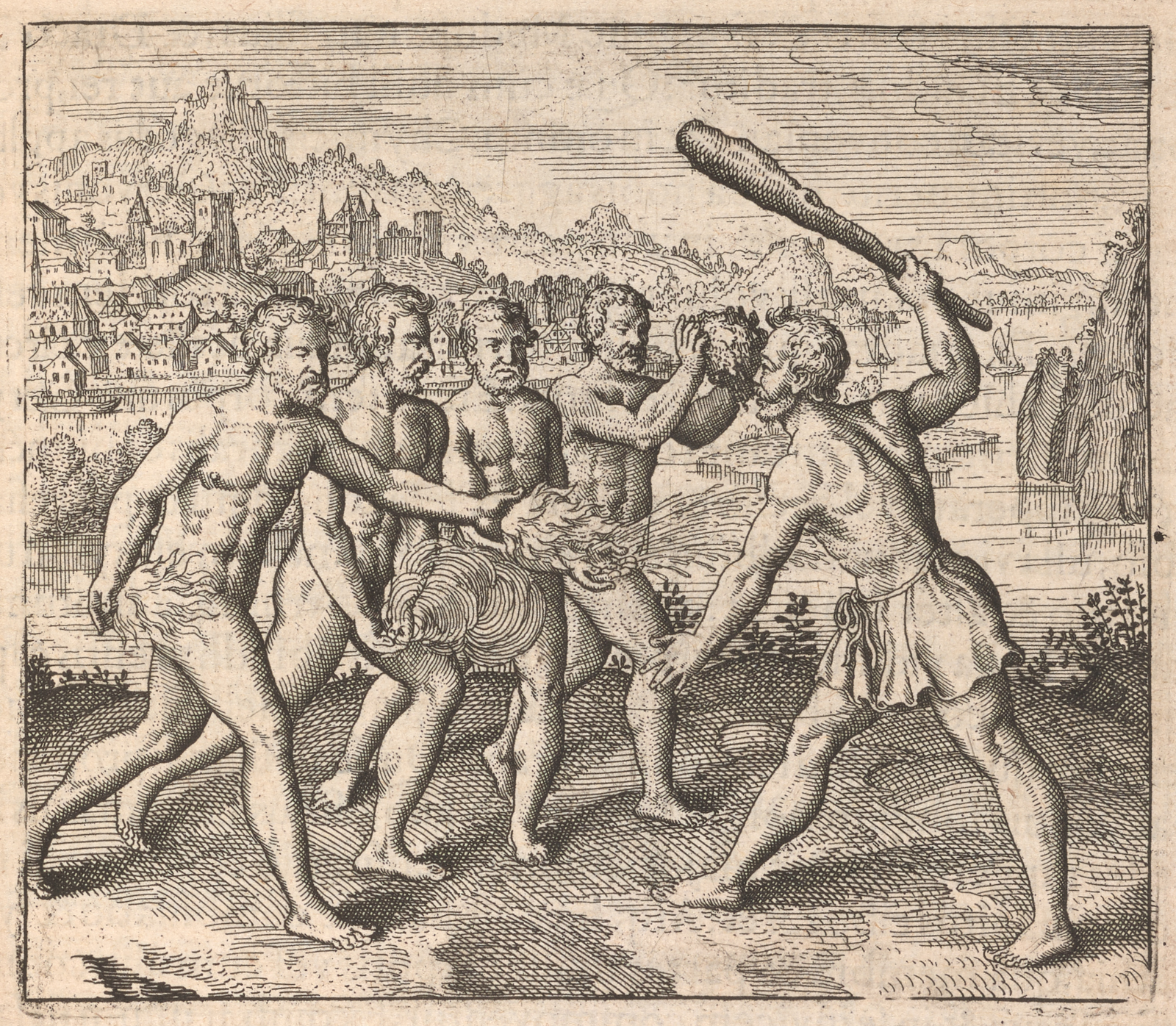
Emblem XIX — Emblem XIXNIGREDO
If you kill one of the four, every body will be dead immediately.
Epigram
If you kill one of the four,
Everybody will be dead immediately.
For the four are bound together so tightly
That the death of one means the death of all.
Separate them gently, not by force,
Or the whole work will be destroyed.
Maier's Discourse
Maier develops the idea that the four elements or components of the philosophical substance are so intimately connected that destroying one annihilates all. He argues that this demonstrates their essential unity — they are not truly four separate things but four aspects of a single body. The discourse draws on the myth of Geryon, the three-bodied king of Spain, and his pure-bred cattle guarded by the dog Orthrus, developing this as an allegory for the composite nature of the prima materia. Maier uses this to warn the alchemist against violent separation: the elements must be gently distinguished, not forcibly torn apart, lest the entire work be destroyed.
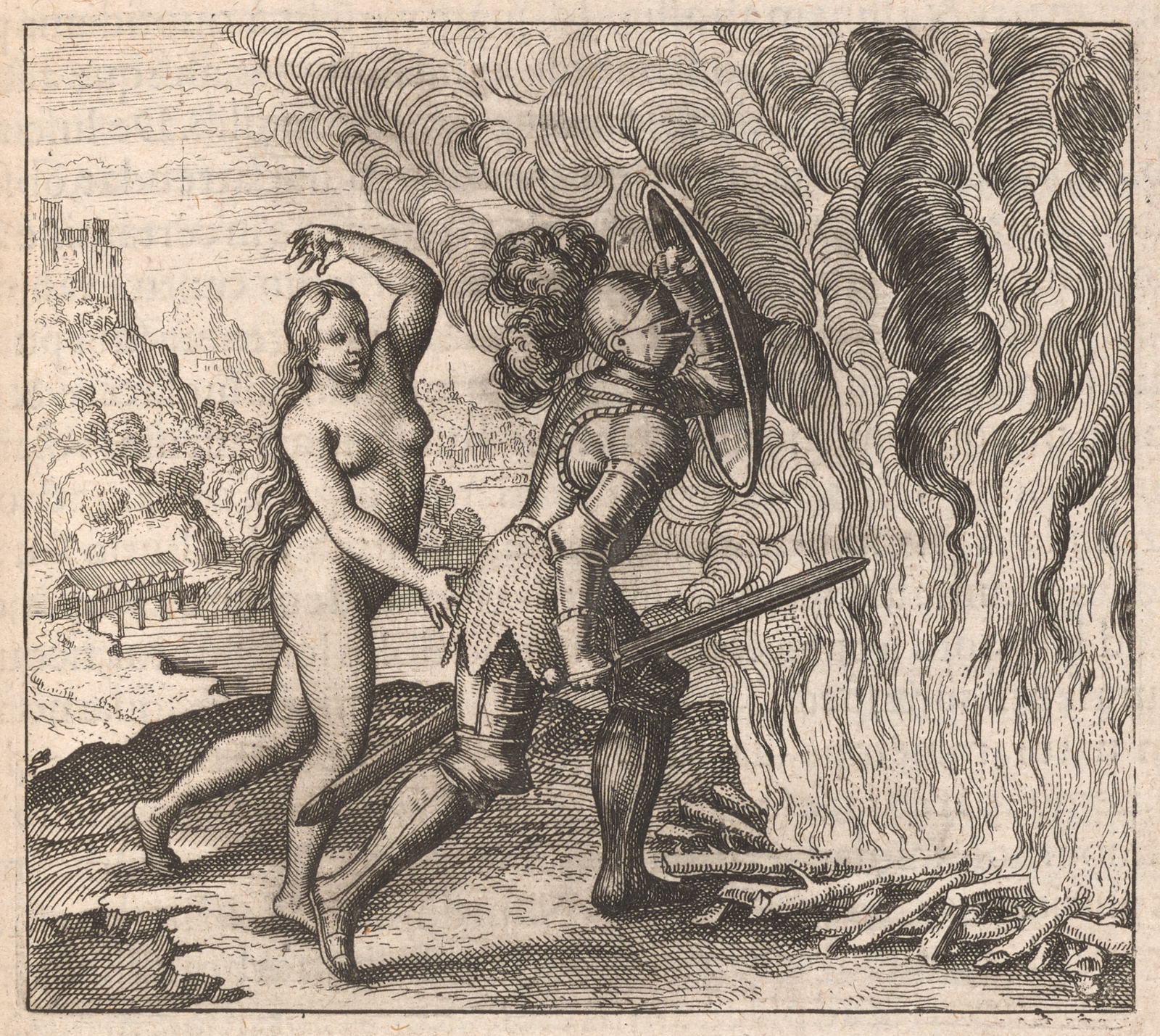
Emblem XX — Emblem XXALBEDO
Nature teaches Nature, Nature conquers Nature, Nature rules Nature.
Epigram
Nature teaches Nature how to conquer fire;
The teacher and the pupil are of the same kind.
A woman is taught by another woman to wash clothes;
The skilled one leads the unskilled.
Nature teaches, Nature conquers, Nature rules:
All wisdom comes from following her.
Maier's Discourse
Maier articulates one of alchemy's foundational maxims: Nature teaches Nature, Nature conquers Nature, Nature rules Nature. He argues that the alchemist must learn by observing natural processes, then apply those lessons to guide and finally master the transformations of matter. The discourse connects this to Democritus's principle that art imitates nature, and extends it: the alchemical art does not merely copy natural processes but accelerates and perfects them. Maier cites the washing of dirty linen (
Emblem III) as an example — Nature provides rain and sun, and the was her woman learns to replicate these cleansing agents.
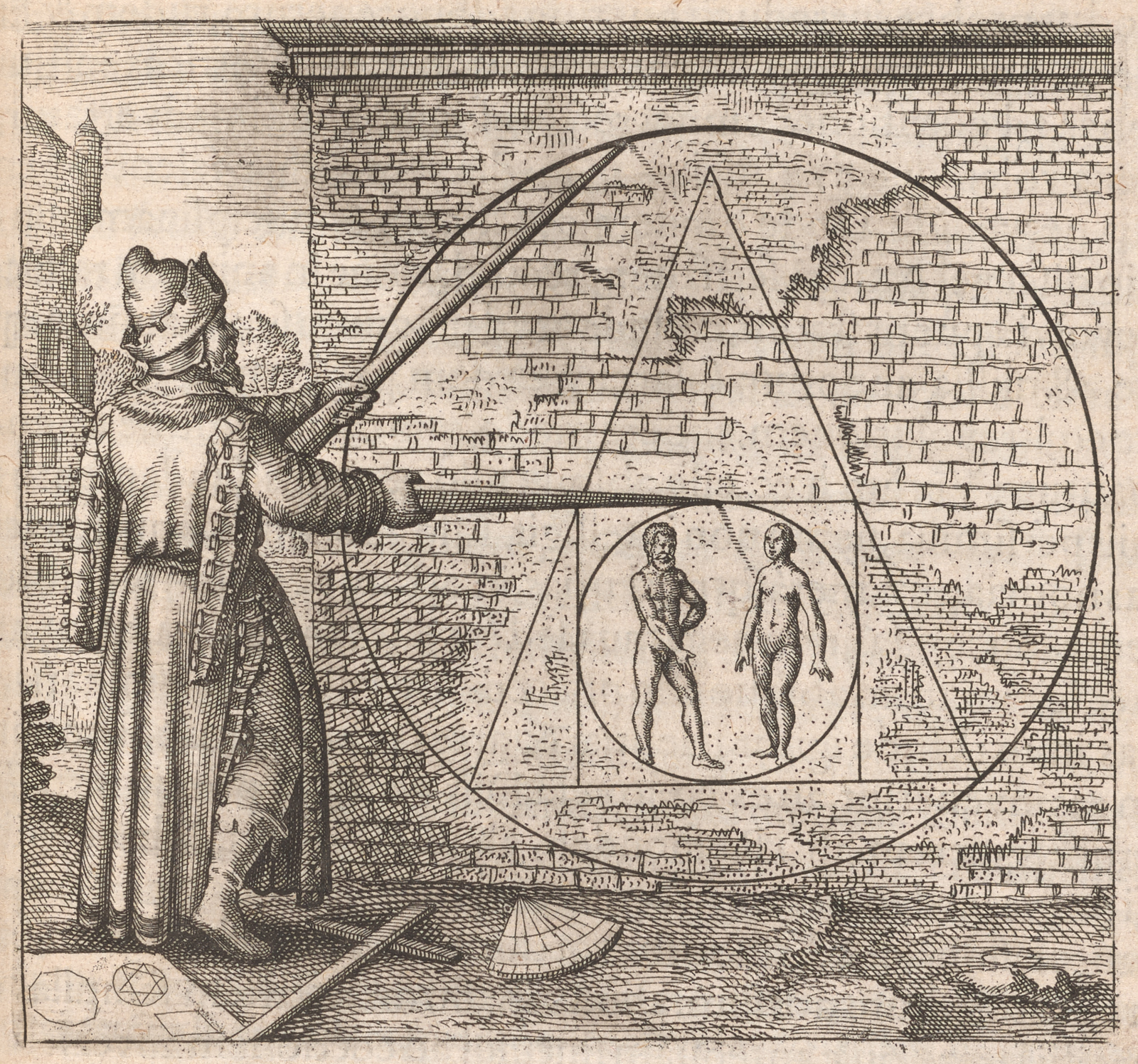
Emblem XXI — Circle-square-triangle-circle formulaRUBEDO
Make a circle out of a man and a woman, out of this a square, out of this a triangle, make a circle, and you will have the Philosopher's Stone.
Epigram
Make a circle out of a man and a woman,
From which a quadrangular body arises with equal sides.
Derive from it a triangle, which is in contact on all sides with a round sphere:
Then the Stone will have come into existence.
If this great thing does not immediately present itself to your mind,
Learn all the doctrine of Geometry, and you will know everything.
Maier's Discourse
Maier develops the famous geometric formula attributed to the Rosarium Philosophorum: make a circle from a man and woman (the coniunctio of opposites), transform this into a square (the four elements), reduce the square to a triangle (the tria prima of salt, sulphur, and mercury), and finally resolve the triangle back into a circle (the unified philosopher's stone). He argues that this sequence encodes the entire alchemical opus in geometric form, drawing on Platonic philosophy to connect ideal mathematical forms to material transformations. The discourse cites the principle of squaring the circle — an impossibility in mathematics but achievable in alchemy — as evidence that the philosophical art transcends ordinary reason.
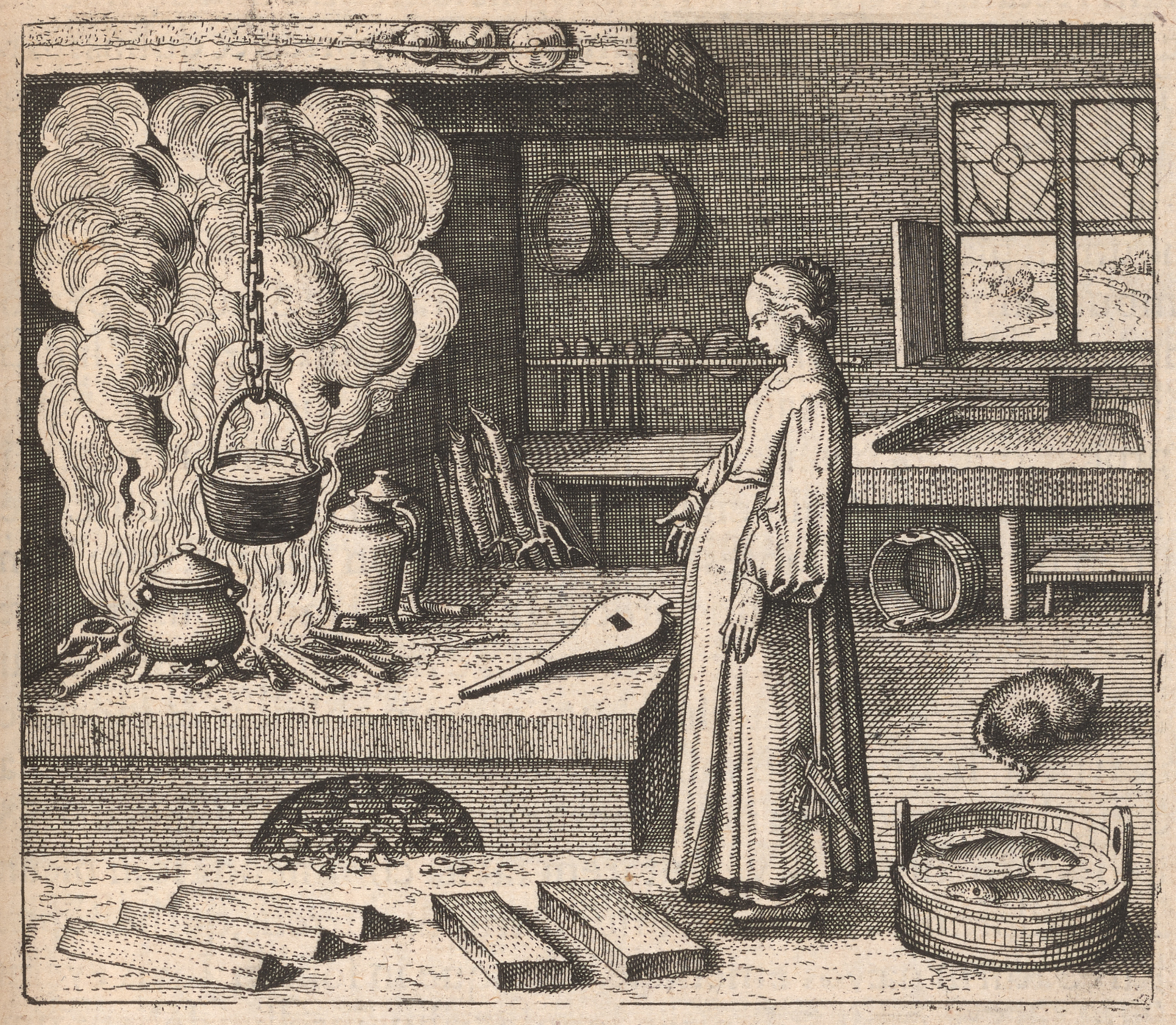
Emblem XXII — Emblem XXIIALBEDO
When you have obtained the white lead, then do woman's work, that is to say: cook.
Epigram
Whoever wants to achieve much with little trouble
Should throw snow in Saturn's belly.
When you have obtained the white lead,
Then do woman's work, that is to say: cook.
Patience and steady warmth are all you need;
The rest Nature will accomplish for you.
Maier's Discourse
Maier instructs that once the white lead (the product of the albedo) has been obtained, the alchemist must perform 'women's work' — that is, cook the substance with steady, patient heat. He develops cooking as the central metaphor for the post-albedo operations, arguing that the white substance must be slowly heated and matured, just as food is transformed by cooking from raw to nourishing. The discourse emphasizes patience and temperature control: the philosophical substance must simmer, not boil. Maier draws on the herms — three-forked road markers — as guides that show the way to straying travelers, an allegory for the textual guideposts left by earlier alchemists.
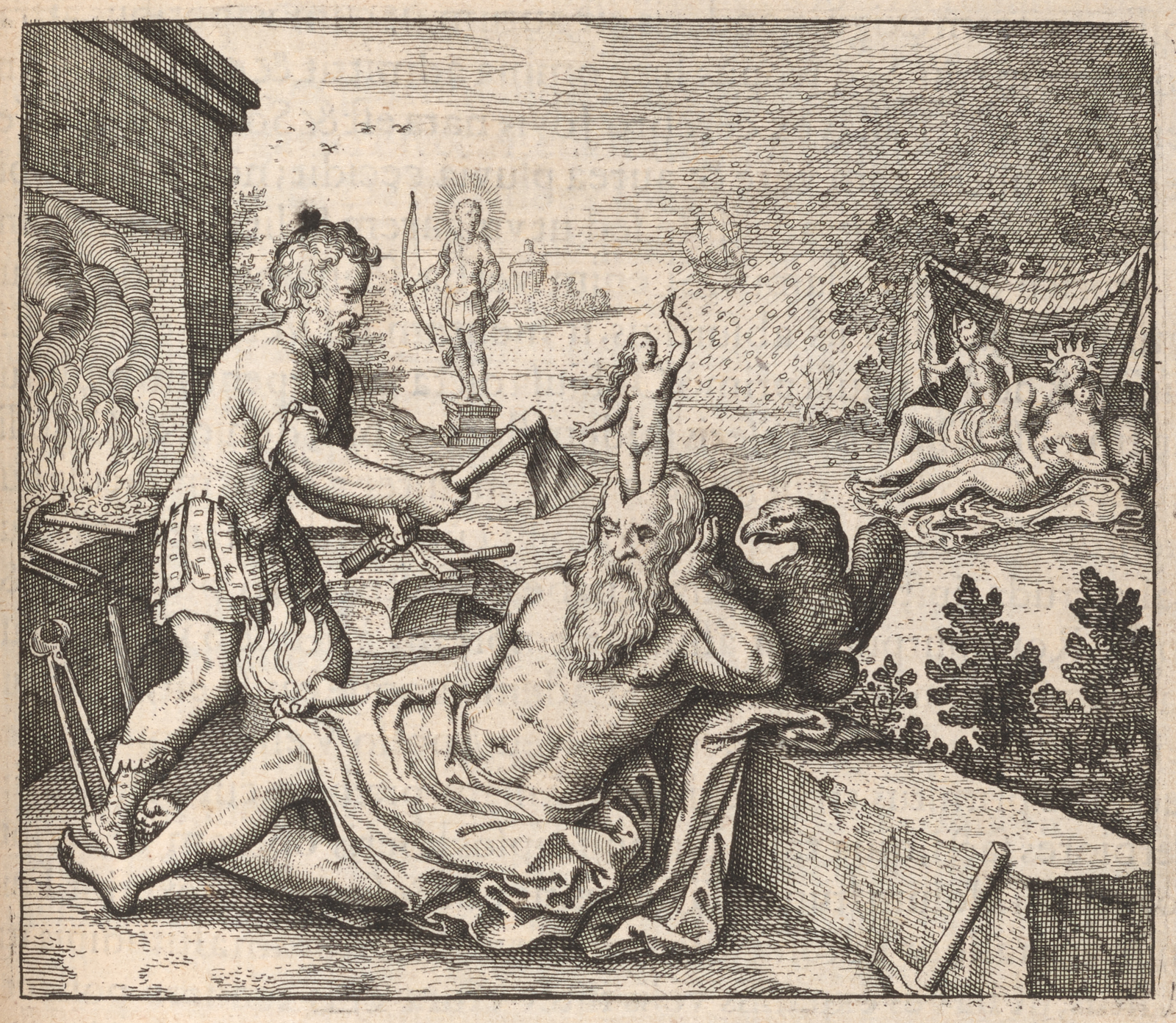
Emblem XXIII — Emblem XXIIICITRINITAS
It rains gold when Pallas is born at Rhodes.
Epigram
When Pallas was born on the island of Rhodes,
It rained gold upon the citizens.
If you wish for golden rain in your work,
Let the sun-god join with Venus,
And from their conjunction golden drops will fall,
More precious than any earthly treasure.
Maier's Discourse
Maier develops the mythological tradition that golden rain fell on Rhodes when Pallas Athena was born from the head of Zeus, interpreting this as an allegory for the moment when the philosophical gold descends or precipitates during the citrinitas stage. He argues that just as Athena emerges fully armed and wise from the mind of the supreme deity, the philosopher's stone appears fully potent when the right conditions are met — it is not assembled gradually but manifests suddenly. The discourse connects the golden rain to the 'golden shower' of Zeus and Danae, weaving multiple classical myths into a single alchemical reading of divine gold falling from the heavens as precipitation of the tincture.
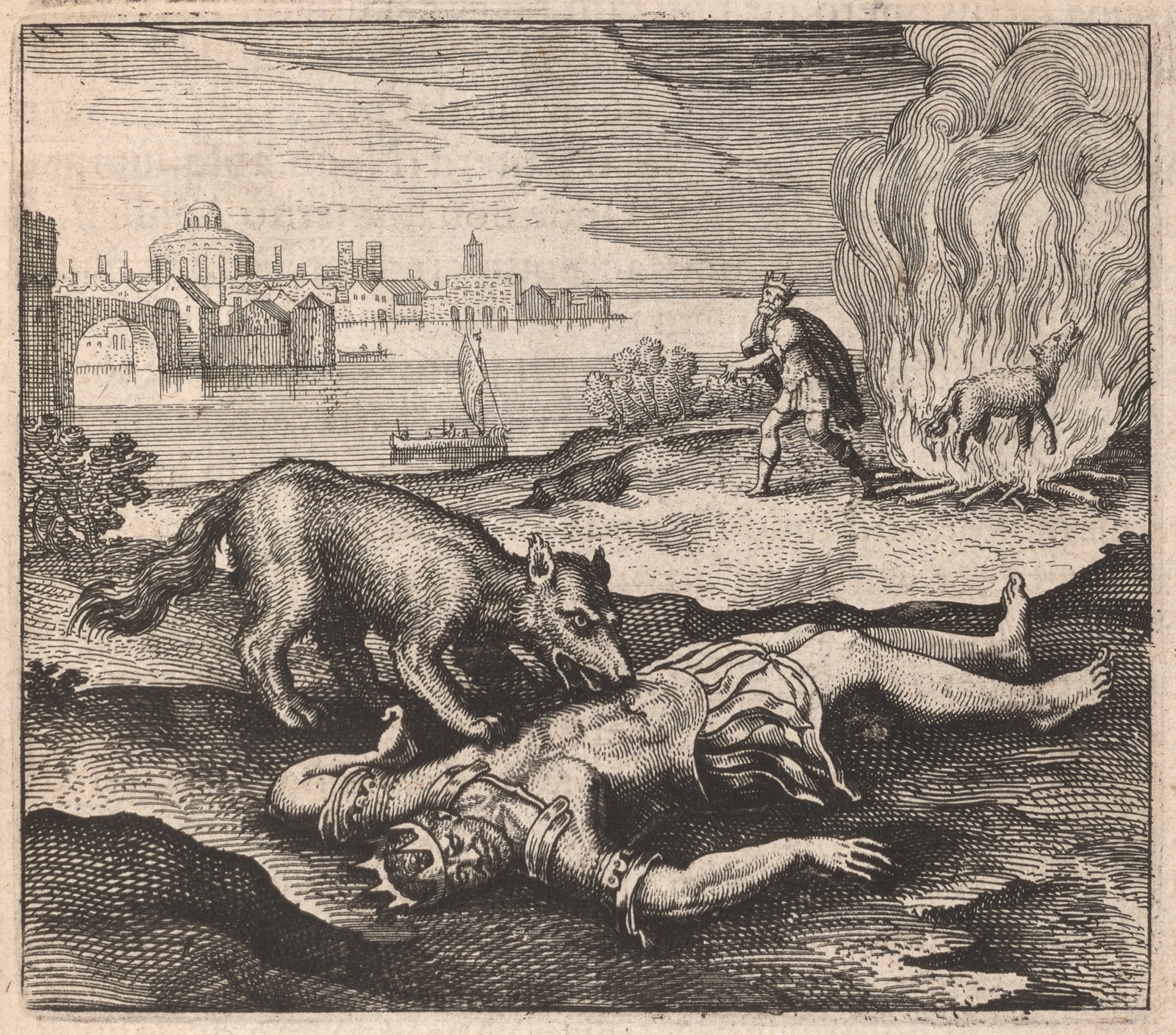
Emblem XXIV — Alchemical King (garbed)NIGREDO
The wolf devoured the king, and after the wolf had been burnt, it returned the king to life.
Epigram
The voracious wolf devoured the king,
Then was thrown upon a funeral pyre.
In the consuming fire the wolf perished,
But the king returned to life, restored and young.
Thus through sacrifice and fire
The tincture is prepared that cures all disease.
Maier's Discourse
Maier narrates a two-stage allegory: the wolf devours the king (antimony dissolves gold), then the wolf is burned, returning the king to life purified and renewed. He develops this as the central nigredo-to-rubedo sequence: the base, voracious substance (the wolf/antimony) must consume the noble but impure metal (the king/gold), and then the consuming agent it self must be destroyed by fire to liberate the purified king. The discourse draws on the metallurgical practice of antimony refining, where antimony sulphide is used to extract and purify gold from alloys. Maier cites this as one of the most practically grounded of all alchemical allegories, noting that the wolf's voracity is well known in natural history.
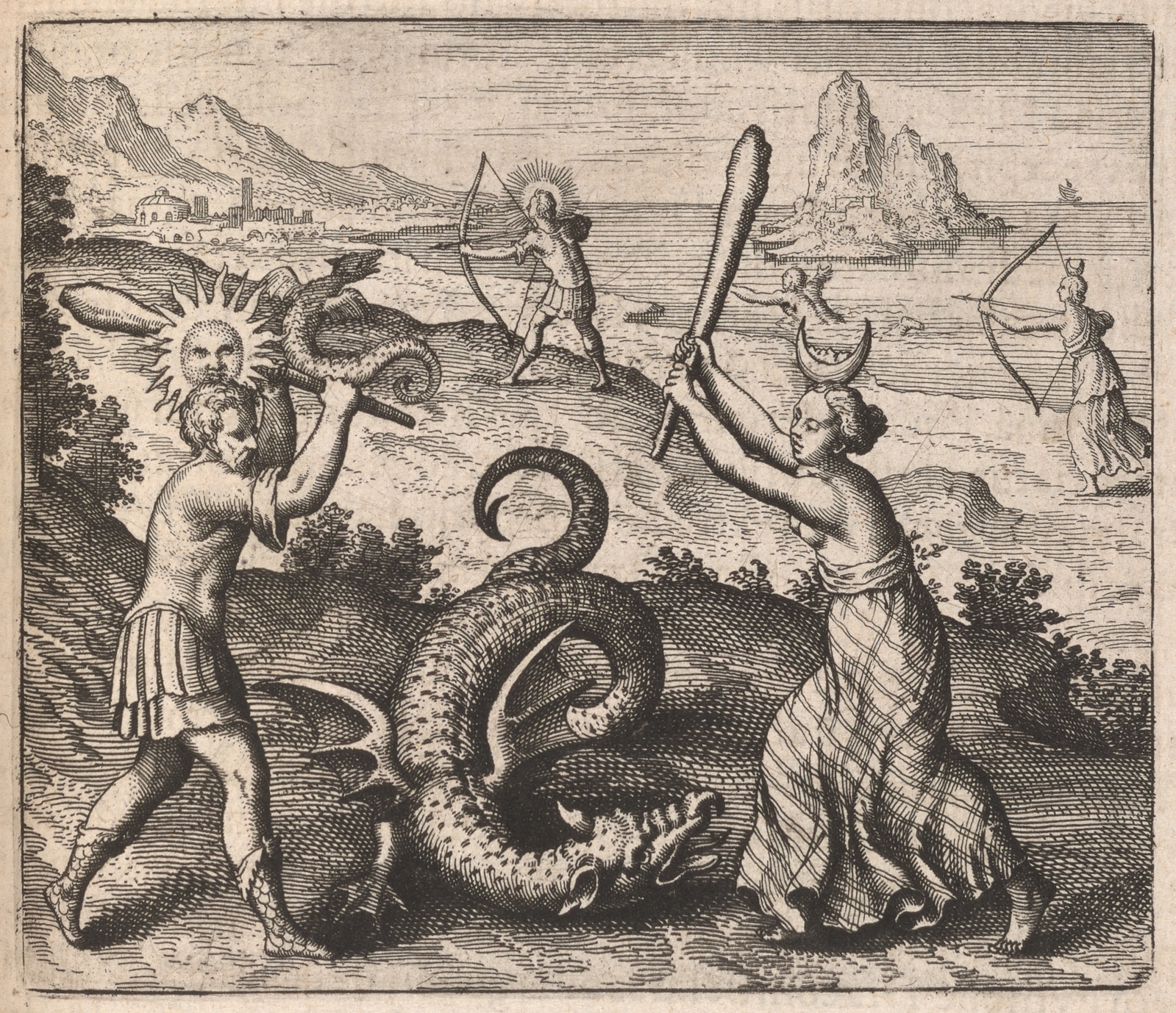
Emblem XXV — Emblem XXVNIGREDO
The Dragon does not die, if it is not killed by its brother and sister, that is to say by Sol and Luna.
Epigram
The Dragon does not die, if it is not killed
By its brother and sister, that is to say by Sol and Luna.
Two must join together to slay the third;
Neither alone can accomplish the deed.
When the dragon's blood has flowed,
The golden treasure lies revealed.
Maier's Discourse
Maier argues that the philosophical dragon — the unreformed prima materia — can not be killed by any single agent but only by the combined action of its own brother and sister, Sol and Luna (gold and silver, sulphur and mercury). He develops the myth of the Golden Fleece, where the dragon guarding the treasure must be slain before the fleece can be obtained, as an allegory for the alchemical work. The discourse cites Jason's quest and connects it to the Hermetic tradition that the Stone is guarded by a dragon that can only be overcome by substances of its own kind. Maier emphasizes that both the masculine (active, fiery) and feminine (passive, moist) principles must cooperate in this killing.
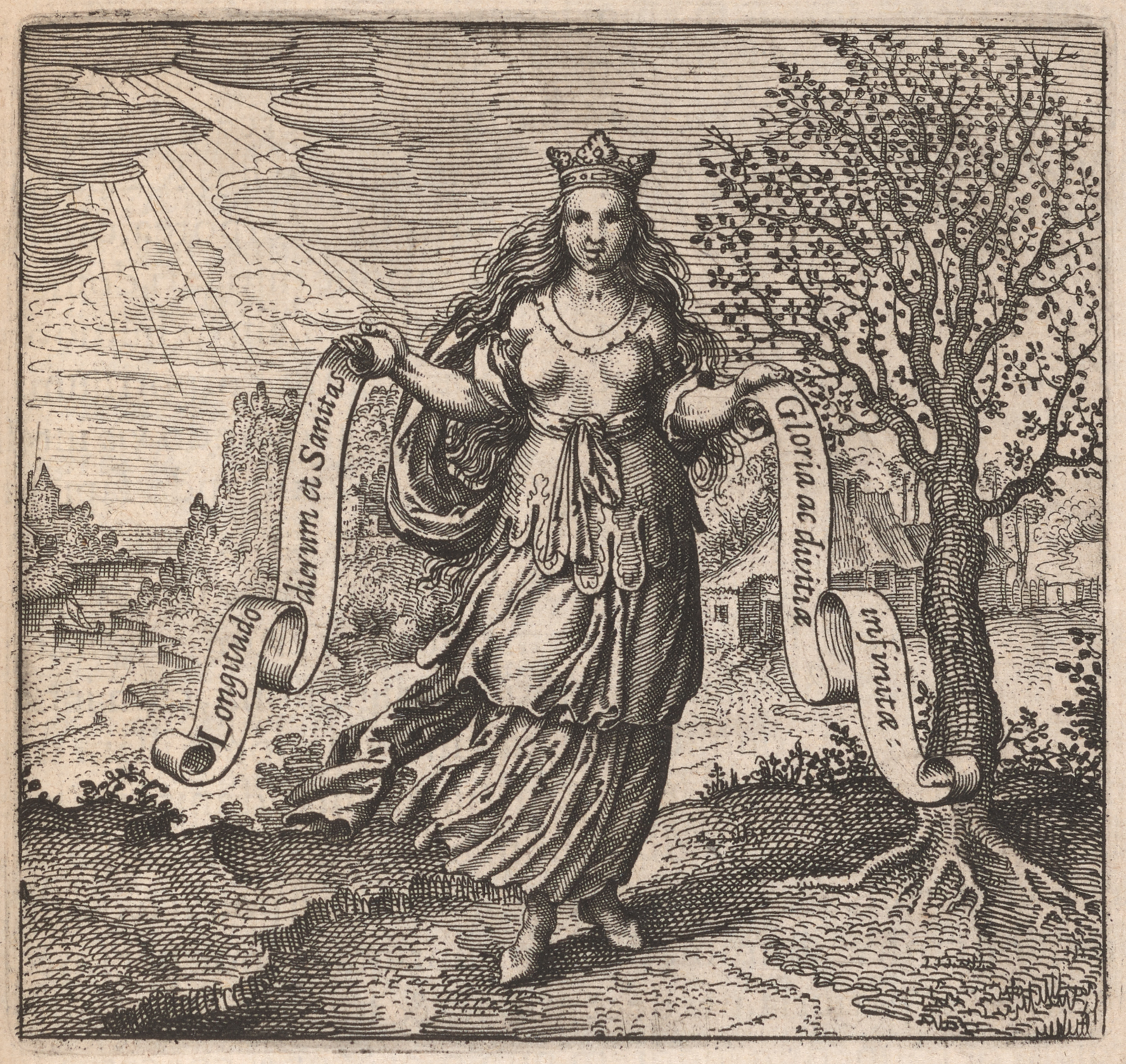
Emblem XXVI — Lady Sapientia / Tree of LifeRUBEDO
The fruit of human wisdom is the Tree of Life.
Epigram
In human affairs there is no greater wisdom
Than that from which arise wealth and health.
The fruit of human wisdom is the Tree of Life;
Whoever eats of it shall never hunger.
Seek this tree in the garden of the sages,
And you will find what the whole world desires.
Maier's Discourse
Maier identifies the fruit of human wisdom as the Tree of Life it self, arguing that the philosopher's stone is the true 'wood of life' sought by sages across all traditions. He draws on Cicero's distinction between humans and animals — that only humans possess reason and the capacity for philosophical inquiry — to argue that alchemy is the highest expression of rational wisdom applied to Nature. The discourse connects the Tree of Life to the biblical Garden of Eden, the Hesperides, and the alchemical tradition of the arbor philosophica — the philosophical tree whose roots are mercury and whose fruit is gold. Maier presents this emblem as marking the rubedo: the tree has borne its fruit, wisdom has been attained.
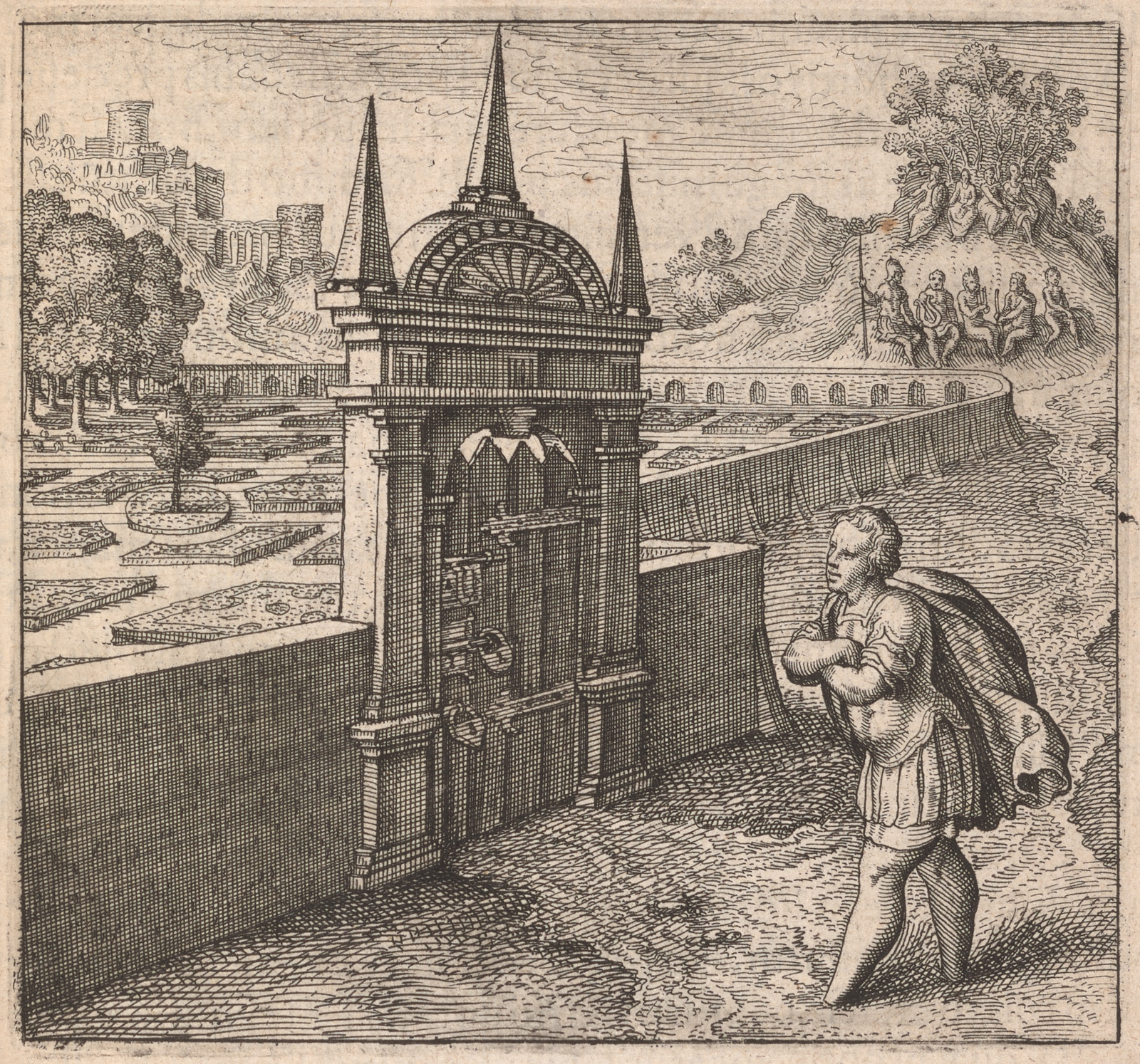
Emblem XXVII — Companion to Sapientia sequenceCITRINITAS
He who tries to enter the Philosophical Rose-garden without the key is like a man who wants to walk without feet.
Epigram
He who tries to enter the Philosophical Rose-garden without the key
Is like a man who wants to walk without feet.
The gate is locked with strong bolts;
Only the prepared may enter.
Three things are needed: patience, knowledge, and labor.
Without these, the garden remains forever closed.
Maier's Discourse
Maier argues that attempting to enter the Philosophical Rose-garden without the proper key is as futile as trying to walk without feet. He develops this as a warning against shortcuts in the alchemical work: the three 'cooking' or 'consuming' processes that occur in the human body — digestion in the stomach, refinement in the liver, and distribution through the blood — mirror the three stages of alchemical preparation that can not be by passed. The discourse grounds this in Old Testament wisdom literature, connecting the rose-garden to the Song of Songs and the Solomonic tradition of enclosed gardens as figures for hidden wisdom accessible only through proper preparation.
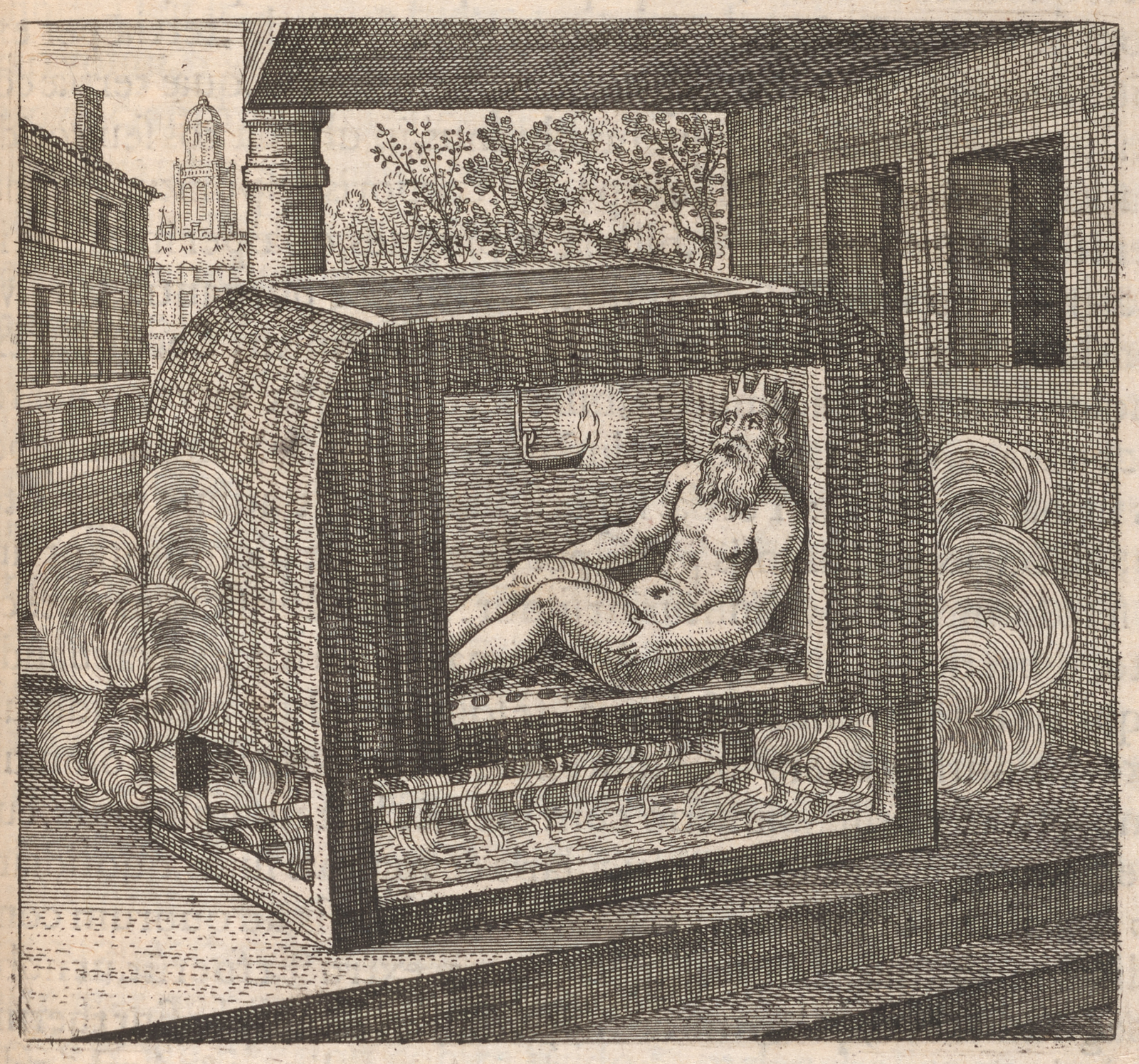
Emblem XXVIII — King Duenech in steam bathNIGREDO
The king is bathed, sitting in a steam-bath, and is freed from the black bile by Pharut.
Epigram
The king is bathed, sitting in a steam-bath,
And is freed from the black bile by Pharut.
In the warmth of the moist vapors
The saturnine corruption is expelled.
The physicians attend him with care,
Until health returns to the royal body.
Maier's Discourse
Maier develops the Allegoria Merlini's narrative of King Duenech, who is bathed in a steam-bath to purge the black bile that ails him. He argues that the king represents philosophical gold in its impure state, and the bath is the vessel in which dissolution occurs: the black bile is the nigredo impurity that must be expelled through gentle, sustained heat. The discourse connects this to the Merlini tradition's account of royal purification, where the king's illness is cured not by violent means but by the patient application of warm moisture. Maier cites the medical practice of therapeutic bathing as a parallel, drawing on his own training as a physician to validate the alchemical analogy.
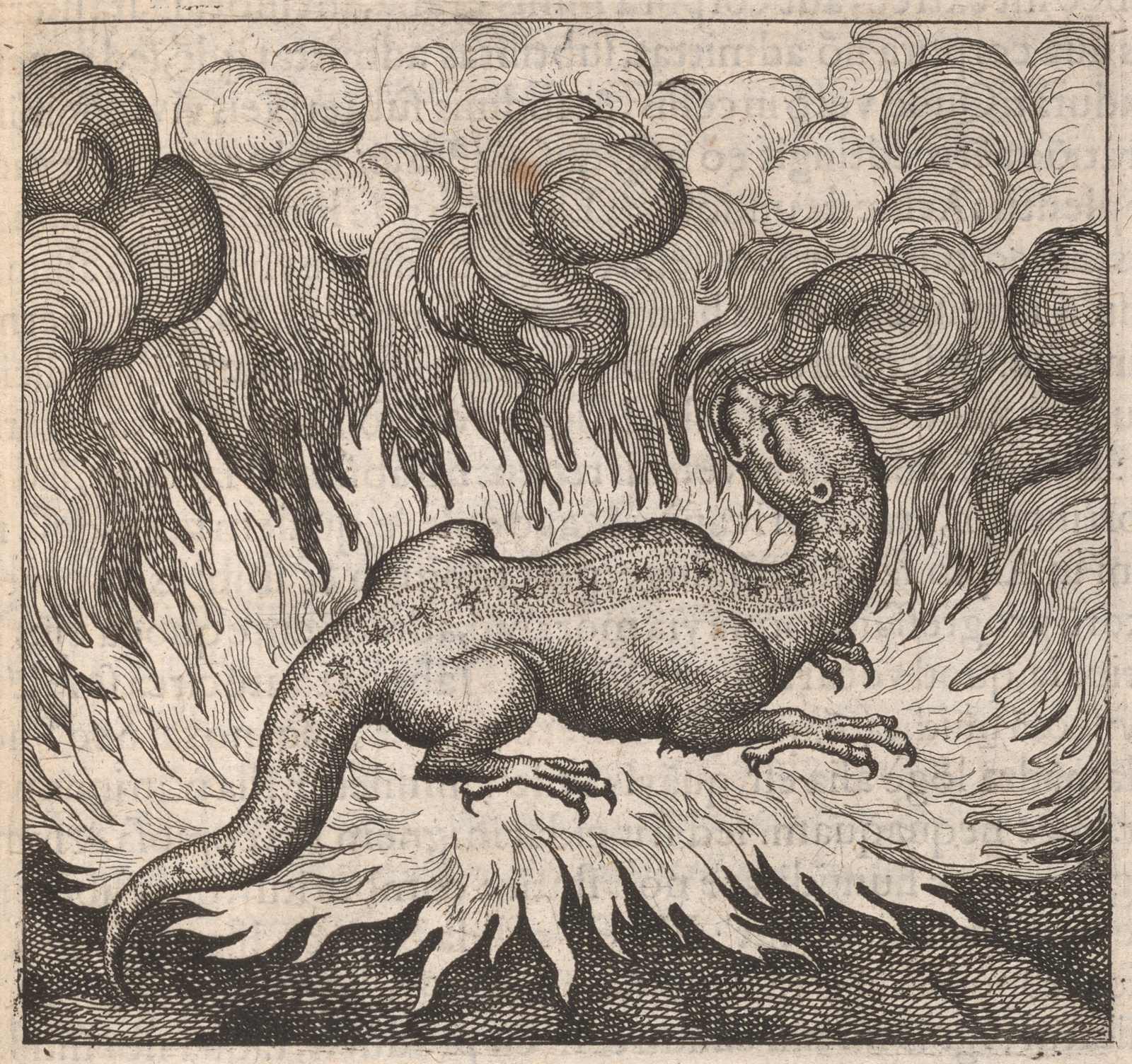
Emblem XXIX — Emblem XXIXCITRINITAS
Just as the Salamander lives in the fire, so also the Stone.
Epigram
Just as the Salamander lives in the fire
And is not consumed by the flames,
So also the Stone endures the test of fire,
Growing stronger where other things perish.
What fire cannot destroy is truly fixed;
This is the mark of the perfected substance.
Maier's Discourse
Maier develops the ancient belief that the salamander lives in fire without being consumed, applying it as an allegory for the philosopher's stone, which endures the test of fire and emerges unchanged or improved. He argues that just as the salamander is nourished rather than destroyed by flames, the perfected stone with stands any degree of heat — a key test of its authenticity. The discourse connects this to the broader principle of fixation: a substance is 'fixed' when it can endure fire without volatilizing. Maier cites classical natural historians including Pliny on the salamander's fire-resistance, while noting that the philosophical salamander transcends the merely natural creature.
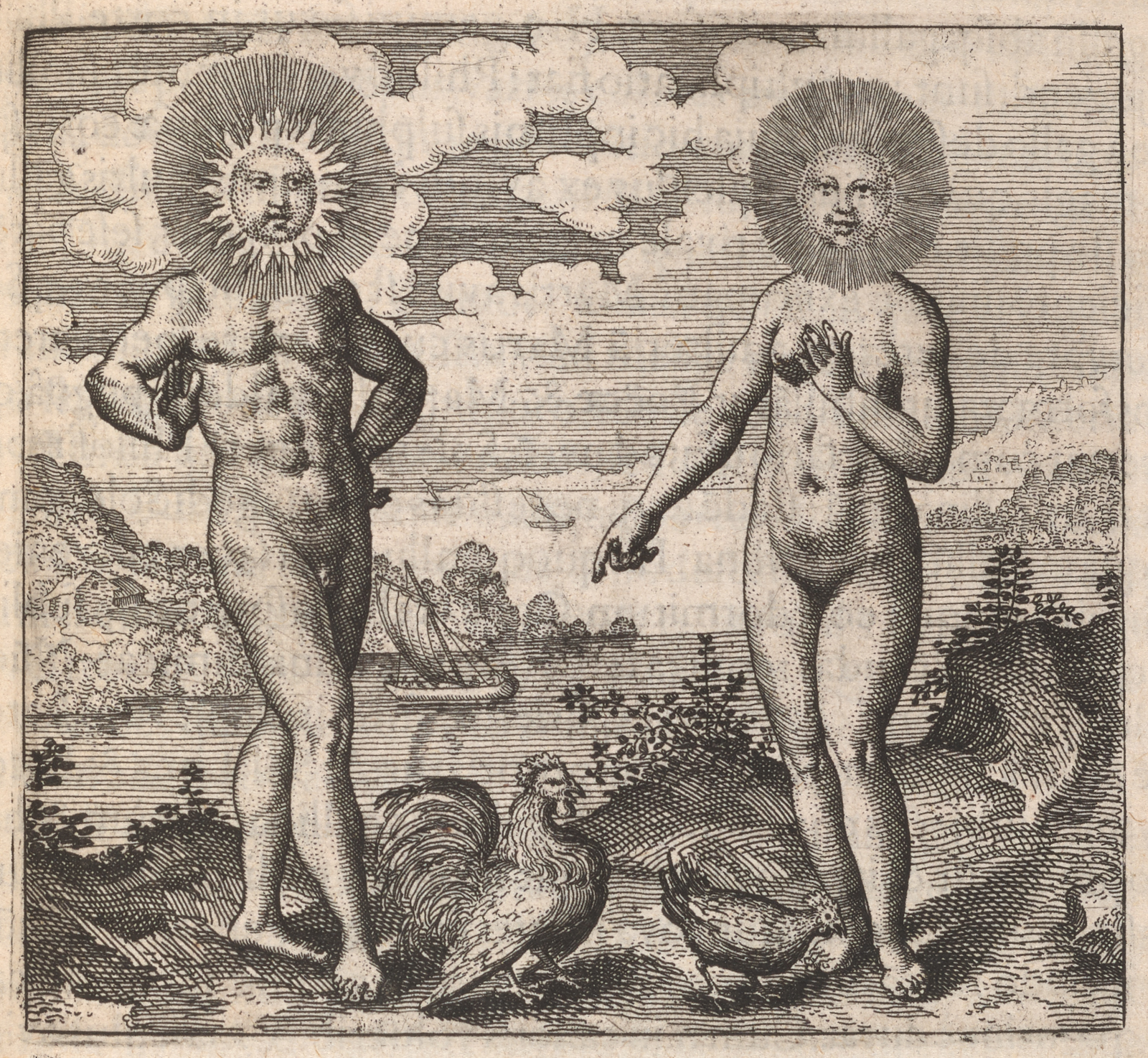
Emblem XXX — Emblem XXXRUBEDO
The Hermaphrodite, lying in darkness like a dead man, needs fire.
Epigram
The Hermaphrodite, lying in darkness like a dead man,
Needs fire to be brought back to life.
Without warmth, the joined substance lies inert;
With it, the union stirs and breathes.
Born of two mountains, of Mercury and Venus,
The Rebis awaits the alchemist's art.
Maier's Discourse
Maier argues that the Hermaphrodite — the unified philosophical substance combining masculine and feminine principles — lies inert in darkness until awakened by fire. He develops this as an allegory for the transition from nigredo (the death-like darkness) to the active stages of the work: the combined substance has been successfully joined but remains dormant until heat reactivates it. Drawing on the myth of the Hermaphrodite born from the two mountains of Mercury and Venus, Maier connects the figure to Morienus's teaching that the Rebis (the 'two-thing') is found not in books but through living masters. The discourse frames the Hermaphrodite as the philosophical Mercury's two-topped Parnassus, where Apollo and the Muses reside.
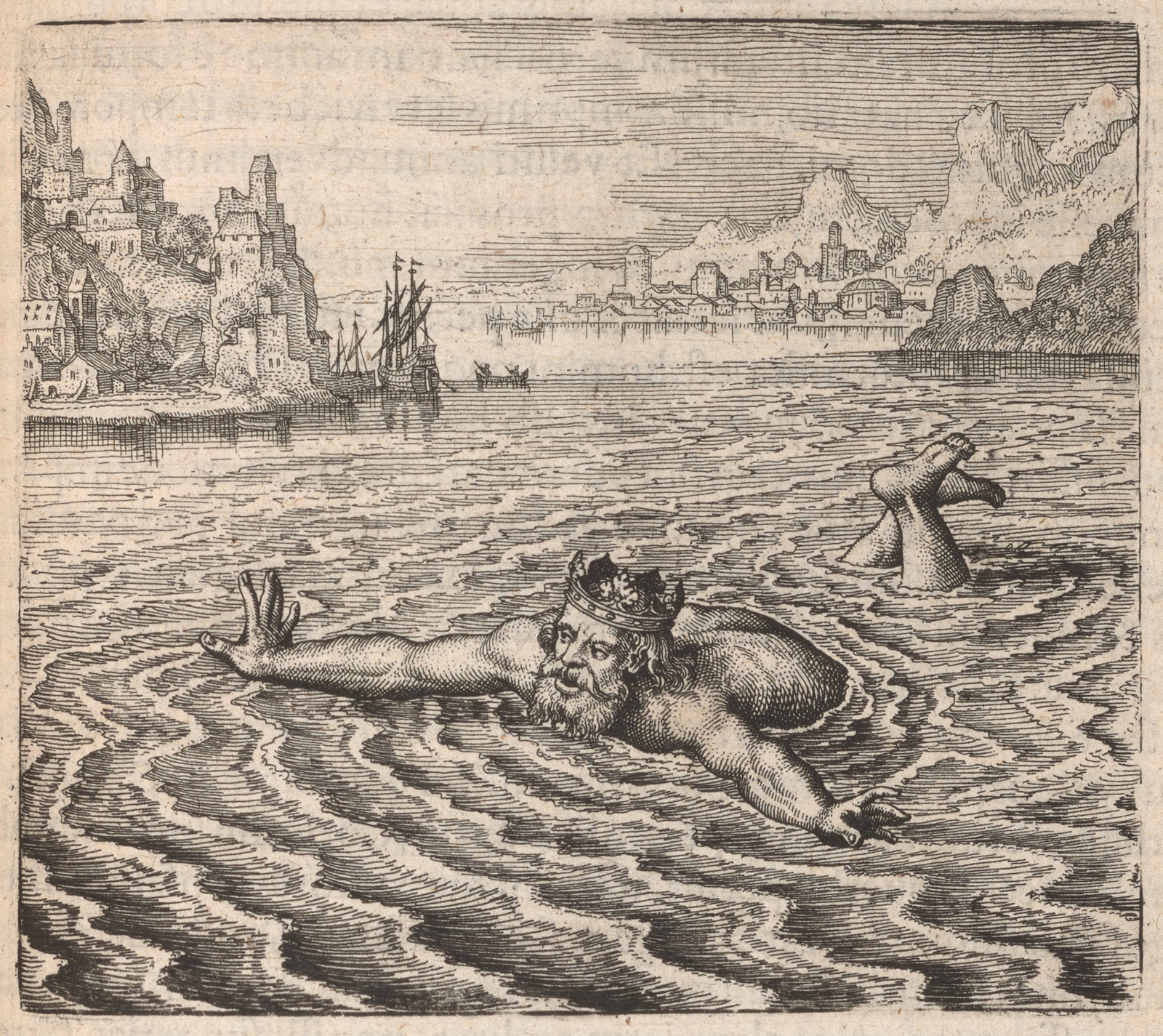
Emblem XXXI — King transformation continuedRUBEDO
The king, swimming in the sea, calling in a loud voice: He who saves me will receive a great reward.
Epigram
The king, on whose head the crown pressed heavily,
Swims in the wide sea and continually cries:
He who saves me will receive a great reward.
If you can rescue the king from the deep,
He will repay you many times over;
For the stone multiplies in the hands of the worthy.
Maier's Discourse
Maier recounts the allegory of the king swimming in the sea who cries out that whoever saves him will receive a great reward. He develops this as a figure for philosophical gold dissolved in the mercurial sea — the noble substance submerged in the volatile solvent, needing to be rescued through fixation. The discourse argues that the king's promise of reward represents the multiplication of the stone: whoever successfully extracts and fixes the dissolved gold will be repaid many times over. Maier connects this to the broader tradition of the 'vegetable stone' that grows and multiplies like a living thing once properly fixed and nourished.
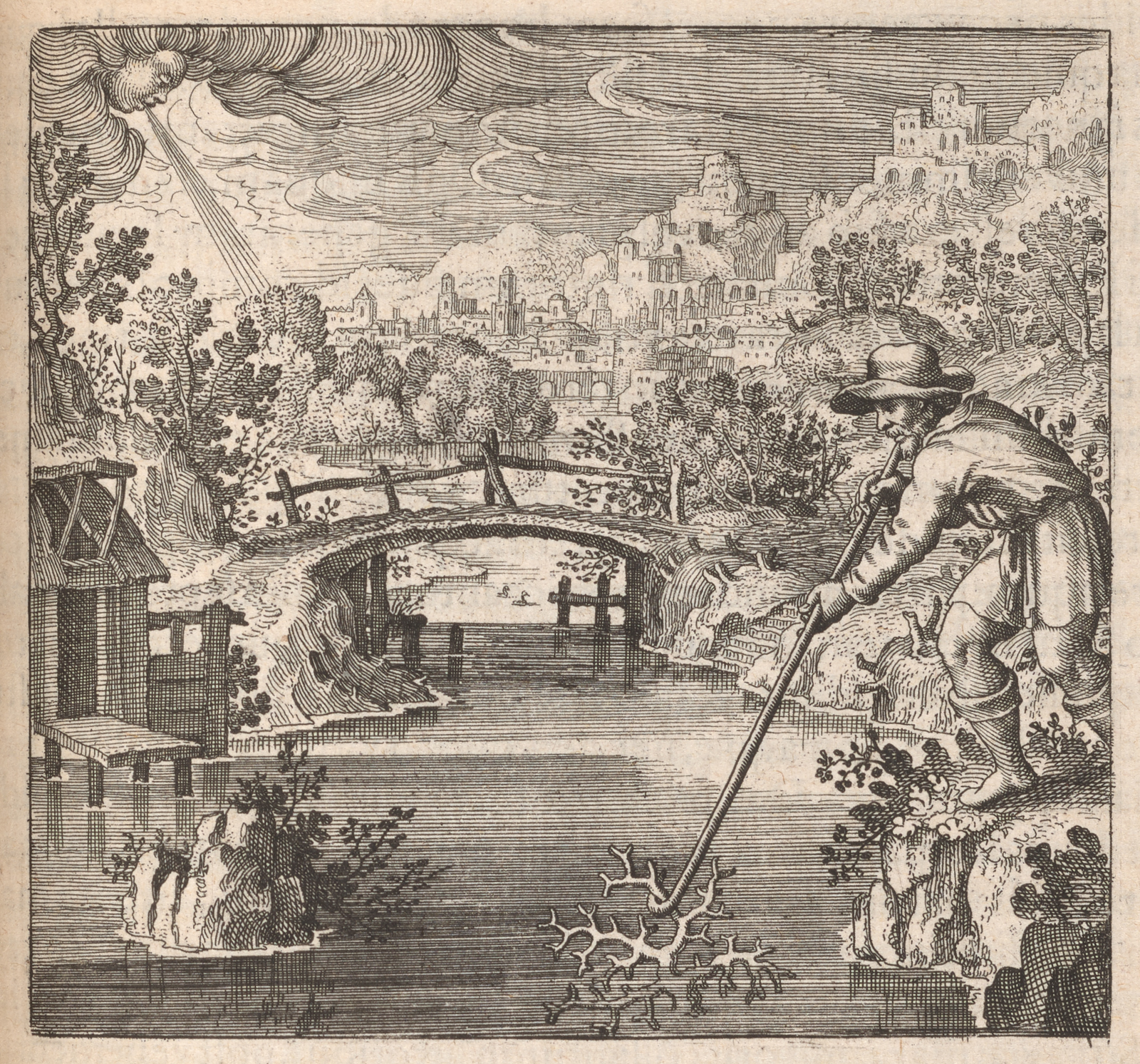
Emblem XXXII — Emblem XXXIIRUBEDO
As coral grows under water and, exposed to the air, gets hard, so also the Stone.
Epigram
As coral grows underwater,
Soft and plant-like in the liquid depths,
And exposed to the air gets hard as stone,
So also the substance of the philosophers:
Fluid in the vessel during preparation,
It solidifies into the permanent Stone.
Maier's Discourse
Maier draws on the natural history of coral — soft and plant-like under water but hardening to stone when exposed to air — as an analogy for the philosopher's stone, which is fluid and mutable during preparation but becomes fixed and permanent once complete. He argues that this natural transformation demonstrates the possibility of a substance changing its fundamental state without losing its essential nature. The discourse connects coral's petrifaction to the alchemical fixation process, where the volatile philosophical substance 'hardens' through exposure to air (the volatile spirit) just as coral solidifies above the water line. Maier cites this as evidence that the rubedo — the final reddening — involves a transition from fluid process to solid product.
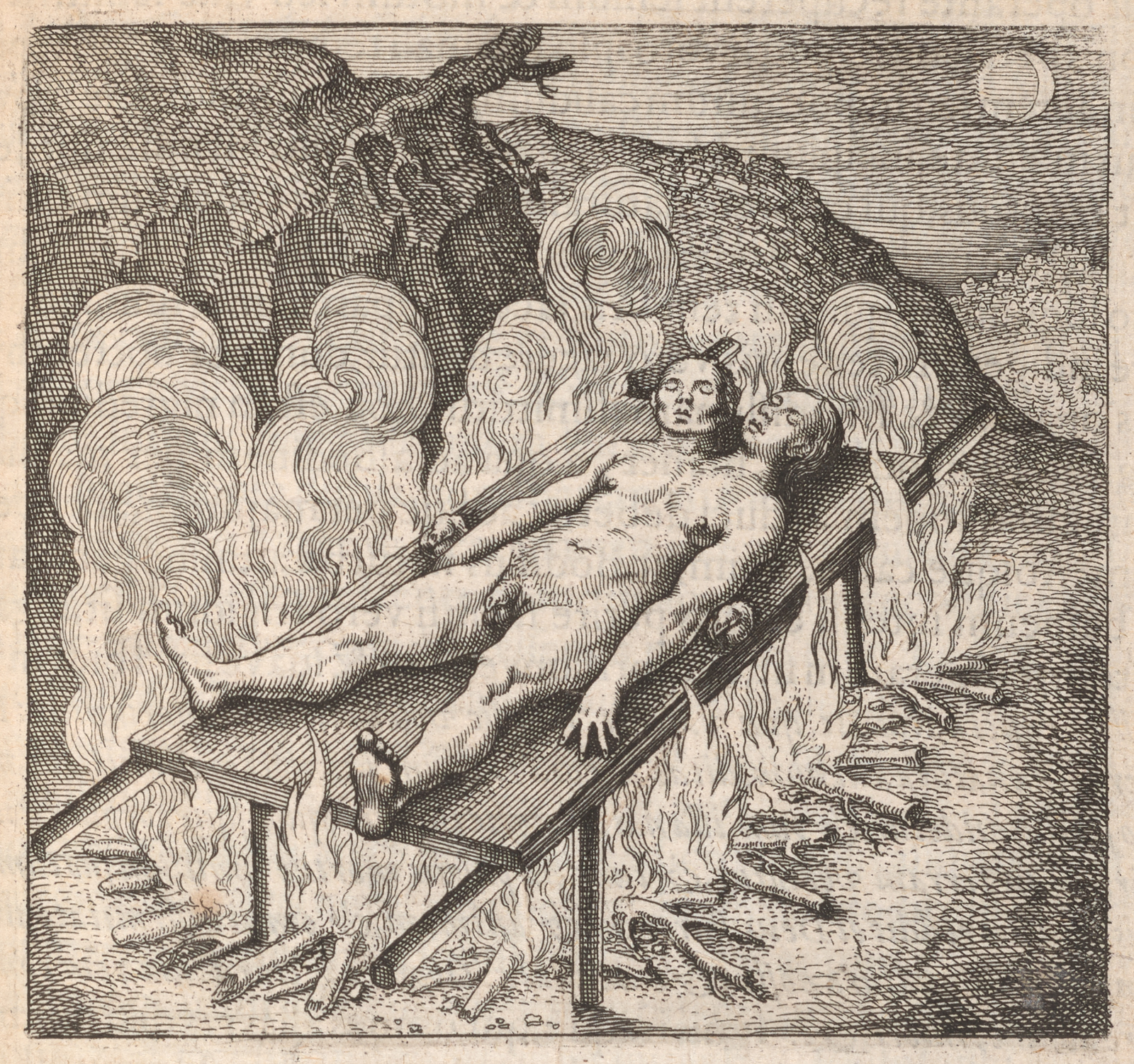
Emblem XXXIII — Hermaphrodite lying in darkness needs fireNIGREDO
The Hermaphrodite, lying in darkness like a dead man, needs fire.
Epigram
He is conceived in the bath,
And born in the air;
Having become red, he walks upon the waters.
The Hermaphrodite, child of Sun and Moon,
Unites the virtues of both parents,
And rules over the kingdoms of Nature.
Maier's Discourse
Maier returns to the Hermaphrodite-in-darkness motif, now explicitly connecting it to the practice of ritual purification through fire and water. He argues that divine origin was ascribed to certain individuals in antiquity through a process of trial — passing through fire and water — and that the Hermaphrodite must undergo the same or deal. The discourse develops the parallel between baptism (purification by water) and calcination (purification by fire) as the two modes of cleansing that the combined philosophical substance must endure. Maier frames the darkness as a necessary passage: the substance must die fully before it can be reborn in the rubedo.
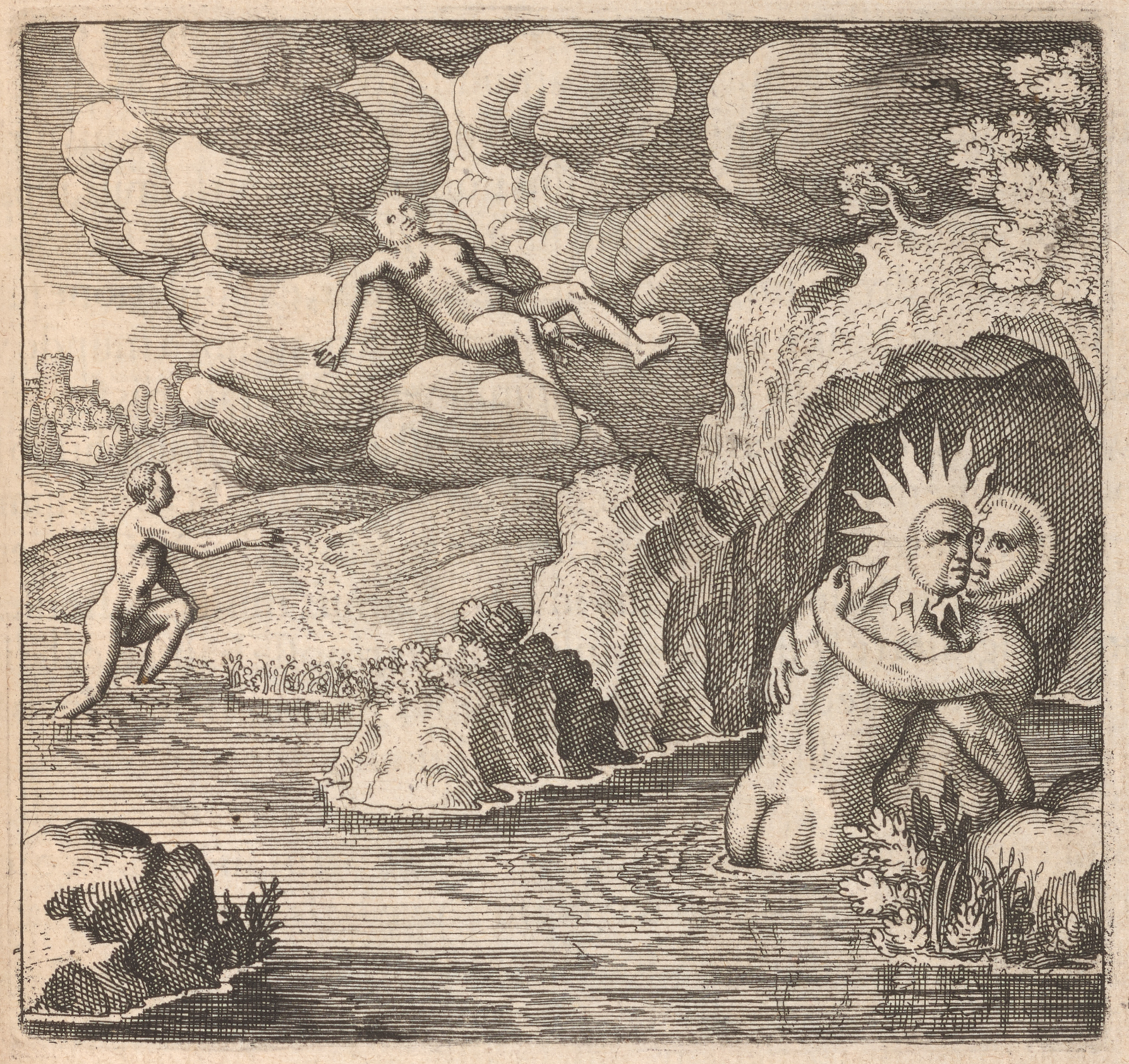
Emblem XXXIV — Celestial conception / hierogamyRUBEDO
He is conceived in the bath and born in the air, but having become red he walks upon the waters.
Epigram
He is conceived in the bath and born in the sky,
But having become red, he walks upon the waters.
From the sacred marriage of heaven and earth
The divine child descends,
Bearing the power to transform all things
From imperfection to perfection.
Maier's Discourse
Maier develops the motto — 'He is conceived in the bath and born in the air' — as an allegory for the philosophical substance that begins in the liquid phase (conception in the bath) and emerges in the aerial or volatile state (birth in the air), before finally walking upon the waters as a perfected, red tincture. He argues that this threefold progression — liquid, aerial, solid — mirrors the three stages of generation in nature. The discourse connects the celestial conception to the Hermetic doctrine of 'as above, so below,' with the heavenly hierogamy producing its earthly analogue in the alchemist's vessel. Maier frames this as the rubedo moment: the substance has been perfected and can now act upon lesser metals.
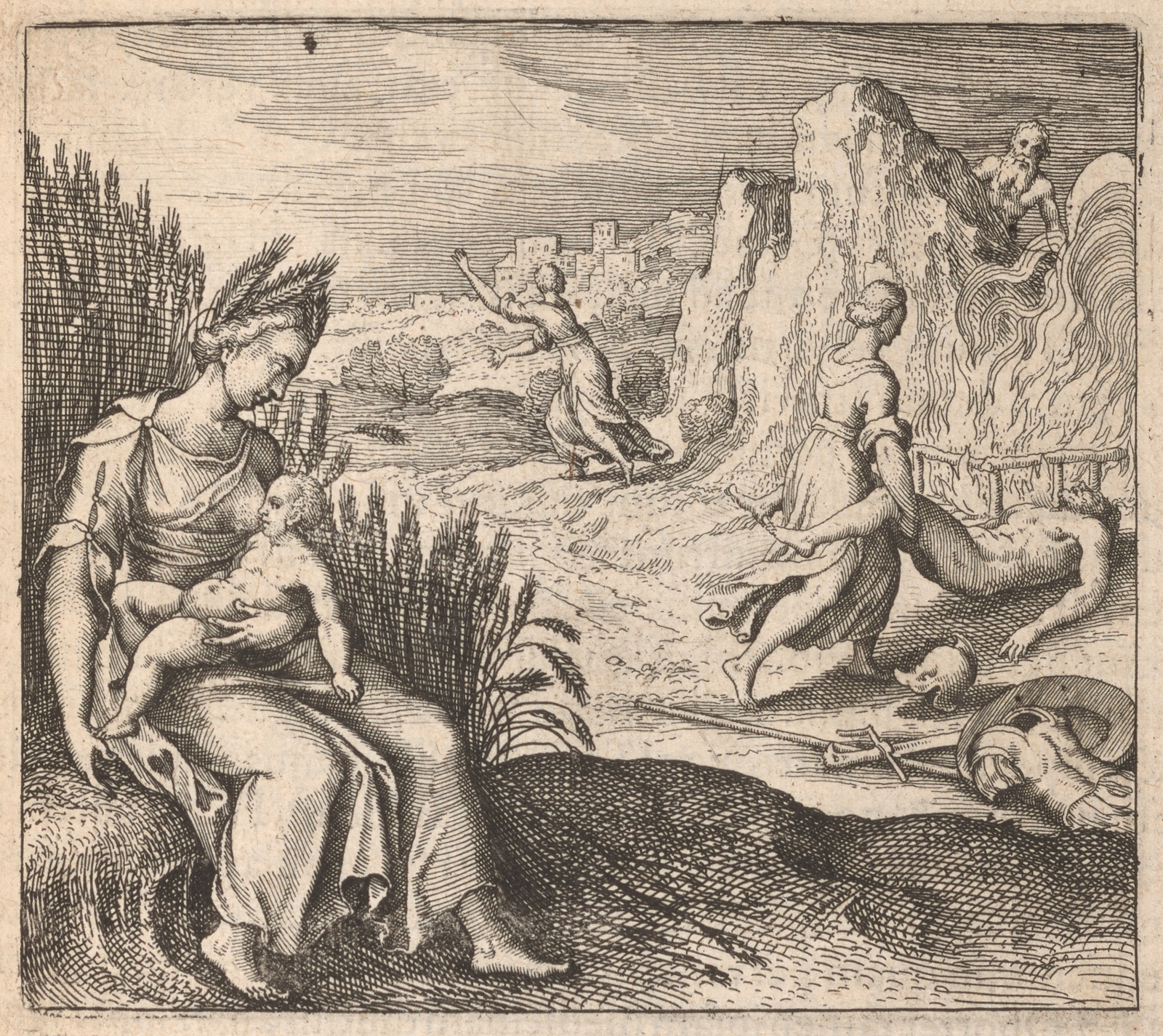
Emblem XXXV — Emblem XXXVALBEDO
As Ceres accustomed Triptolemus, and Thetis Achilles, to endure fire, so the artist does with the Stone.
Epigram
As Ceres accustomed Triptolemus to endure fire,
And Thetis hardened Achilles in the flames,
So the artist tempers the Stone:
Gradually, patiently, with repeated applications.
What does not kill the substance makes it stronger;
The child of fire becomes invulnerable.
Maier's Discourse
Maier draws on two parallel myths — Ceres hardening Triptolemus in fire and Thetis dipping Achilles in the Styx — to argue that the philosopher's stone, like a divine child, must be tempered through exposure to fire to achieve its full power. He develops the principle that what does not kill the substance makes it stronger, drawing an explicit parallel between mythological fire-baptism and the alchemical calcination that hardens and fixes the volatile components. The discourse argues that the artist must follow these divine mothers' example, applying fire gradually and repeatedly rather than all at once, to produce a substance that endures any test.
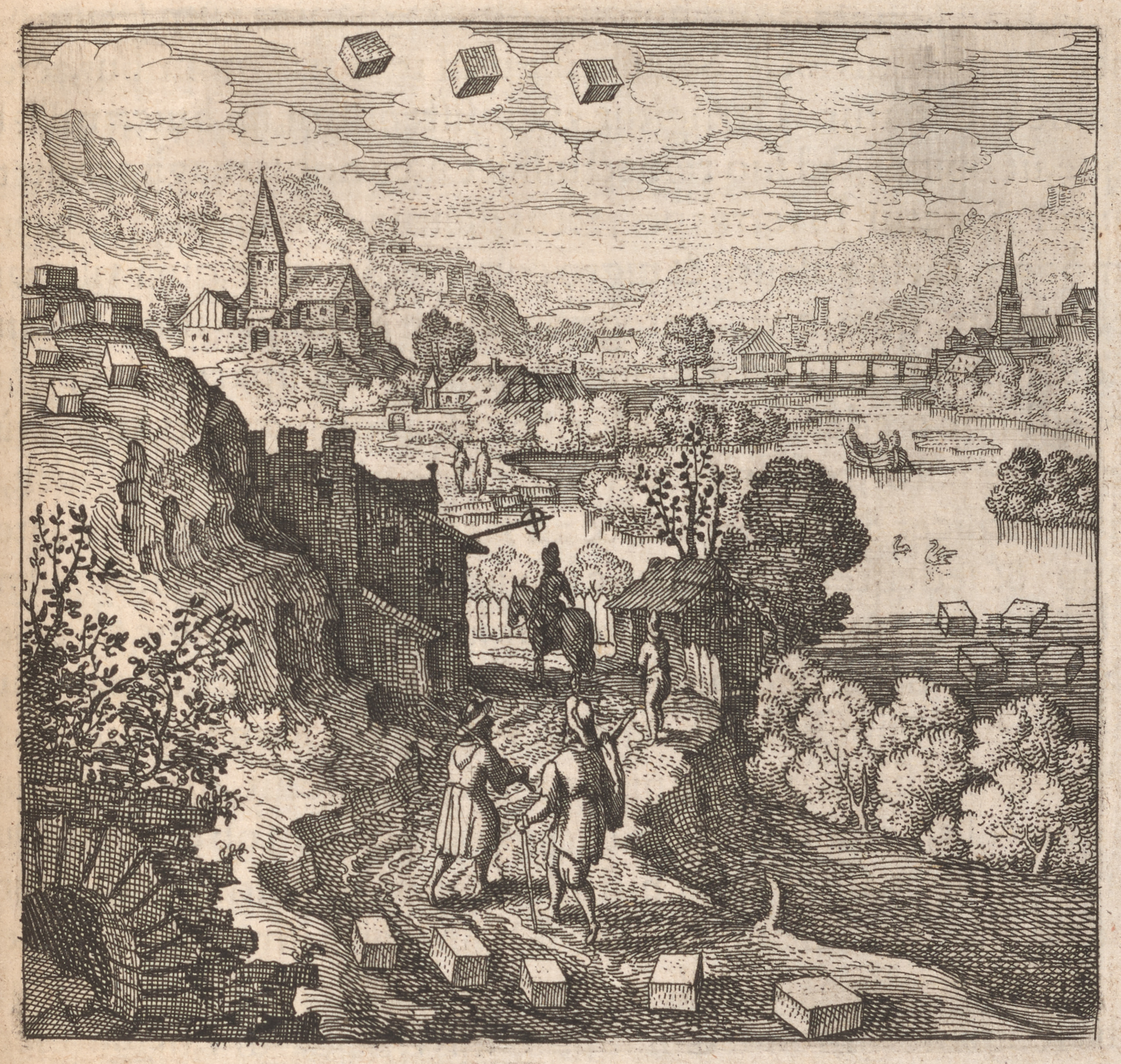
Emblem XXXVI — Emblem XXXVINIGREDO
The Stone has been thrown on to the earth and lifted on to the mountains, and it dwells in the air and feeds in the river.
Epigram
The Stone has been thrown onto the earth,
And lifted onto the mountains, and dwells in the air,
And feeds in the river:
It participates in all four elements,
Yet belongs wholly to none.
Despised by the many, it is treasure to the wise.
Maier's Discourse
Maier develops the paradox that the philosopher's stone has been thrown on to the earth (despised, found in humble places) yet lifted on to mountains (exalted, valued above all things). He argues that the stone dwells in the air and feeds in the river — occupying all four elements simultaneously — because it is the quintessence that participates in all elemental natures without being limited to any one. The discourse draws on the biblical metaphor of the rejected cornerstone and connects it to the alchemical tradition that the prima materia is found every where yet recognized by none. De Jong identifies a nationalistic element in Maier's treatment, connecting the earth-as-mother imagery to German territorial symbolism.
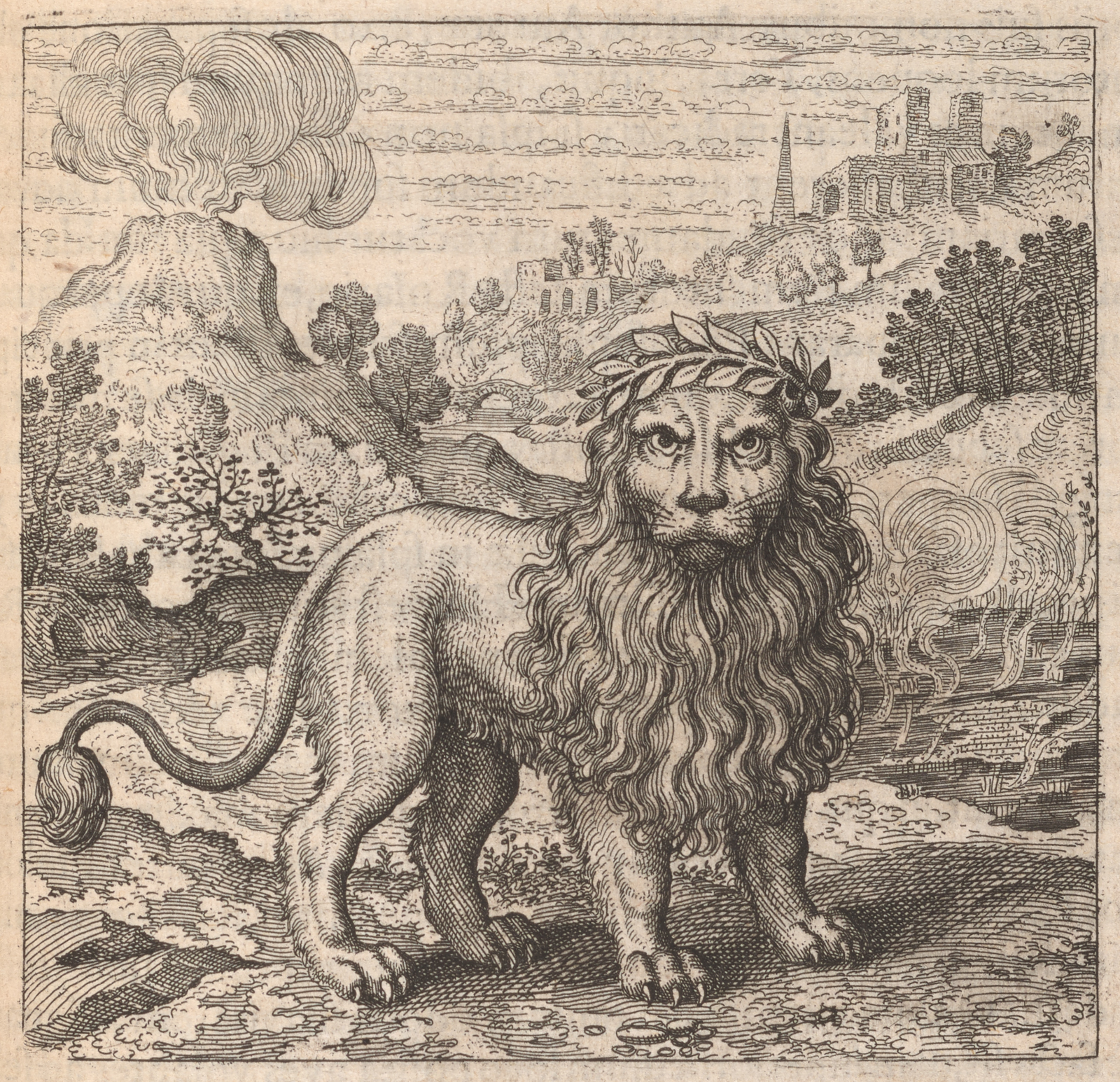
Emblem XXXVII — Emblem XXXVIICITRINITAS
Three things are sufficient for mastery: white smoke, that is water, the green Lion, that is the Ore of Hermes, and stinking water.
Epigram
Three things are sufficient for mastery:
White smoke, that is water;
The green Lion, that is the Ore of Hermes;
And stinking water.
With these three, rightly combined,
The Work may be brought to completion.
Maier's Discourse
Maier argues that mastery requires only three things: white smoke (water in its volatile form), the green lion (the raw ore of Hermes, vitriol or an impure metallic substance), and stinking water (the foul aqua foetida that dissolves metals). He develops the principle of simplicity in the art: despite the bewildering variety of alchemical texts, the practical requirements are minimal. The discourse uses the metaphor of building a house — foundation, walls, roof — to argue that the alchemist needs only three components properly combined and treated. Maier cites this triadic simplicity against the accusations of fraud and impossibility leveled at the art.
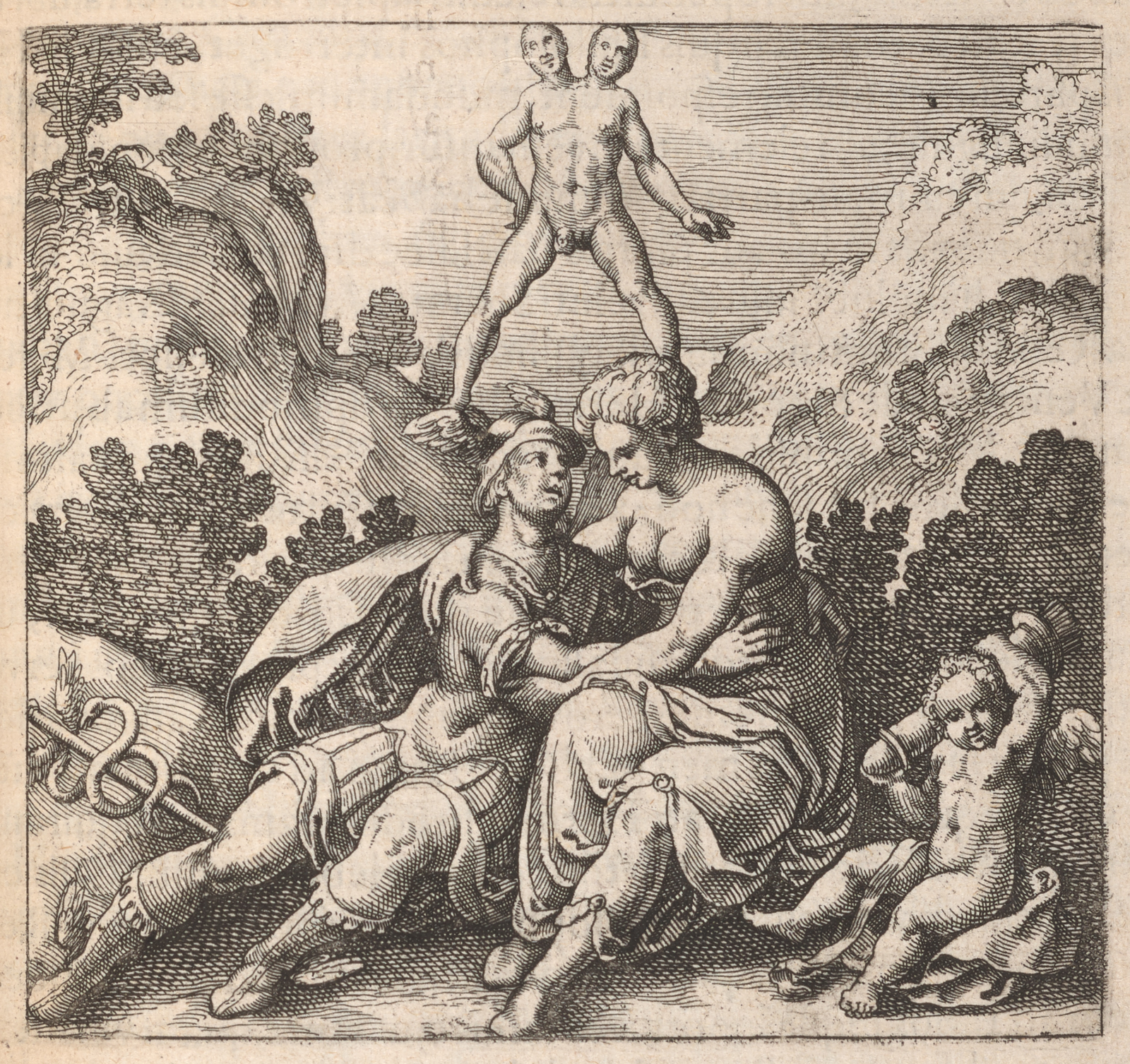
Emblem XXXVIII — Standing hermaphroditeRUBEDO
The Hermaphrodite, born of two mountains, of Mercury and Venus.
Epigram
By his art, Oedipus made the Sphinx kill herself,
The Sphinx, who was terrifying everybody with her riddle.
The Hermaphrodite, born of two mountains,
Stands complete, combining male and female.
What was divided is now united;
The work of conjunction is accomplished.
Maier's Discourse
Maier presents the standing Hermaphrodite — born of the two mountains of Mercury and Venus — as the completed product of the alchemical work. He develops Socrates' declaration that he was a citizen not of one city but of the world as an analogy for the Hermaphrodite who inhabits two domains simultaneously. The discourse argues that the Rebis has been successfully produced: the philosophical Mercury and Venus have been permanently united, and the resulting substance stands on its own — no longer needing the fire that revived it from darkness (Emblems XXX, XXXIII). Maier frames this as the culmination of the rubedo, where the joined substance achieves autonomous stability.
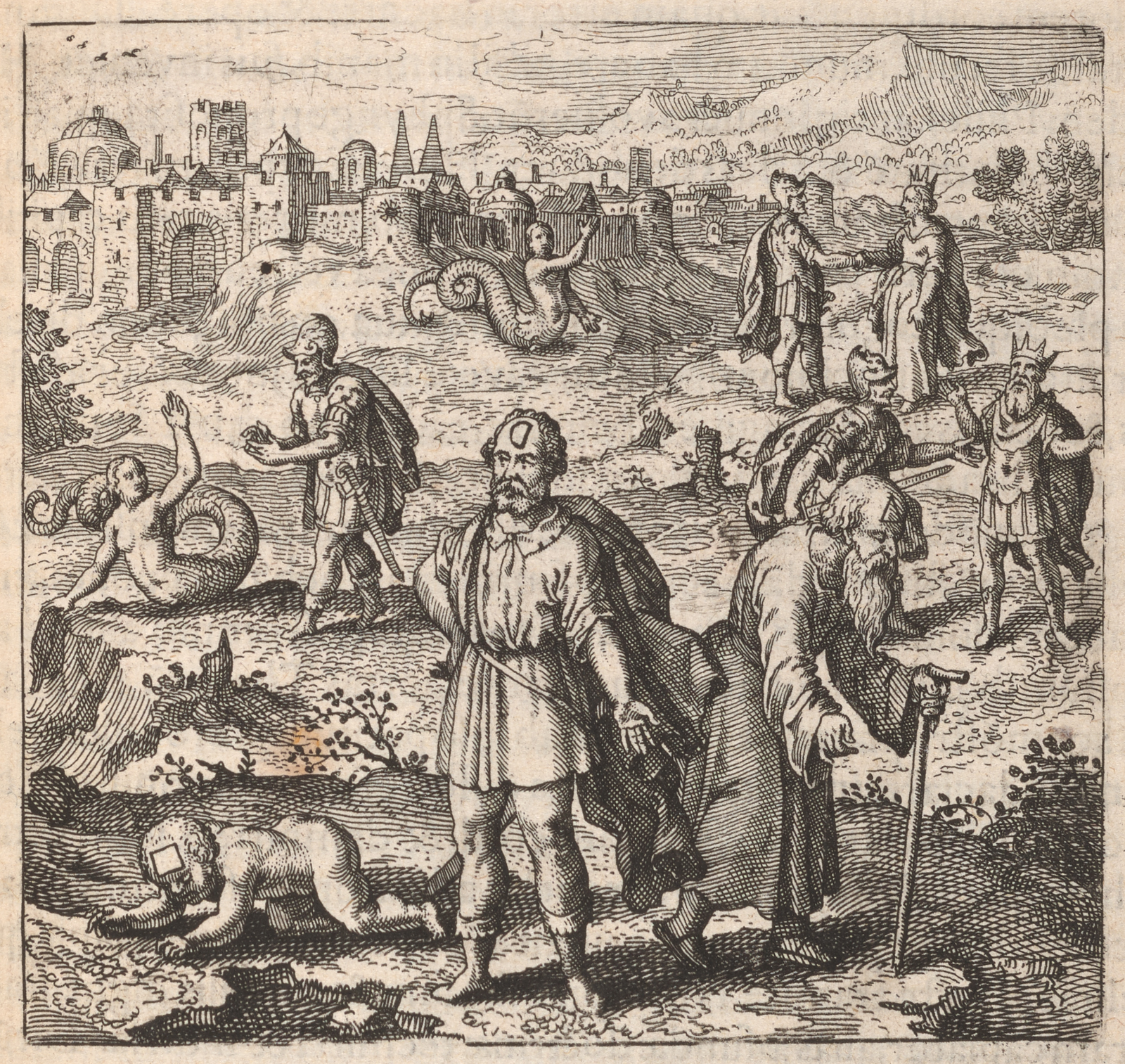
Emblem XXXIX — Emblem XXXIXALBEDO
Oedipus, having conquered the Sphinx and having killed his father Laius, married his mother Jocasta.
Epigram
By his art, Oedipus made the Sphinx kill herself,
The Sphinx, who was terrifying everybody with her riddle.
What walks on four legs in the morning, two at noon, three at evening?
The answer is not what the common crowd believes;
The alchemist reads it differently:
Four elements, two principles, three substances.
Maier's Discourse
Maier retells the Oedipus myth as an alchemical allegory: conquering the Sphinx (solving the riddle of Nature) leads to killing the father (destroying the original metallic form) and marrying the mother (reuniting with the prima materia from which the metal was born). He argues that this seemingly transgressive sequence — patricide and incest — is actually the normal order of alchemical transformation, where the product must dissolve its parent substance and recombine with its own origin. The discourse frames the Sphinx's riddle as the central question of alchemy: what walks on four legs, then two, then three? Maier reads this as the three stages of the Stone — unstable, bipedal, and finally supported by the 'third leg' of the tincture.
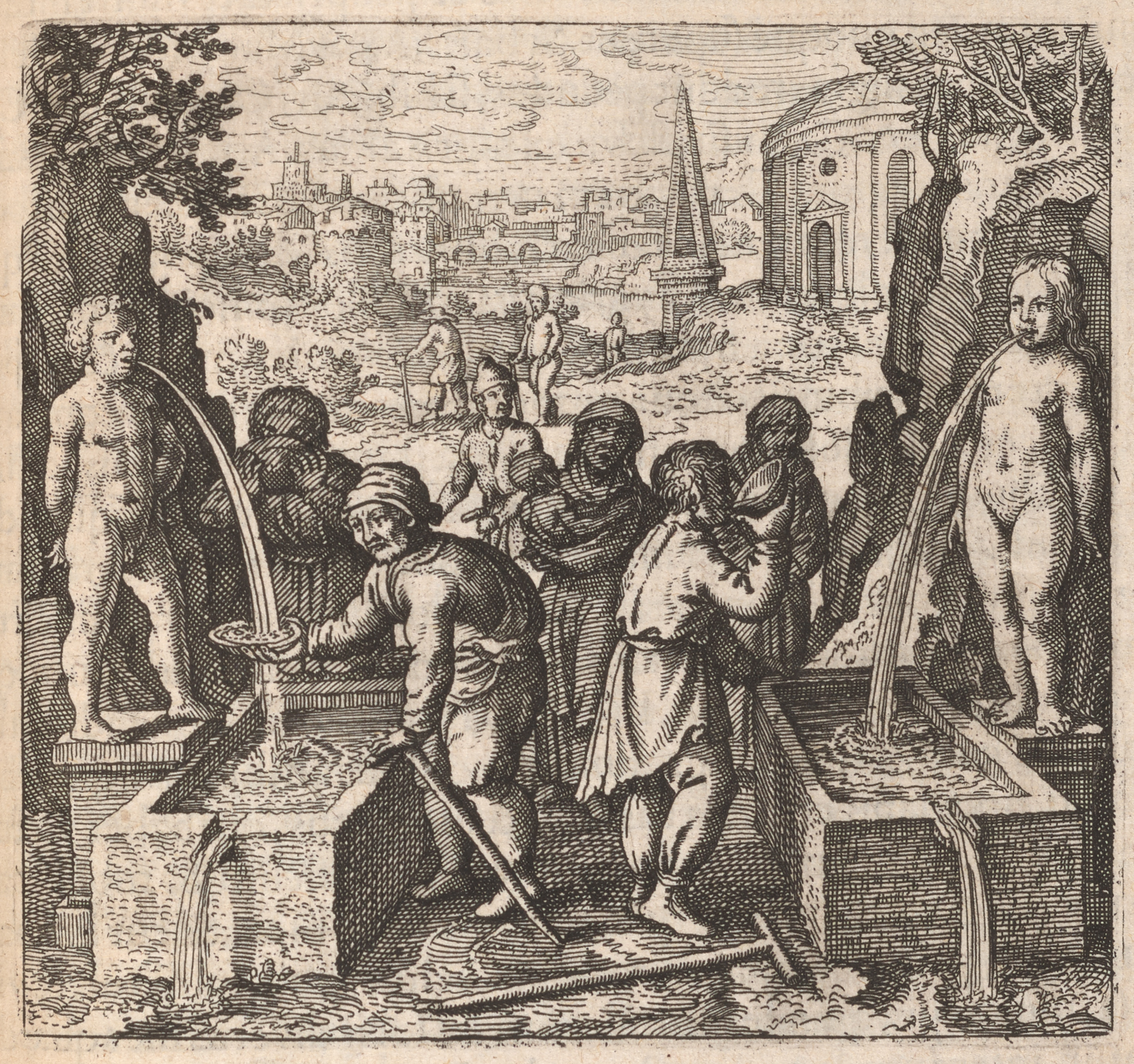
Emblem XL — Emblem XLRUBEDO
Make one water out of two waters, and it will be the water of holiness.
Epigram
Make one water out of two waters,
And it will be the water of holiness.
Let the volatile and the fixed unite,
The ascending and the descending merge.
From this marriage of two contrary streams
The universal medicine is born.
Maier's Discourse
Maier instructs the alchemist to make one water from two waters, producing the 'water of holiness.' He develops this as the final mercurial conjunction: the two philosophical waters — one volatile and ascending, the other fixed and descending — must be combined into a single, unified menstruum. The discourse connects this to the Hermetic tradition of the two serpents of the caduceus and to the mystical waters of baptism that cleanse and renew. Maier argues that this united water is the universal solvent that can dissolve all metals and serve as the medium for the final projection. The rubedo is achieved when the two contrary waters cease to separate and remain permanently joined.
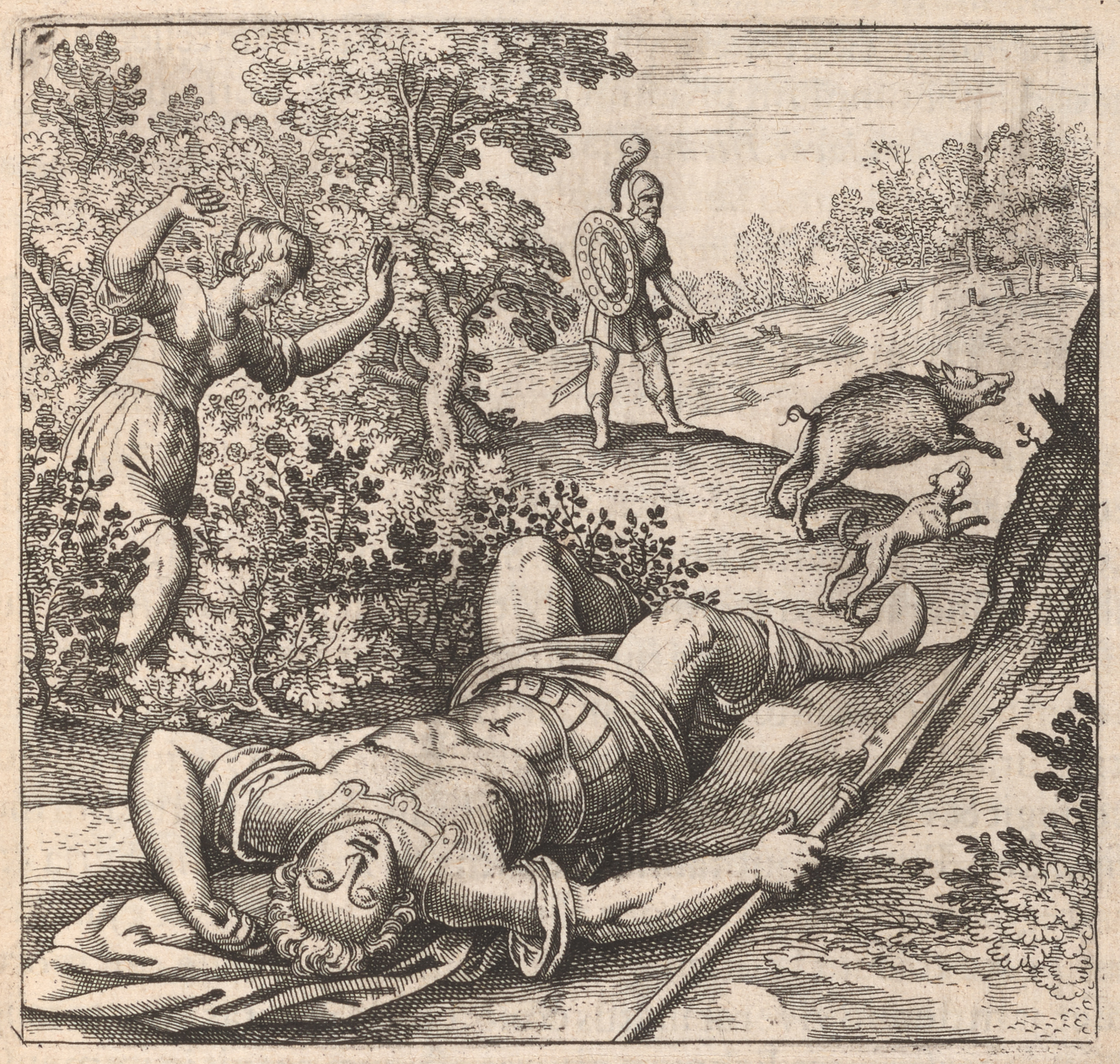
Emblem XLI — Emblem XLINIGREDO
Adonis is killed by a boar, and Venus, rushing up to him, painted the roses red with her blood.
Epigram
Adonis is killed by a boar,
And Venus, rushing up to him,
Painted the roses red with her blood.
So the white stone must be reddened
Through the sacrifice of Venus's blood,
And from albedo the rubedo is born.
Maier's Discourse
Maier retells the death of Adonis — beloved of Venus, killed by a boar, his blood dyeing white roses red — as an allegory for the transition from albedo to rubedo. He argues that the beautiful, white philosophical substance (Adonis/the white stone) must be 'killed' — subjected to a final violent transformation — and that the resulting reddening (Venus's blood on the roses) produces the red tincture. The discourse develops the boar as a figure for the aggressive sulphurous agent that destroys the passive, beautiful white form. Maier cites Ovid's Metamorphoses as his primary source, while De Jong traces the alchemical reading of this myth through the Rosarium tradition.
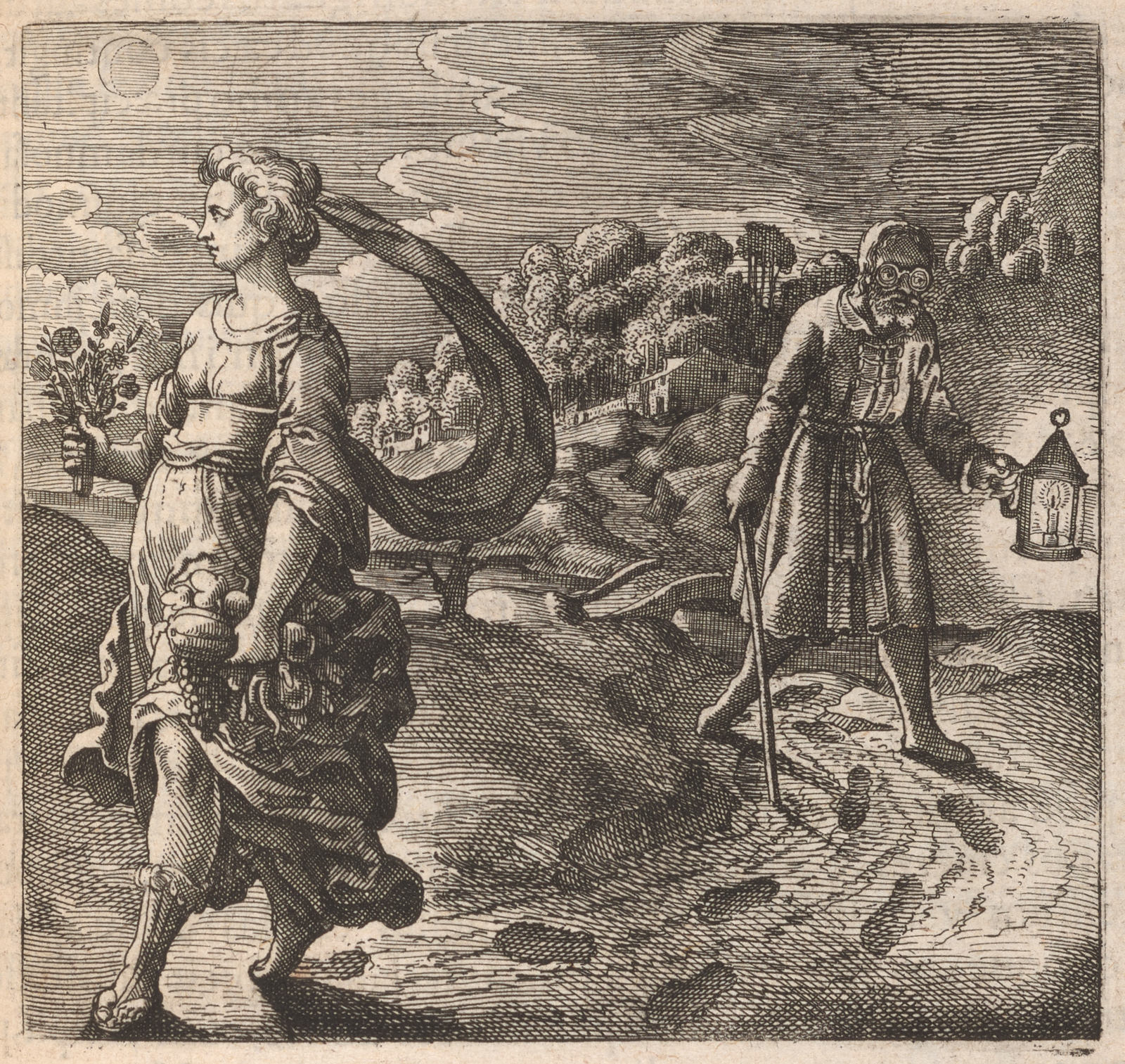
Emblem XLII — Emblem XLIIRUBEDO
What Nature, Reason, Experience and Reading teach you, let that be the fire, the vessel, the water and the earth.
Epigram
What Nature, Reason, Experience, and Reading teach you,
Let that be the fire, the vessel, the water, and the earth.
Four guides attend the alchemist:
Nature shows the way, Reason illuminates,
Experience confirms, and Reading transmits
The wisdom of earlier masters.
Maier's Discourse
Maier develops the Tabula Smaragdina's teaching by identifying four guides that together constitute the alchemical method: Nature provides the raw material and model, Reason supplies theoretical understanding, Experience offers practical knowledge gained through trial, and Reading transmits the wisdom of earlier masters. He argues that these four correspond to the fire, the vessel, the water, and the earth of the work — each indispensable, none sufficient alone. The discourse emphasizes the balance between textual learning and hands-on practice, a the me running through the entire Atalanta Fugiens. Maier presents this emblem as a methodological summation of the principles scattered across the preceding forty-one.
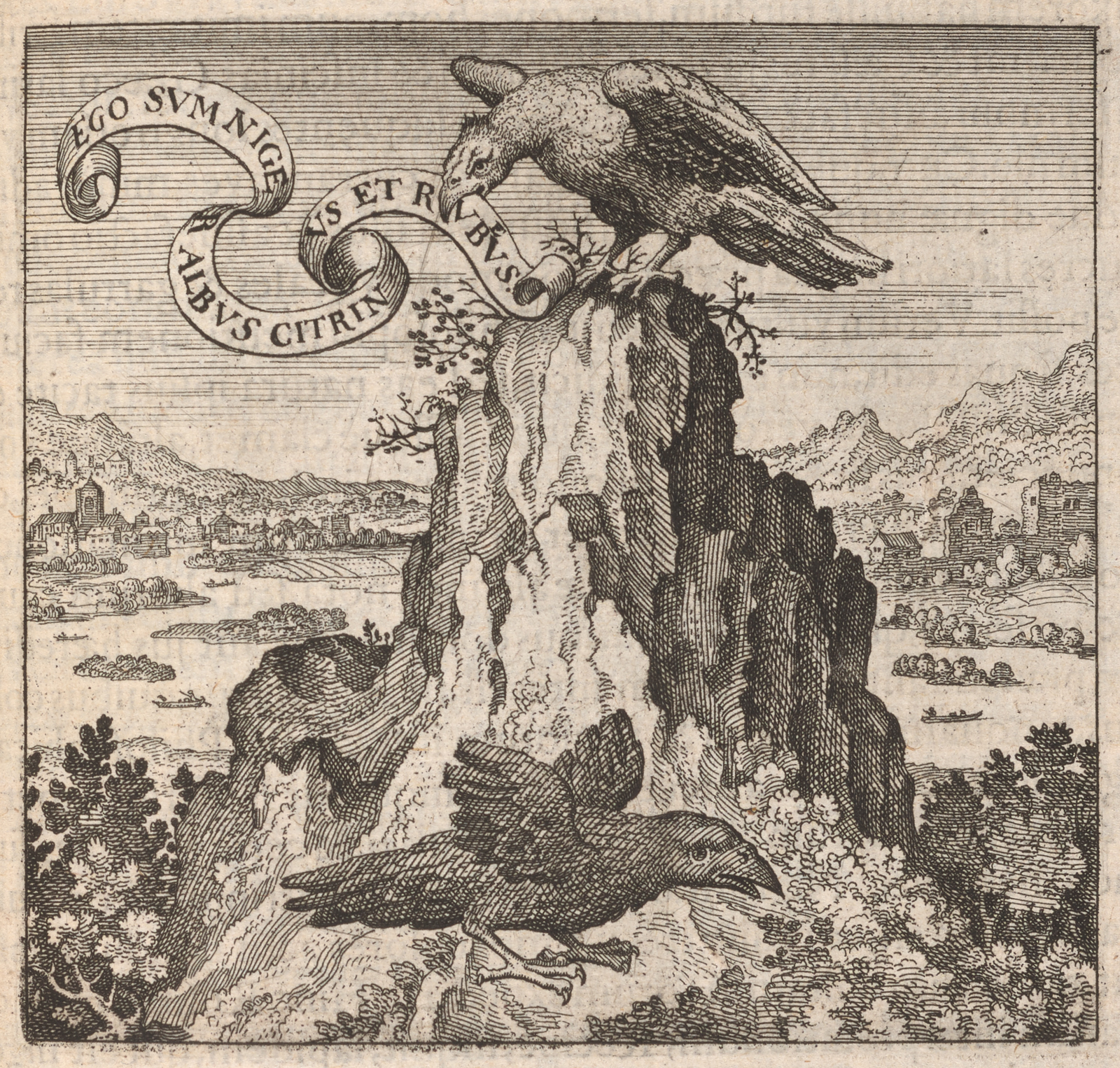
Emblem XLIII — Emblem XLIIIALBEDO
Listen to the screech owl's voice, which it produces it self, and the water and do not heed any bird that cries in the evening.
Epigram
Listen to the screech owl's voice,
Which it produces itself, and the water.
Do not heed any bird that cries in the evening;
For the owl alone speaks truth in the darkness.
The philosophical mercury is nocturnal;
Only by night-wisdom is the Stone found.
Maier's Discourse
Maier instructs the alchemist to listen to the screech owl's voice and the sound of running water while ignoring the cries of evening birds — a parable about discerning true signals from false. He develops the owl as a figure for philosophical mercury (the lunar, nocturnal principle) whose call reveals the correct path, while the other birds represent misleading doctrines and false alchemists. The discourse connects the biblical story of Naaman (
Emblem XIII) to this emblem, reprising the the me of purification through water. Maier argues that the alchemist must develop sensory discernment — learning to hear and see what Nature reveals — rather than following the loud but empty promises of charlatans.
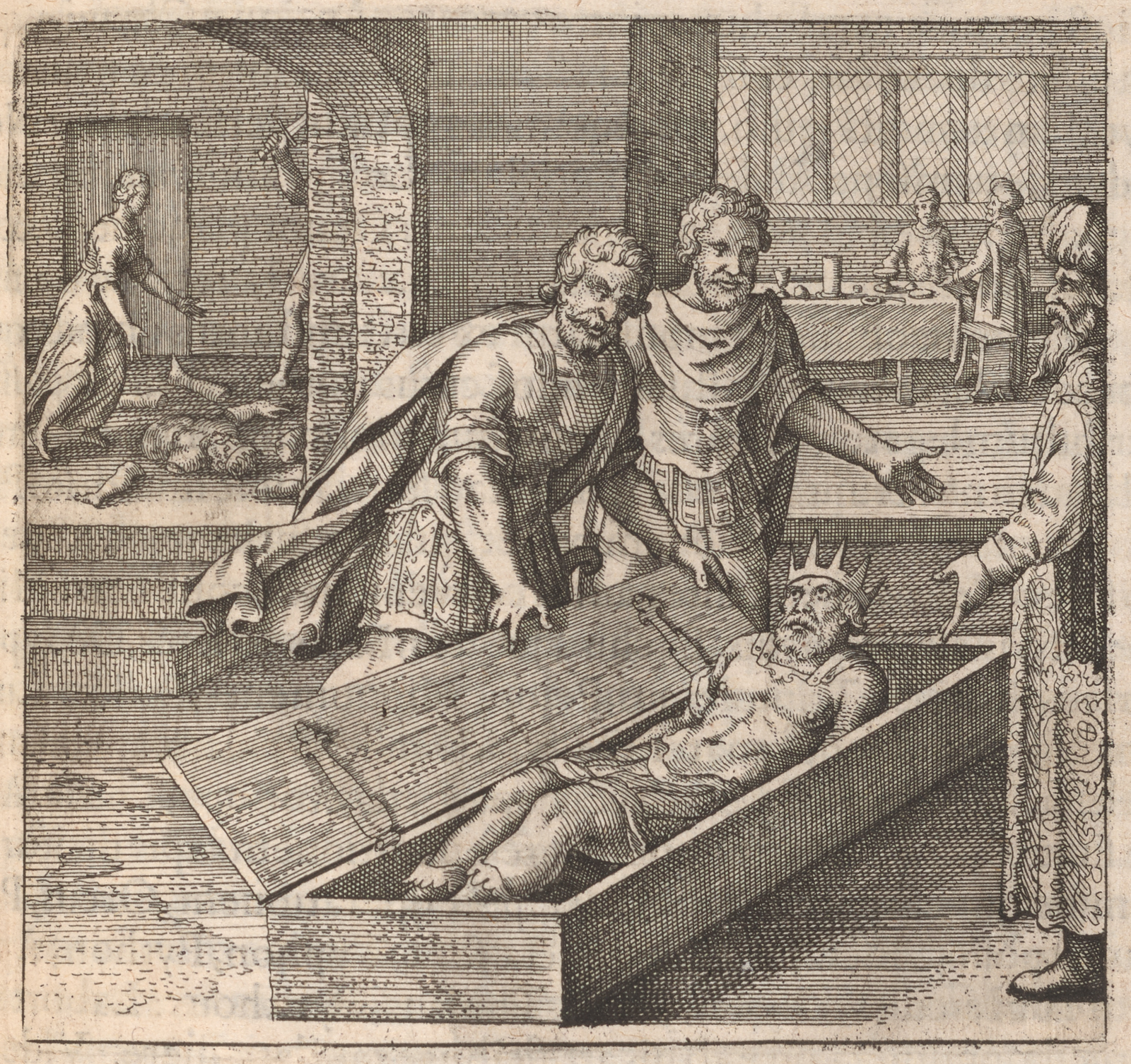
Emblem XLIV — Osiris killed and resurrectedNIGREDO
Typhon kills Osiris by a ruse, and after that he scatters his limbs far and wide, but Is is gathers them together again.
Epigram
Syria has Adonis, Greece has Dionysus,
Egypt has Osiris, who is nobody else but the Sun of Wisdom.
Isis is the sister, wife, and mother of Osiris,
Whose limbs are dissected by Typhon,
But which she joins together again.
So death and dismemberment precede resurrection.
Maier's Discourse
Maier retells the Egyptian myth of Osiris — murdered by Typhon through treachery, his body scattered, then painstakingly reassembled by Is is — as the complete arc of the alchemical opus. He identifies Typhon's killing with the nigredo dissolution, the scattering of limbs with the separation of elements, and Is is's gathering with the reconstitution and final rubedo. The discourse develops Osiris as the archetypal philosophical body that must be destroyed, dispersed, and reunited to achieve perfection. De Jong traces Maier's treatment of this myth through multiple alchemical traditions, noting that the Osiris-Is is cycle became one of the most enduring allegories in Western alchemy precisely because it encodes all three stages — death, purification, and resurrection — in a single narrative.
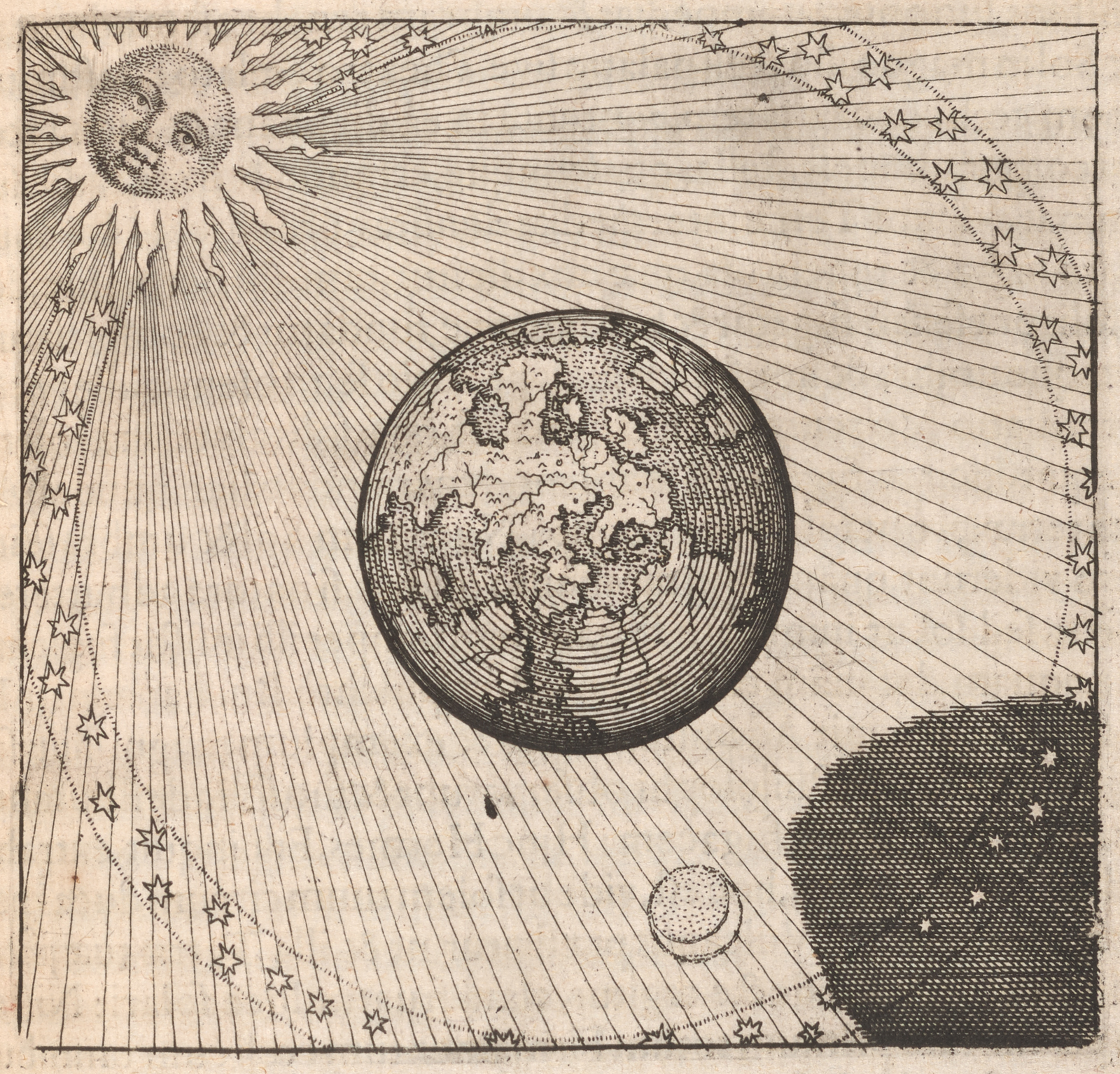
Emblem XLV — Emblem XLVRUBEDO
Sol and his shadow complete the work.
Epigram
Sol and his shadow complete the work.
Two stones are given, one manifest, one hidden;
The visible and invisible aspects of a single substance.
Neglect neither the light nor the dark;
Both are needed for the final projection,
When the stone achieves its full power.
Maier's Discourse
Maier argues that Sol and his shadow together complete the work — the visible, noble gold (Sol) must be joined with its shadowy, hidden counterpart (the impure, dark aspect) to produce the philosopher's stone. He develops the principle that the stone requires both the light and dark aspects of the same substance, and that ignoring the shadow — the nigredo remainder — makes completion impossible. The discourse draws on the Consilium Conjugii and the Massa Solis et Lunae tradition to argue that the two stones spoken of by the philosophers are actually the manifest and hidden aspects of a single substance. Maier presents this penultimate teaching as the key to unlocking the entire series.
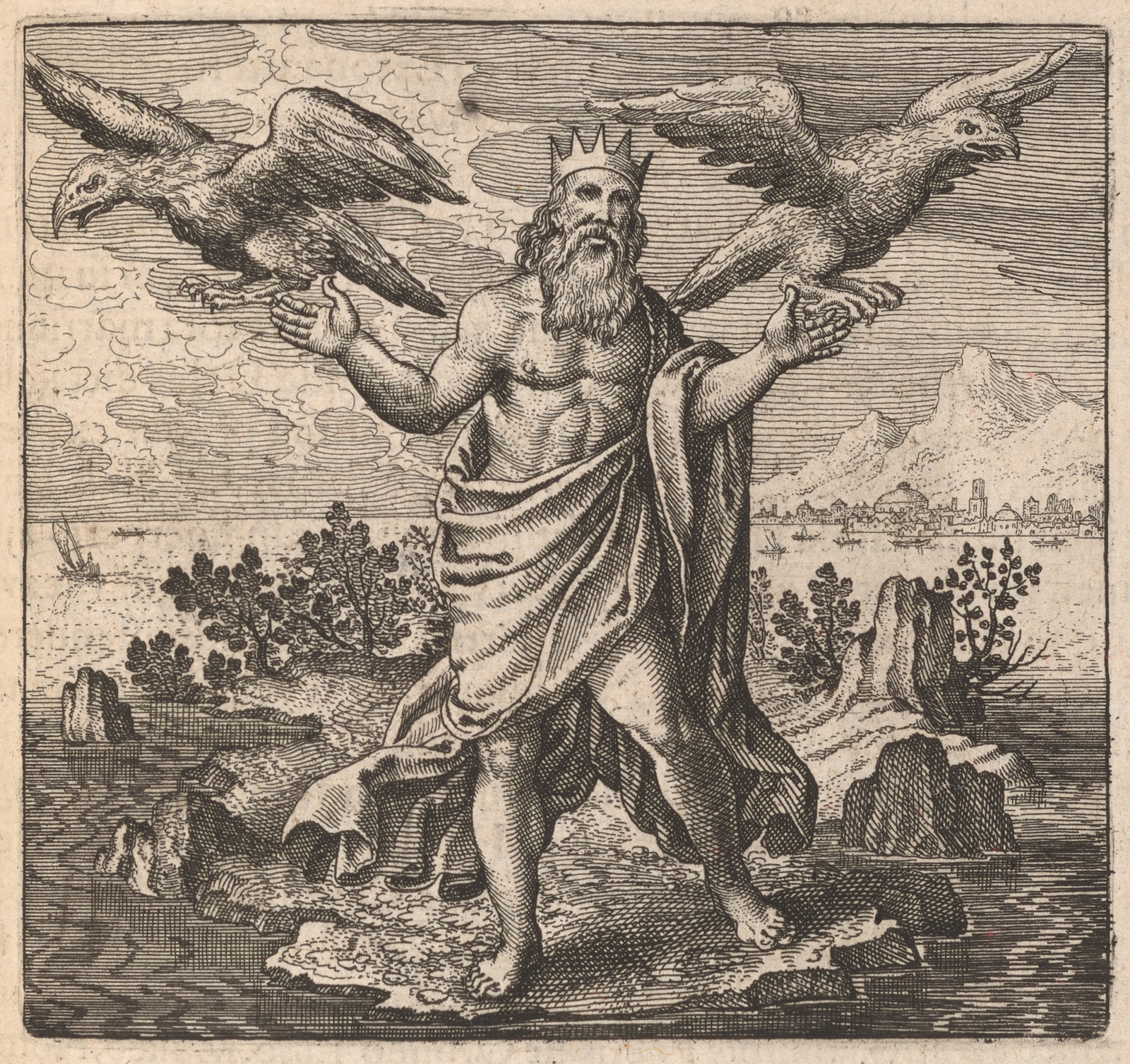
Emblem XLVI — Emblem XLVICITRINITAS
Two eagles meet, the one from the East, the other from the West.
Epigram
Two eagles meet, one from the East,
The other from the West.
One is winged and swift, the other steady;
They converge at the center of the sky.
From their meeting, the volatile and fixed unite
In the aerial conjunction of the great work.
Maier's Discourse
Maier develops the meeting of two eagles — one from the East, the other from the West — as an allegory for the conjunction of the two philosophical principles that originate from opposite ends of the alchemical process. He identifies the Eastern eagle with sulphur (the hot, solar principle born from fire) and the Western eagle with mercury (the cool, lunar principle born from water). Their meeting in mid-air represents the volatile conjunction where both principles abandon their fixed natures and unite in the aerial, spiritual realm. The discourse connects the circumnavigation imagery — east to west, west to east — to the Hermetic principle of universal circulation, where all things return to their origin.
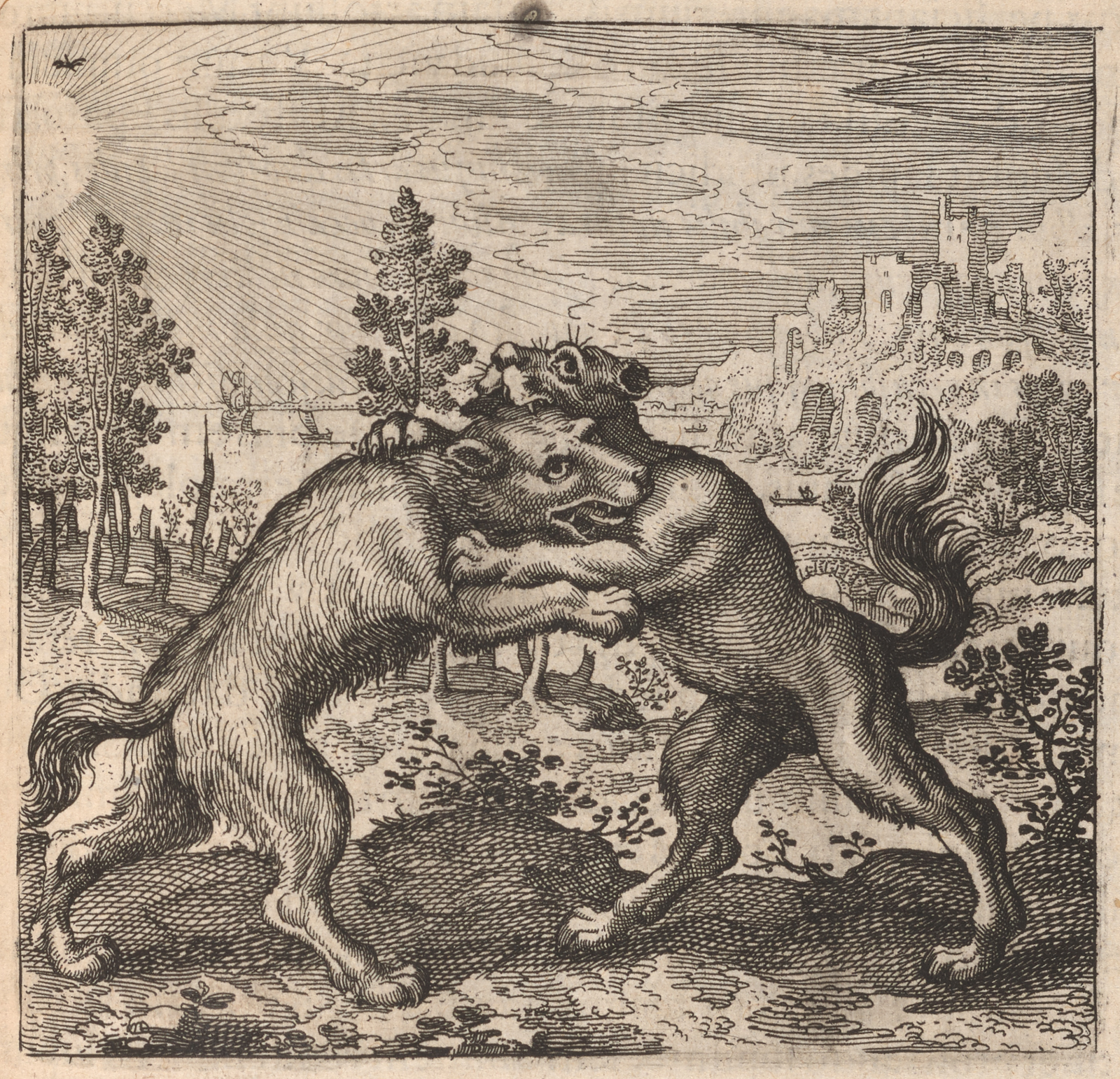
Emblem XLVII — Emblem XLVIINIGREDO
The wolf coming from the East, and the Dog coming from the West, have bitten each other.
Epigram
The Wolf comes from the place where the Sun rises;
But from where the Sun sinks in the West comes the Dog.
They bite and tear at each other
Until both are consumed by fury.
From their mutual destruction
The medicine of the philosophers emerges.
Maier's Discourse
Maier parallels the eagle meeting of
Emblem XLVI with a more violent version: the wolf from the East and the dog from the West bite each other in mutual destruction. He argues that while the eagles' conjunction was aerial and spiritual, the wolf-and-dog encounter is terrestrial and material — the same union of opposites enacted at a lower, more physical register. The discourse develops the wolf as the more aggressive, dissolving agent (philosophical mercury in its corrosive aspect) and the dog as the resistant, fixed body that must be broken down. Their mutual biting — each wounding the other — represents the reciprocal action of dissolution, where both substances are transformed by their encounter.
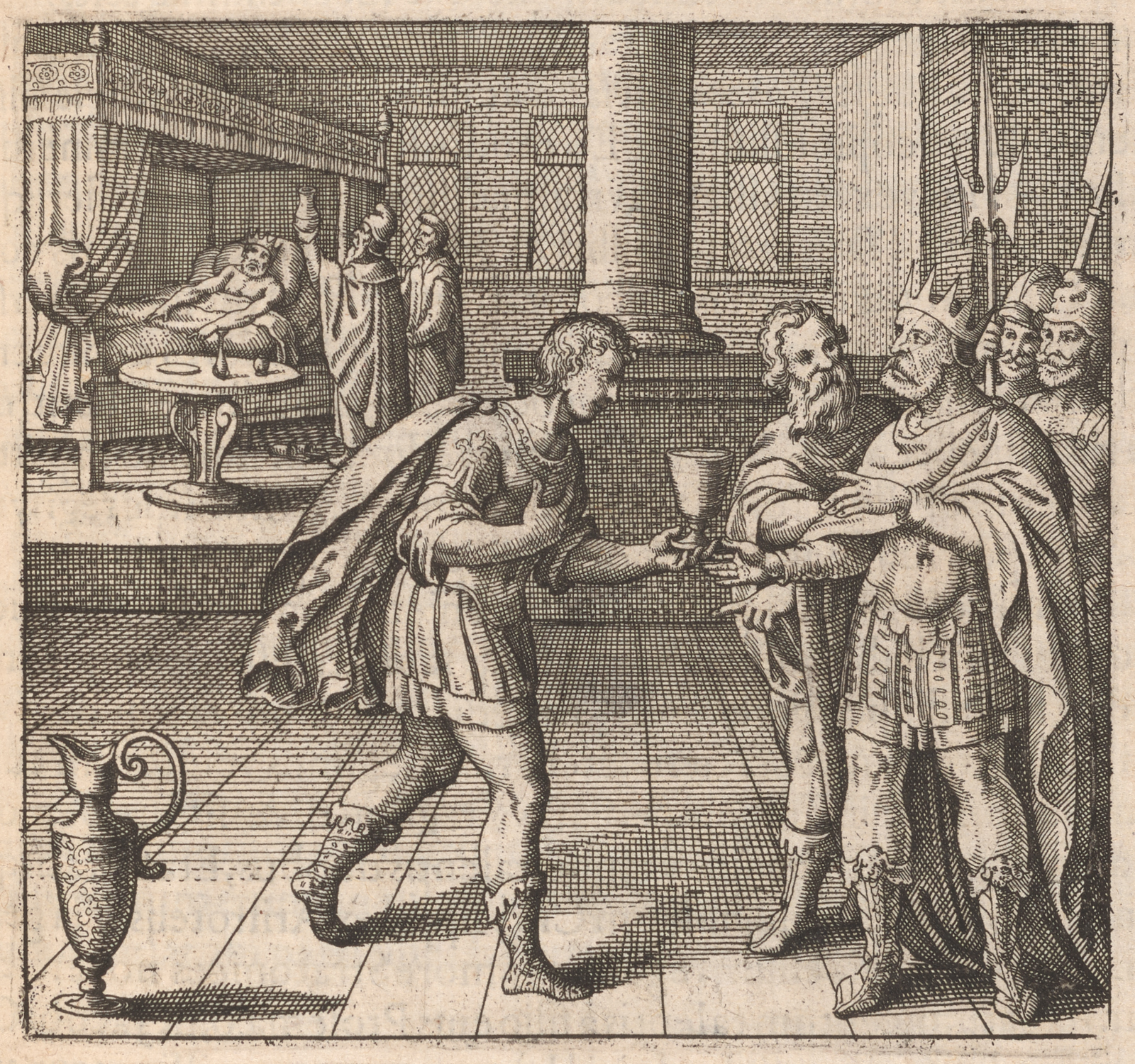
Emblem XLVIII — King Duenech receives potionRUBEDO
The king, fallen ill from drinking, is restored to health by a physician.
Epigram
The king, fallen ill from drinking bad water,
Calls for physicians to restore his health.
Egyptian and Alexandrian doctors attend him,
Each with their remedies and arts.
Dressed at last in black, white, and red,
The king rises cured, the work complete.
Maier's Discourse
Maier develops the Merlini allegory of King Duenech in its final phase: the king, fallen ill from drinking foul waters, is restored to health by physicians who administer the correct elixir. He draws on Xerxes drinking muddy water in the desert as an analogy for the philosophical substance contaminated by impurities. The discourse describes the king's cure through successive stages — first Egyptian, then Alexandrian physicians — corresponding to different alchemical traditions' approaches to purification. Bernard of Treves's allegory describes the restored king dressed in a black cuirass, white tunic, and purple-red cloak — the three colors of the opus (nigredo, albedo, rubedo) worn simultaneously, signaling the completion of the work.
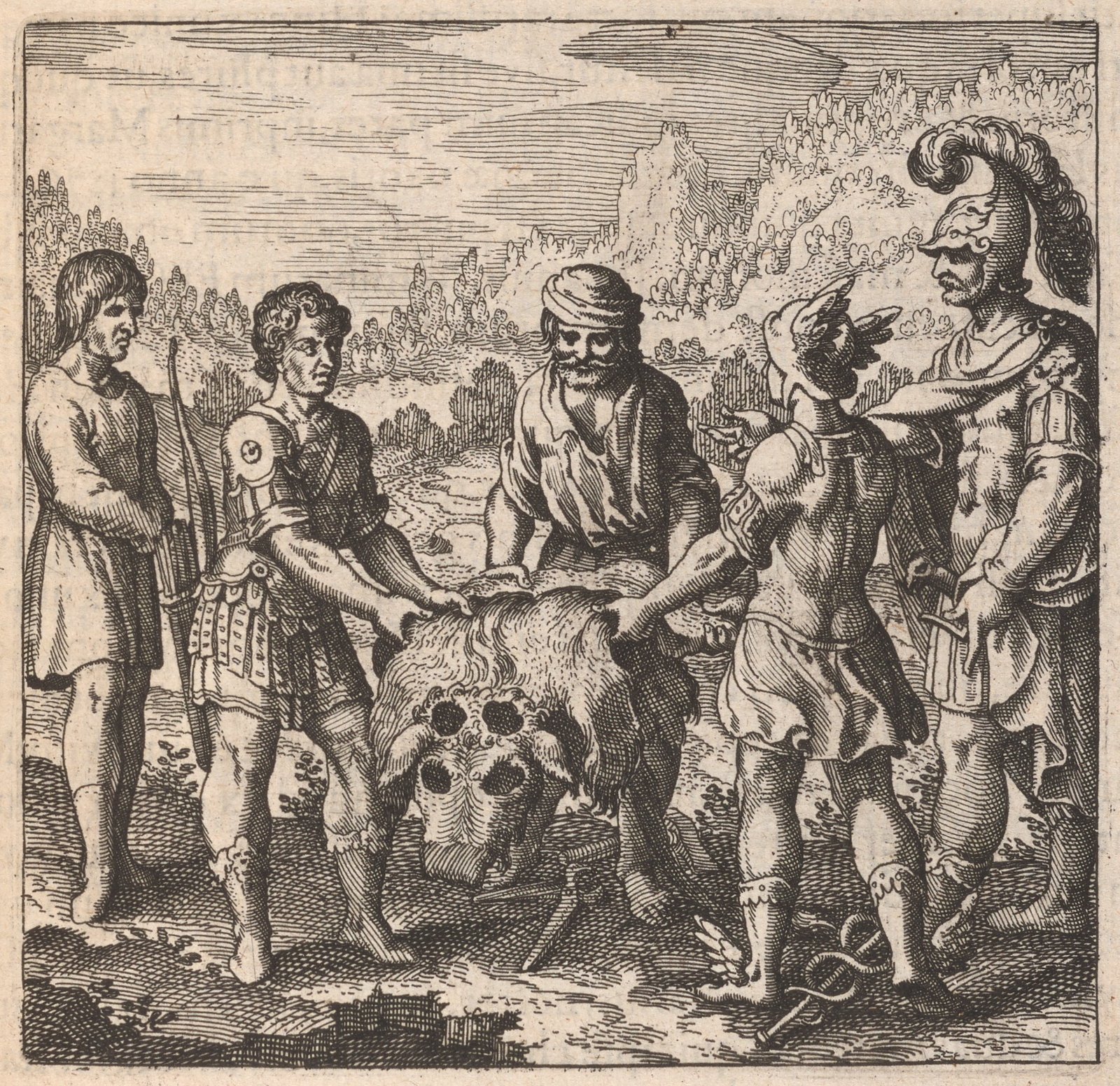
Emblem XLIX — Emblem XLIXCITRINITAS
The Philosophical Child acknowledges three fathers, just as Orion.
Epigram
The Philosophical Child acknowledges three fathers,
Just as Orion was born of three gods.
Salt, Sulphur, and Mercury contribute
Each their portion to the generation.
No single father suffices for the birth;
The Stone requires a triple origin.
Maier's Discourse
Maier argues that the philosopher's stone, like the mythological Orion, acknowledges three fathers — three distinct sources or principles that contribute to its generation. He develops this as an allegory for the tria prima: the stone is born from salt (the bodily principle), sulphur (the soul principle), and mercury (the spirit principle), each 'fat he ring' a different aspect of the complete substance. The discourse draws on the Orion myth — conceived from the combined seed of Zeus, Poseidon, and Hermes — to argue that no single source suffices for the generation of the philosophical child. Maier presents this as one of the final teachings: the stone's triple origin explains why it can not be produced from any single starting material.
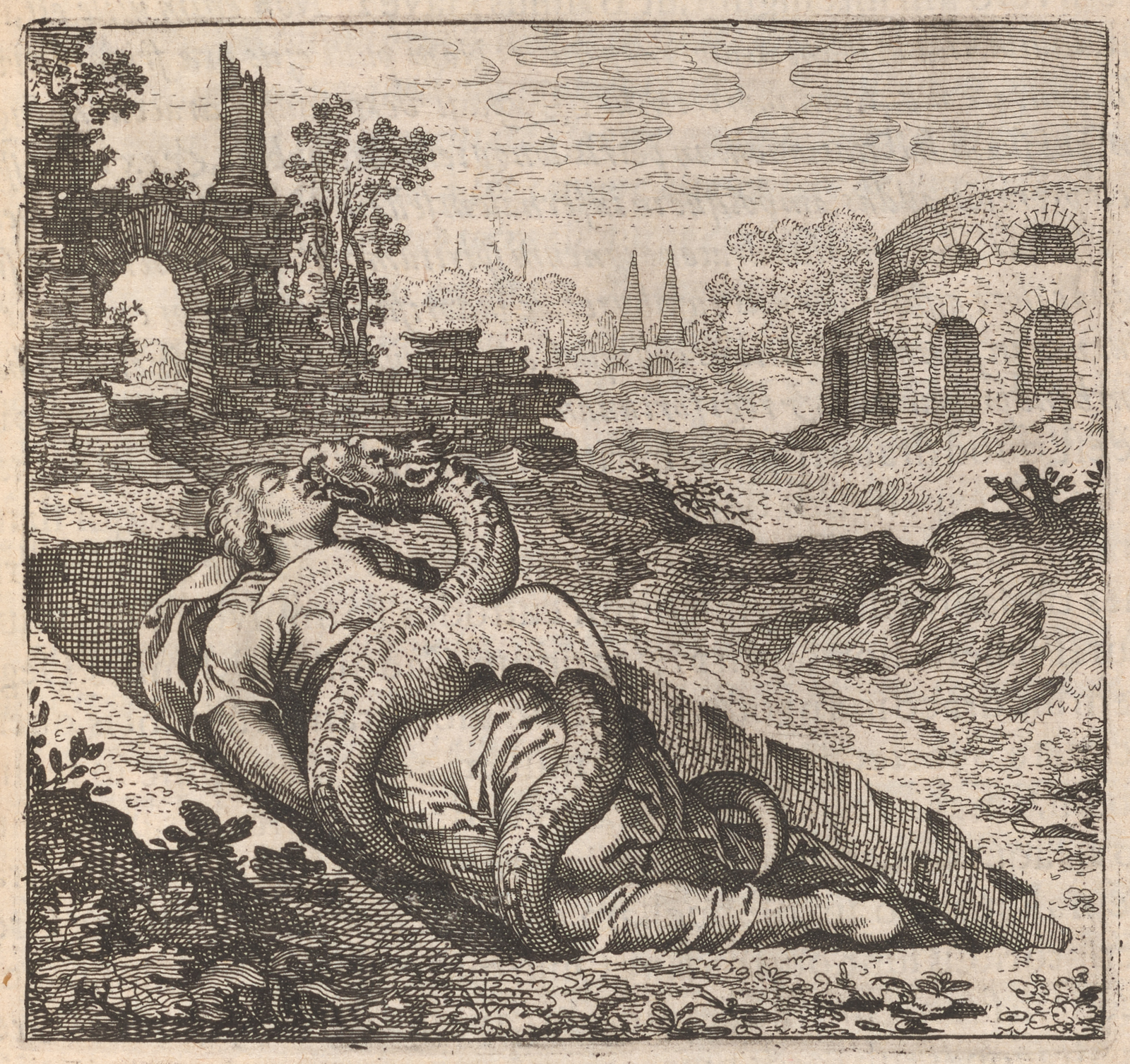
Emblem L — The Dragon kills the womanNIGREDO
The Dragon kills the woman, and she kills it, and together they bathe in blood.
Epigram
Have a deep grave dug for the poisonous Dragon,
With which the woman should be tightly joined.
They bite each other in mortal combat,
And bathe together in their mingled blood.
The Dragon kills the woman, she kills the Dragon;
From this mutual death the Stone is born.
Maier's Discourse
Maier narrates the final emblem as a double death: the dragon kills the woman and she kills it, and together they bathe in the blood of their mutual destruction. He develops this as the ultimate expression of the alchemical principle that the Stone is born from the death of both its parents — the volatile (the dragon, dwelling in caves under ground) and the fixed (the woman, dwelling in the adjacent air). The discourse argues that their commingled blood — the shared substance released by reciprocal dissolution — becomes the bath of regeneration from which the philosopher's stone emerges. Maier presents this as the closing image of the entire series: the work ends where it began, in mutual consumption and transformation.