Emblem XXIII — Emblem XXIII CITRINITAS
Original Source
What You See
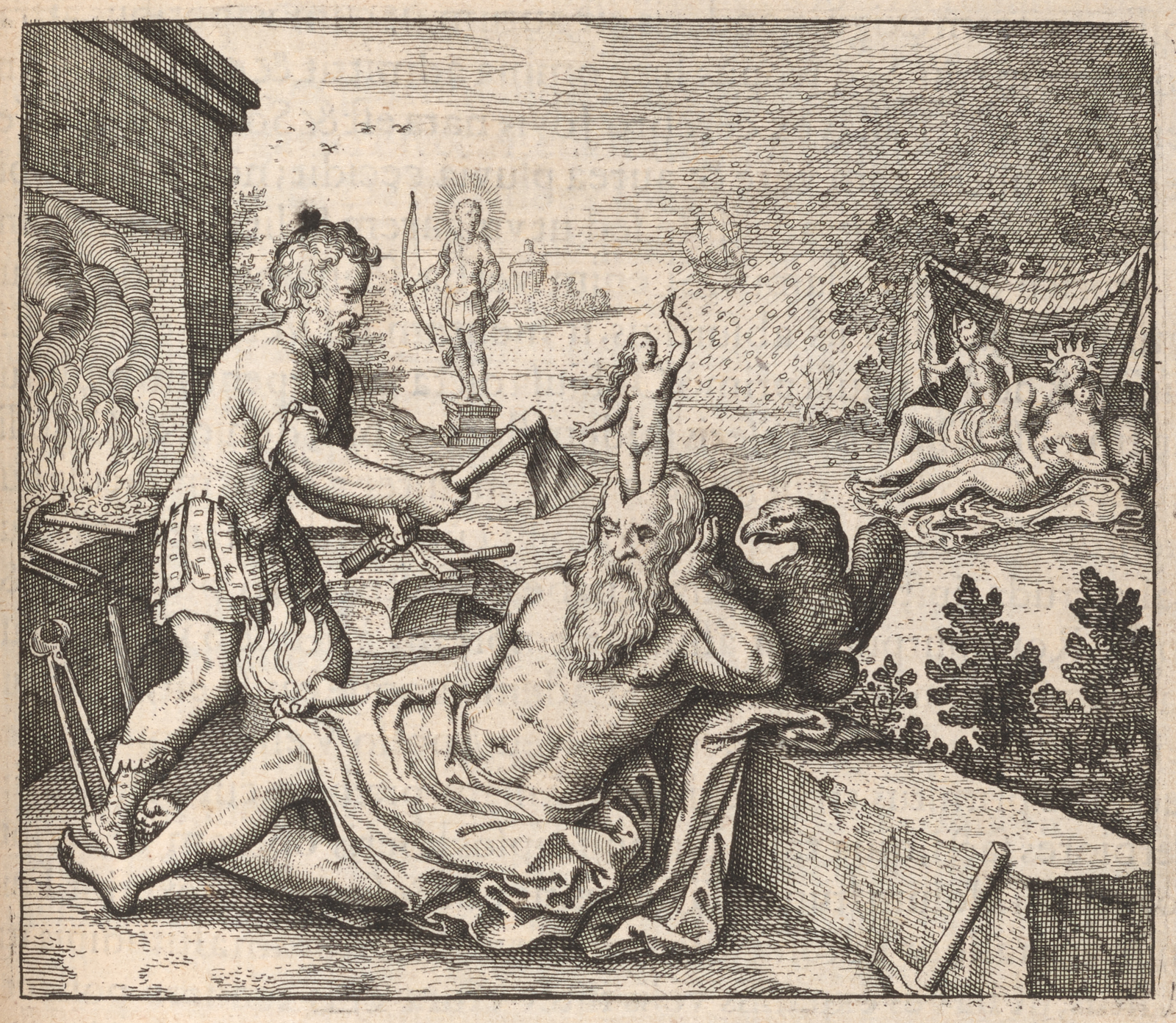
Golden rain descends from the sky onto the island or city of Rhodes, where figures reach upward to catch the falling drops. At one side, a helmeted figure — Pallas Athena — emerges fully formed, suggesting her birth from the head of Zeus. The golden precipitation and the goddess's birth occur simultaneously, linking divine emergence with the descent of philosophical gold from above.
It rains gold when Pallas is born at Rhodes.
Epigram
When Pallas was born on the island of Rhodes, It rained gold upon the citizens. If you wish for golden rain in your work, Let the sun-god join with Venus, And from their conjunction golden drops will fall, More precious than any earthly treasure.Discourse Summary
Maier develops the mythological tradition that golden rain fell on Rhodes when Pallas Athena was born from the head of Zeus, interpreting this as an allegory for the moment when the philosophical gold descends or precipitates during the citrinitas stage. He argues that just as Athena emerges fully armed and wise from the mind of the supreme deity, the philosopher's stone appears fully potent when the right conditions are met — it is not assembled gradually but manifests suddenly. The discourse connects the golden rain to the 'golden shower' of Zeus and Danae, weaving multiple classical myths into a single alchemical reading of divine gold falling from the heavens as precipitation of the tincture.
Overview
Emblem XXIII bears the motto: "It rains gold when Pallas is born at Rhodes."
Maier's Discourse
Maier develops the mythological tradition that golden rain fell on Rhodes when Pallas Athena was born from the head of Zeus, interpreting this as an allegory for the moment when the philosophical gold descends or precipitates during the citrinitas stage. He argues that just as Athena emerges fully armed and wise from the mind of the supreme deity, the philosopher's stone appears fully potent when the right conditions are met — it is not assembled gradually but manifests suddenly.
Source Texts
De Jong's source-critical analysis identifies the textual traditions Maier draws upon for this emblem.
The discourse draws on alchemical sources: Lambsprinck, De Lapide Philosophico. The discourse draws on classical sources: Ovid, Metamorphoses X.560-704. The discourse draws on biblical sources: Solomonic / Biblical Wisdom Tradition (Proverbs). The discourse draws on Hermetic sources: Tabula Smaragdina (Emerald Tablet).
Alchemical Significance
J.B. Craven: Craven summarizes Emblem 23: gold rains while Pallas is born at Rhodes and the sun lies by Venus, connecting the birth of Athena to the alchemical rain of gold in the vessel.
H.M.E. de Jong: De Jong identifies the wolf-king allegory's source in Strabo and in Basil Valentine's Twelve Keys, demonstrating that the wolf represents antimony used to purify gold from base alloys. She traces the metallurgical process of antimony refining behind Maier's mythological narrative of royal death and resurrection.
Scholarly Commentary
J.B. Craven MYTHOLOGICAL MEDIUM
Craven summarizes Emblem 23: gold rains while Pallas is born at Rhodes and the sun lies by Venus, connecting the birth of Athena to the alchemical rain of gold in the vessel.
Citation: p. 90
H.M.E. de Jong ALCHEMICAL HIGH
De Jong identifies the wolf-king allegory's source in Strabo and in Basil Valentine's Twelve Keys, demonstrating that the wolf represents antimony used to purify gold from base alloys. She traces the metallurgical process of antimony refining behind Maier's mythological narrative of royal death and resurrection.