Maier's Alchemical Bestiary
The emblems of Atalanta Fugiens are populated by a menagerie of allegorical creatures — lions, wolves, dragons, eagles, toads, and salamanders — each encoding specific chemical substances and operations within the alchemical tradition. This page collects Maier's bestiary and situates each creature within the broader history of alchemical imagery, drawing on Lyndy Abraham's Dictionary of Alchemical Imagery, De Jong's source identifications, and Lawrence Principe's chemical interpretations.
12 creatures surveyed
The Lion
Winged and Wingless — Volatile and Fixed
In classical natural history, the lion is the king of beasts, associated with solar power, courage, and sovereignty. Pliny and Aelian recorded its supposed ability to sleep with open eyes and to revive stillborn cubs with its breath—qualities that made it an irresistible symbol for alchemists seeking to describe substances that could conquer death and restore vitality to inert matter. In mythology, the Nemean lion slain by Hercules linked the beast to the hero's labors, which alchemists consistently read as allegories of the Great Work.
In the alchemical tradition, the lion carries a remarkable range of meanings depending on its color, posture, and whether it possesses wings. Abraham's Dictionary of Alchemical Imagery devotes extensive coverage to the green lion, which denotes the raw antimony ore or prima materia from which philosophical mercury is extracted. Michael Maier himself called it 'the ore of Hermes' and 'the stinking water,' and St Dunstan identified it as 'green gold, multiplicable, spermatick, and not yet perfected by Nature.' The green lion devouring the sun—one of alchemy's most iconic images, first printed with the Rosarium Philosophorum in 1550—represents the dissolution of gold by the mercurial solvent, releasing the 'sperm' or living seed from which pure gold may be grown.
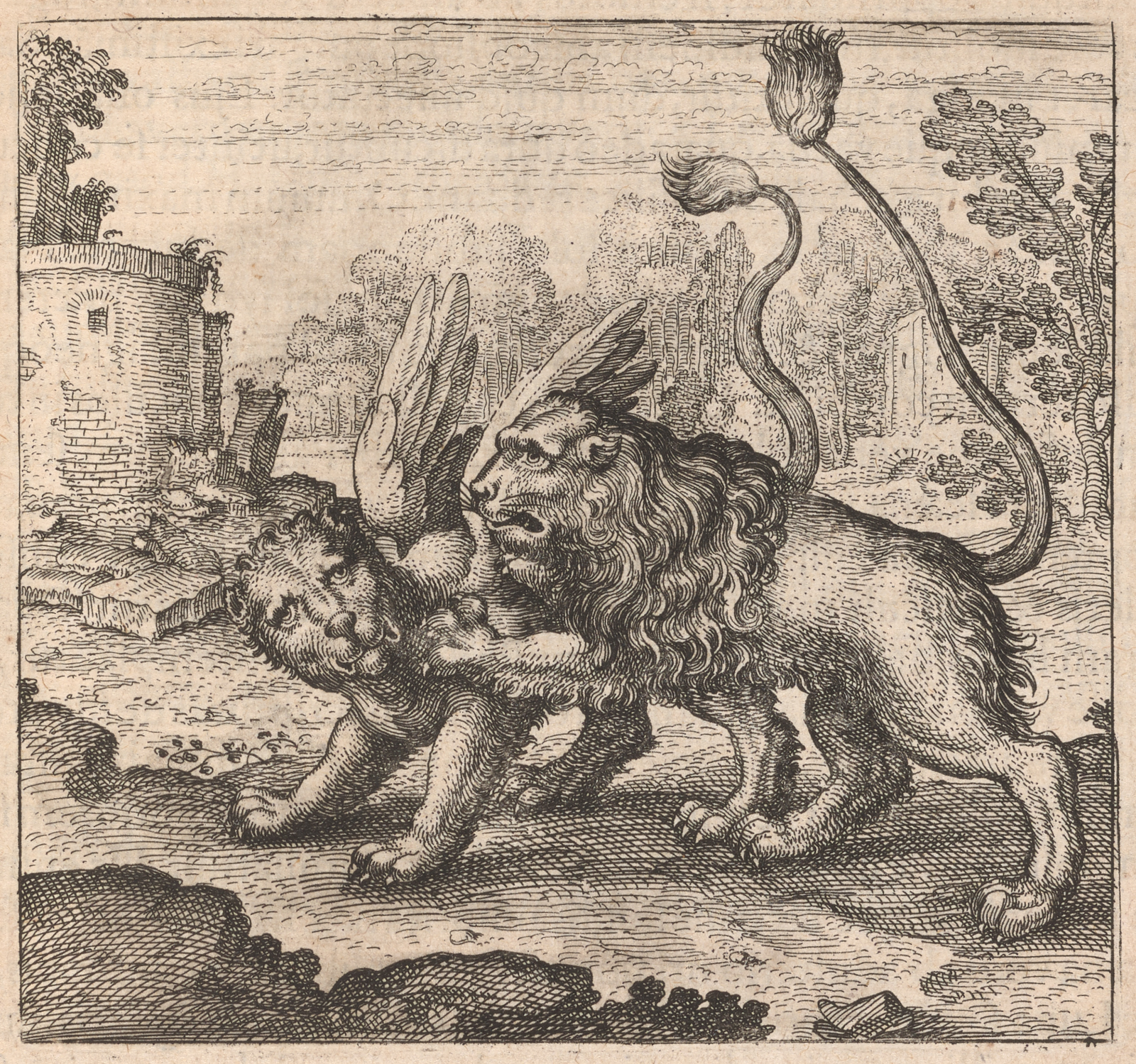
In Emblem XVI of the Atalanta Fugiens, Maier presents two lions prowling a dark valley: a winged lioness and a wingless lion. De Jong's commentary identifies the winged lioness as volatile Mercury—synonymous with primeval water and the Moon—while the wingless lion represents combustible, solid Sulphur, or the Sun. Their union, achieved through the alchemist's art, produces the Philosopher's Stone, in which sulphur has become incombustible and mercury has become a solid substance. The motto reads that two powerful lions lurk in a dark, horrible valley, and that only wisdom and artifice can subdue them.
De Jong traces the motif of the contrasting lions through multiple emblems in the Atalanta Fugiens. The same opposition of volatile and fixed appears in Emblem VII as winged and wingless birds, in Emblem XXX as cock and hen, and in Emblem XLVII as wolf and dog. The valley and mountaintop where the lions dwell symbolize the circular course of the alchemical process: heavy matter precipitates to the bottom of the vessel while thin vapors rise to the top, until the purified upper and lower portions combine to form the Stone.
Forshaw highlights that Maier also deploys the lion in the frontispiece of the Atalanta Fugiens, drawing on the myth of Hippomenes and Atalanta, who were transformed into lions by the goddess Cybele after desecrating her temple with their lovemaking. This mythological genealogy connects the emblem to the larger theme of the coniunctio—the chemical wedding of opposites. The chariot of Cybele, drawn by lions, reinforces the idea that these fierce beasts are yoked powers, united under divine compulsion.
Chemically, the lion represents multiple stages and substances. The red lion is the mature philosophical sulphur or the red tincture. The green lion is the raw ore or vitriol from which mercury is extracted. The winged and wingless pair encode the fundamental binary of the art: volatile mercury (which flies from the fire) and fixed sulphur (which endures it). The entire opus can be understood as the process of taming these two lions—dissolving the fixed, fixing the volatile—until they become one balanced substance that neither flees nor is consumed by flame.
The Wolf
Antimony — The Devourer That Purifies
The wolf has been a figure of insatiable hunger since antiquity. Aristotle and Pliny described its voracity; Roman legend placed the she-wolf at the founding of civilization itself. In the alchemical tradition, this hunger became the defining metaphor for antimony—the substance known to medieval metallurgists as lupus metallorum, the wolf of metals, because of the ferocity with which it devoured and consumed other metallic bodies. Abraham's Dictionary confirms that the wolf is antimony, the grey, ravenous agent that destroys impure matter so that it may be reborn in purer form.
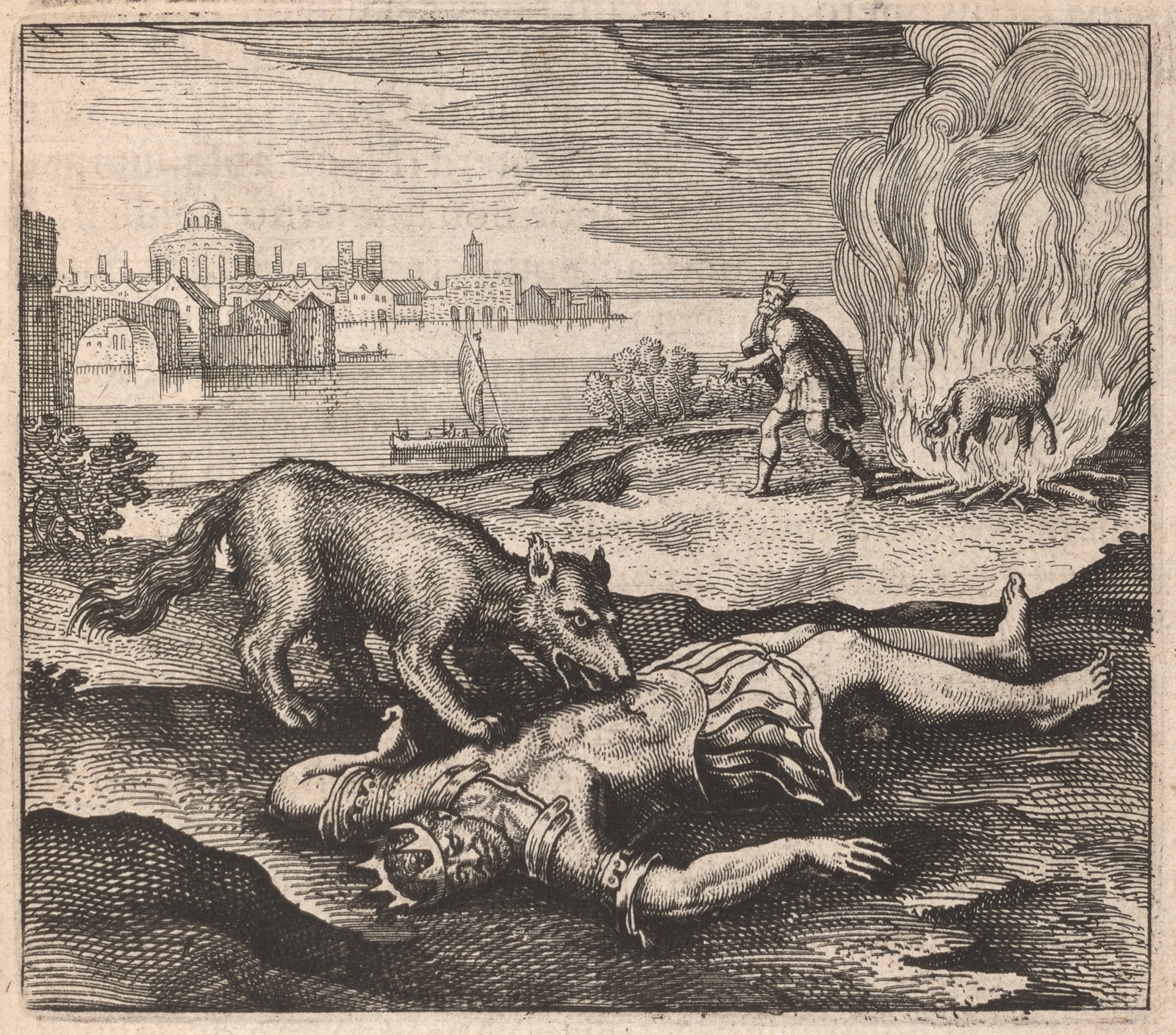
Emblem XXIV of the Atalanta Fugiens is one of Maier's most striking compositions. Its motto, drawn directly from the first of Basil Valentine's Twelve Keys, reads: 'The wolf devoured the king and after the wolf had been burnt, it returned the king to life.' De Jong's commentary explains that the king symbolizes the Philosopher's Stone—or more precisely, the impure gold that must be purified. The king's body is thrown before the voracious wolf (antimony), which devours it; the wolf is then cast into a great fire, where it is consumed, and the king rises from the ashes, alive, strong, and young, with the heart of a lion.
The chemical operation encoded here is the purification of gold using antimony. When gold is fused with metallic antimony (the 'grey, voracious wolf' that is 'subject to the bellicose Mars' by name but 'a son of grey-haired Saturn' by birth), the antimony absorbs the base-metal impurities. The alloy is then subjected to intense heat: the antimony oxidizes and is driven off, leaving behind purified gold. As Basil Valentine wrote, when this process is repeated three times, 'the Lion has conquered the wolf, and will find nothing any more to its taste in it.' Lawrence Principe has identified this as a historically accurate description of the cupellation-like refining of gold with stibnite (native antimony sulphide).
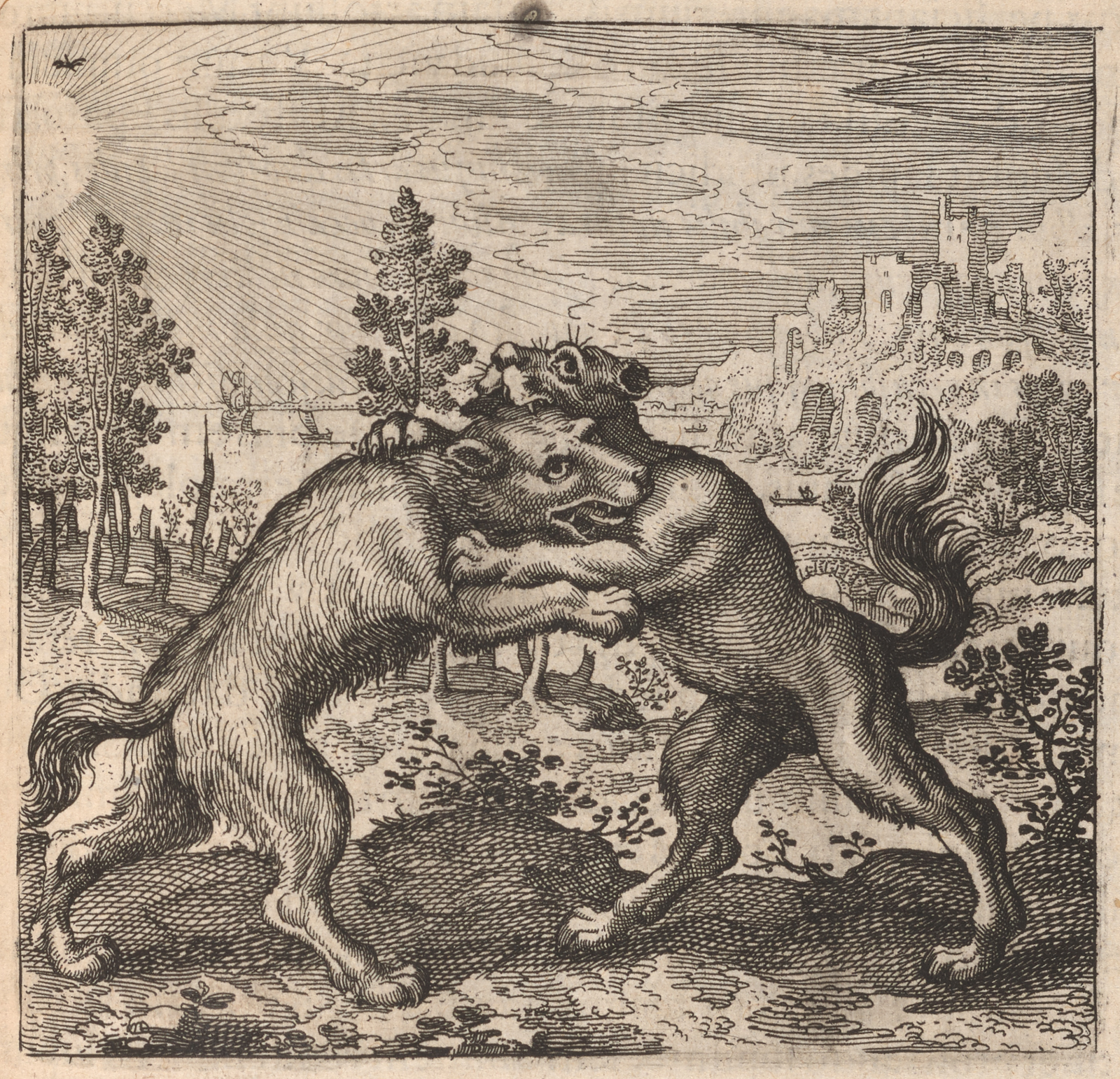
The wolf returns in Emblem XLVII, now paired with the dog in a different configuration of the same sulphur-mercury opposition. The motto, sourced from Rhazes's Epistola, states that the wolf comes from the East and the dog from the West; they bite each other in mutual frenzy until both die, producing from their bodies both poison and medicine. De Jong explains that the wolf from the East represents Sulphur (hot, dry, choleric) while the dog from the West represents Mercury (cold, moist, soft). Abraham concurs, noting that Maier used the wolf-and-dog pairing rather than the more common dog-and-bitch to represent the first primitive union of sulphur and argent vive.
De Jong observes that the wolf-and-dog image in the Atalanta Fugiens closely resembles Emblem V of Lambsprinck's emblems, which bears the motto 'Wolf and Dog stay in one house; nevertheless a unity arises out of them at the end.' The chemical meaning, De Jong notes, is that the difference between wolf and dog is slight—just as the difference between Sulphur and Mercury is slight, since they mutually descend from one another. The destructive combat is not waste but transformation: the very violence of their encounter produces the balanced, unified substance that is the goal of the art.
The Toad
Venomous Nurse-Child of the Stone
The toad occupies a peculiar position in the European imagination: venomous, ugly, and earth-bound, yet believed since antiquity to carry a precious stone in its head—the 'toadstone' or bufonite that was prized as a charm against poison. This paradox of the precious hidden within the repulsive made the toad a natural symbol for alchemists, who insisted that their Stone was found in the most despised and overlooked of substances. Abraham's Dictionary notes that the alchemical toad is synonymous with the serpent, crow, and dragon—all names for the dark prima materia at the beginning of the opus.
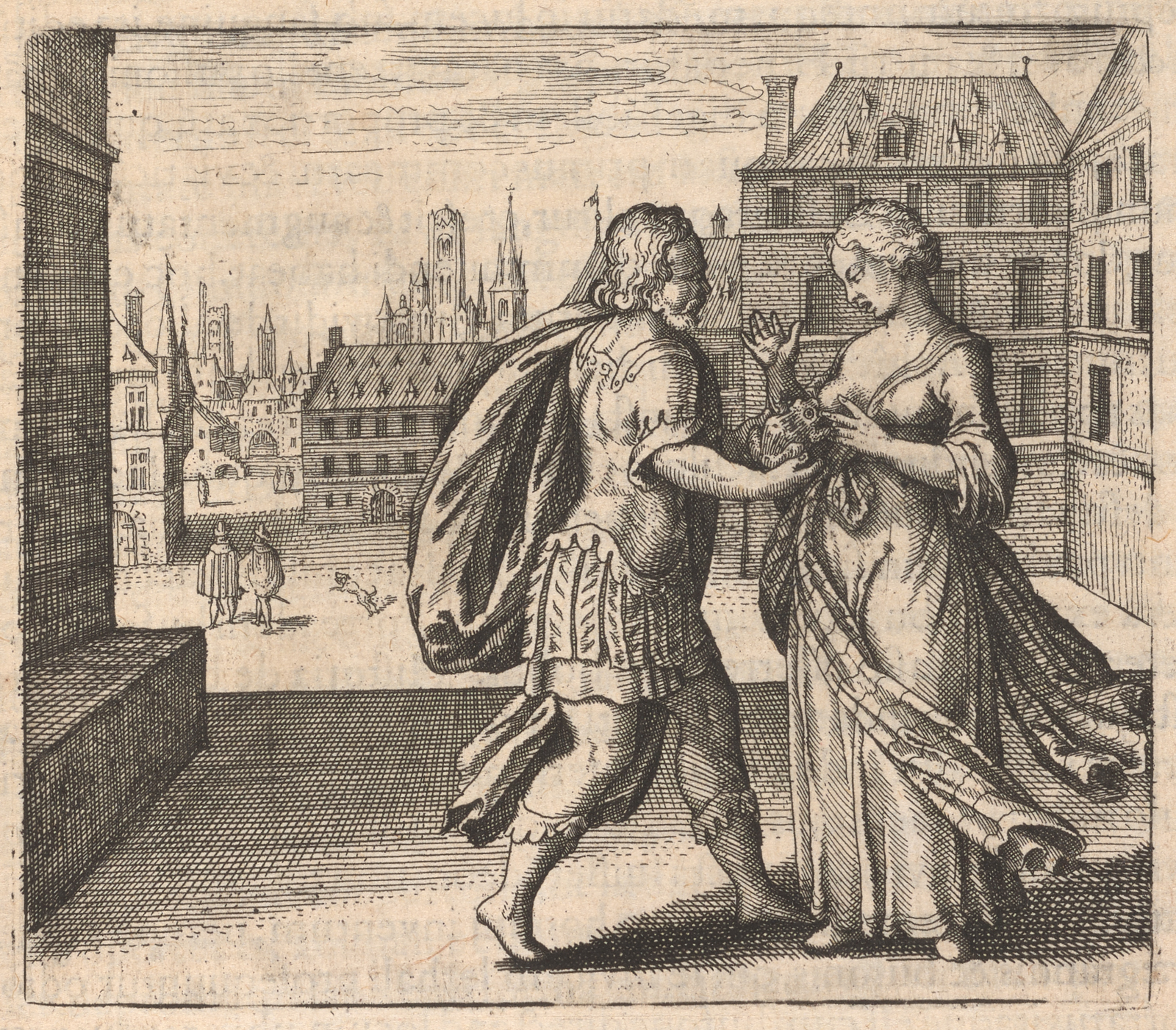
In Emblem V of the Atalanta Fugiens, Maier presents one of his most disturbing images: a woman nursing a toad at her breast, while the creature's poison slowly kills her. The motto reads: 'Put a toad to the breasts of a woman, that she may feed it, and the woman may die, and the toad grows big from the milk.' The source, as De Jong identified, is pseudo-Aristotle's Tractatus de Practica Lapidis Philosophici, which instructs the adept to tie the nursing woman's hands behind her back so she cannot harm her monstrous son.
De Jong's commentary decodes the allegory precisely. The toad represents the element earth—the very dry, purified substance that must be made pliable by the addition of water (the third stage of the Stone's preparation). The woman represents the element water. As the toad absorbs more and more moisture, it grows; as the woman gives up her substance, she dies. The operation described is cibation: the gradual feeding of a dry calcined body with measured quantities of mercurial liquid until the powder becomes a soft, wax-like paste. De Jong cites Lull's Codicillus: 'The coagulation of one nature does not happen without the dissolution of the other'—the toad coagulates as the woman dissolves.
The toad also appears in Maier's personal symbolism in a remarkable way. As Forshaw recounts, Maier petitioned Emperor Rudolf II for a coat of arms featuring an eagle flying above and a toad creeping along the ground, connected by a golden chain—an image drawn from Avicenna. The eagle represents volatile Mercury ascending; the toad represents the fixed earthly body. The golden chain (catena aurea) linking them signifies the continuous bond between heaven and earth, spirit and matter, that the alchemist must maintain throughout the Work. This same pairing appears in an emblem from Maier's Symbola Aureae Mensae, where Avicenna himself points to the pair and commands: 'Join together an earthly toad and a flying eagle.'
Chemically, the toad at the breast encodes the process of imbibition or cibation—the careful, repeated moistening of a calcined earth with distilled mercury-water. The 'poison' that kills the woman is the corrosive power of the mineral earth, which consumes the liquid as fast as it is added. The 'noble medicine' that results—mentioned in the epigram as something that drives poison from the human heart—is the Philosopher's Stone itself, which, like the mythical toadstone, transforms the most deadly venom into the most sovereign remedy.
The Dragon and Serpent
Ouroboros — Mercury in Its Darkest Phase
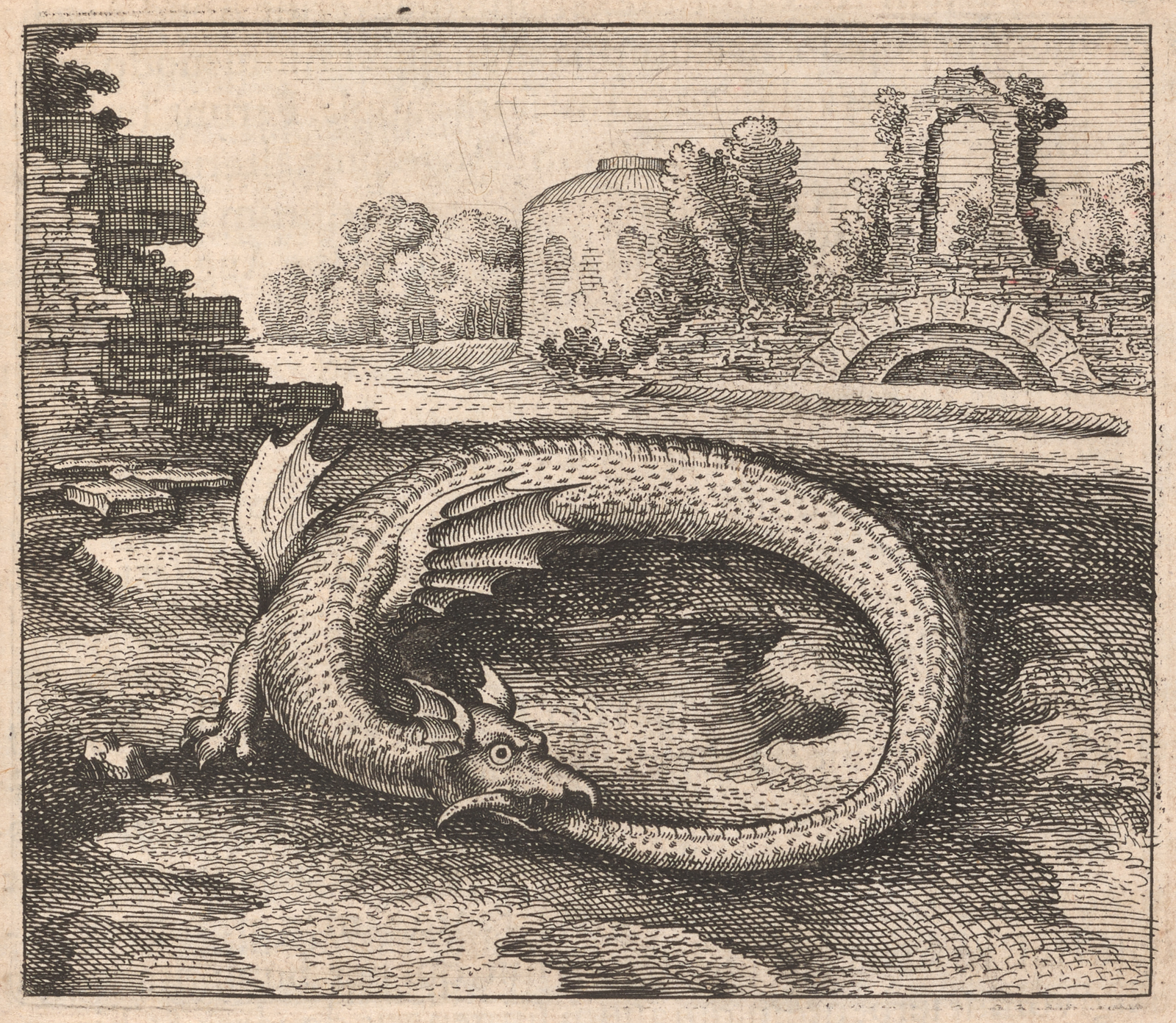
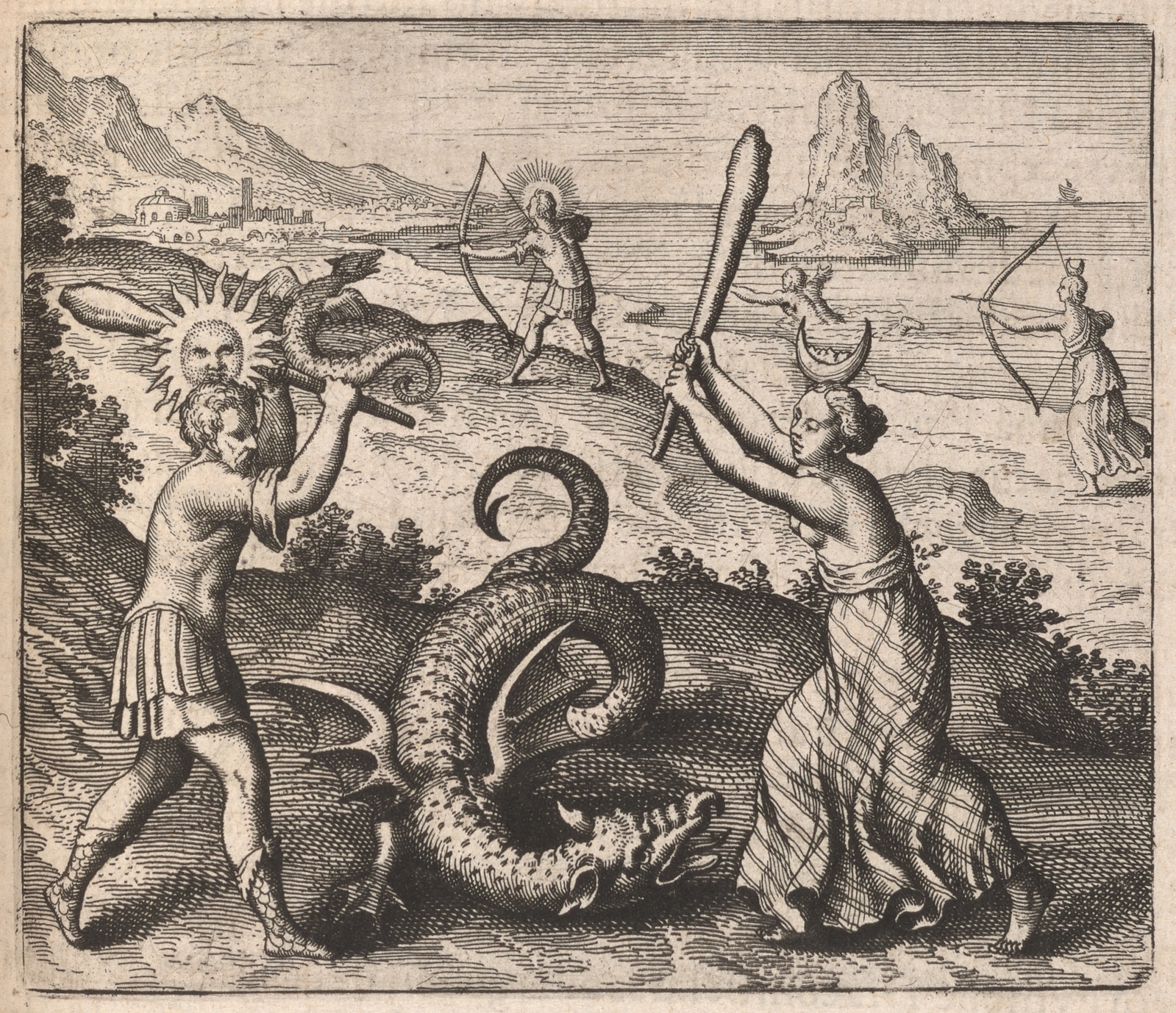
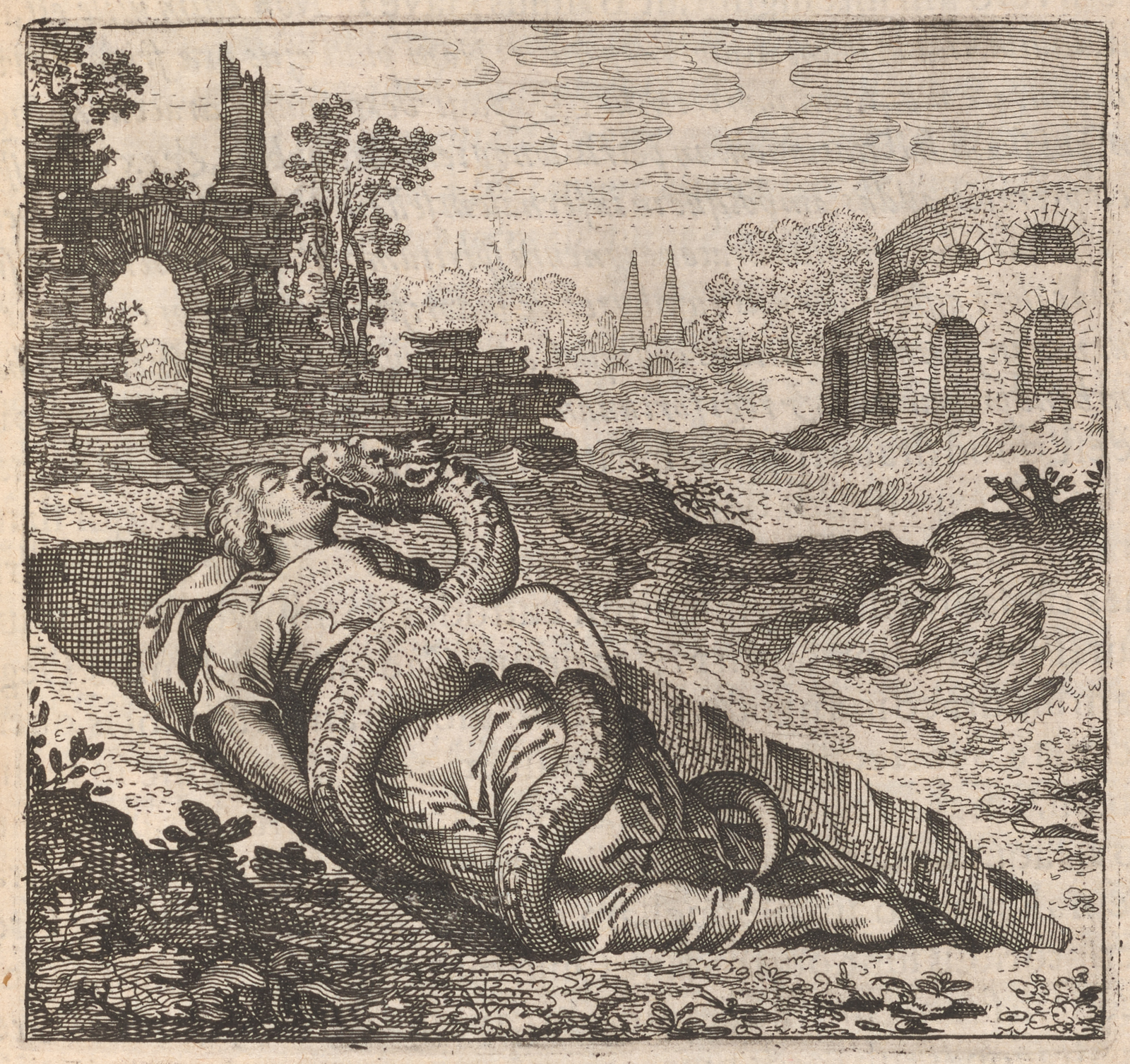
The dragon and the serpent are among the oldest symbols in human culture, and in alchemy they are often interchangeable. From the earliest Greek alchemical papyri through the Arabic tradition and into the Latin West, the serpent devouring its own tail—the ouroboros—served as the master symbol of the art. Abraham's Dictionary identifies the dragon as the dual-natured Mercurius in his first dark chthonic phase, citing Chaucer's Canon's Yeoman: 'By the dragoun, Mercurie and noon other / He understood.' The saying that 'a serpent which devours a serpent becomes a dragon' encodes the idea that when one mercurial substance consumes another, a more powerful agent results.
Emblem XIV of the Atalanta Fugiens depicts the ouroboros directly, with the motto: 'This is the dragon which devours its own tail.' De Jong's extensive commentary traces the symbol back to the Chrysopoeia of Cleopatra (c. 300 CE), where a serpent biting its tail encircles the words 'The One is the All.' In Maier's discourse, the dragon's self-consumption represents the circular movement of the alchemical process: repeated dissolving, evaporating, and distilling, in which finer parts ascend while coarser residues remain at the bottom. When the dragon bites off its tail, it digests its own 'unstable, poisonous and moist part,' becoming slower and more solid—a vivid description of the fixation of volatile mercury.
De Jong identifies an important dual meaning: the dragon is both nigredo (black matter in the stage of destruction and decomposition) and aqua divina (the life-giving divine water). At the initial stage it is poison; at the final stage it is the means of salvation. This ambivalence is central to alchemy's paradoxical logic. Lambsprinck's emblems capture it precisely: 'From its poison the noblest medicine arises; it immediately digests its poison, for it devours its own poisoned tail.'
In Emblem XXV, the dragon takes a different form: the winged serpent attacked by Sol and Luna (Sun and Moon) with bludgeon, bow, and arrow. The motto, from the Rosarium Philosophorum, states: 'The Dragon does not die, if it is not killed by its brother and sister, i.e. Sol and Luna.' De Jong explains that the volatile Mercury (the winged dragon) must lose its volatility and changeableness and be coagulated into stone. This is the coagula phase of the work, where the two fixed principles of sulphur and salt overcome the fugitive spirit of mercury. Forshaw glosses the broader principle succinctly: in alchemical ornithology, winged creatures symbolize volatile spirits ascending in the flask, while wingless creatures represent the fixed sediment.
The dragon also appears in connection with Emblem L, where a woman is united with a dragon—another figure for the coniunctio of mercury and sulphur. The serpent's association with Mercury extends to the caduceus of Hermes, entwined with male and female serpents, which Maier discusses in Emblem X. Throughout the Atalanta Fugiens, the dragon and serpent serve as the connective tissue linking disparate emblems into a single narrative of dissolution, purification, and reconstitution.
The chemical referent shifts depending on context, but the core remains consistent: the dragon is mercury in its raw, uncontrolled state—volatile, corrosive, and dangerous. The entire art consists in killing this dragon (fixing the mercury), extracting its blood (the dissolving mercurial water), and transforming its venom into medicine. As Maier notes, citing Lull, this sulphurous dragon is also 'the roaring lion' and 'the sharp sword'—it separates and destroys everything, but from that destruction, the Stone is born.
The Eagle
Volatile Spirit — Jupiter's Armor-Bearer
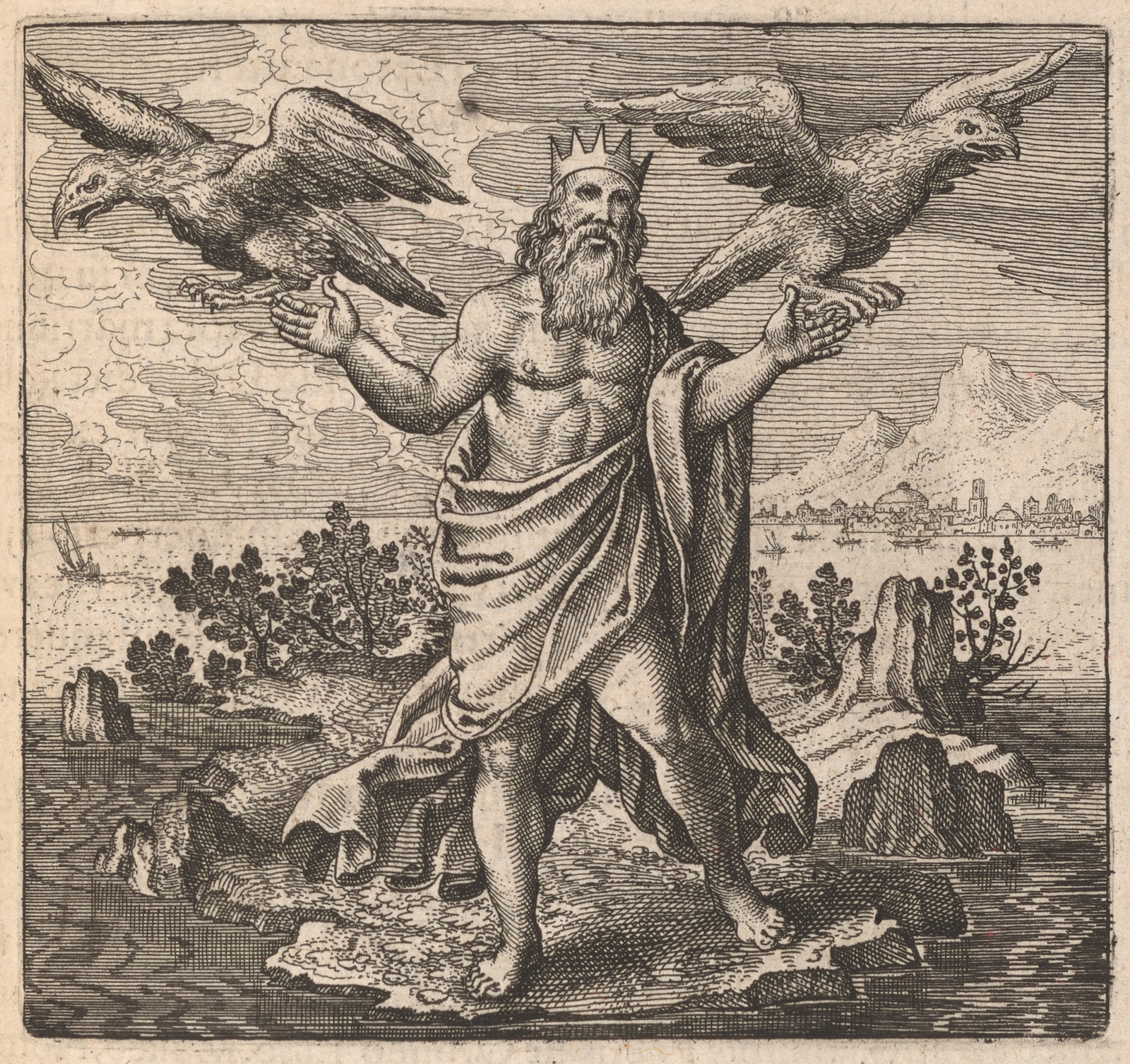
The eagle—king of birds, sacred to Jupiter, capable of gazing directly into the sun—was the supreme symbol of the volatile spirit in alchemical imagery. In classical natural history, Pliny and Aristotle attributed to the eagle the ability to test its young by holding them up to the sun: those that could bear the light were kept, the rest discarded. Alchemists seized on this as a figure for the testing of substances by fire, and for the sublimation of spirit from gross matter. Abraham identifies the alchemical eagle as sublimated philosophical mercury—the white tincture, the virgin's milk, the volatile water that rises to the top of the alembic.
In Emblem XLVI of the Atalanta Fugiens, Maier deploys the eagle in a mythological frame: 'Two eagles meet, the one from the East, the other from the West.' The epigram recounts how Jupiter sent a pair of eagles from Delphi to find the center of the earth; the eagles returned simultaneously, proving that Delphi was the world's navel. De Jong's commentary reveals that the two eagles are the two Stones—one from the East (Sulphur, hot and dry) and one from the West (Mercury, cold and moist). Their meeting at Delphi represents the coniunctio, the union of opposites at the exact center point that produces the Philosopher's Stone.
De Jong traces these same two eagles forward into Emblem XLVII, where they become the wolf and the dog—confirming that throughout the Atalanta Fugiens, the same fundamental opposition is restated in ever-shifting animal forms. The source text from Aristotle's letter (cited via the Consilium Conjugii) describes the white stone rising in the West and the red stone rising in the East, both ascending above the waters before descending to the depths—a remarkably precise description of the cyclic sublimation and condensation within the alembic.
The eagle also plays a central role in Maier's personal iconography. As Forshaw recounts, Maier petitioned Rudolf II for a coat of arms derived from Avicenna's symbolism: an eagle flying above connected by a golden chain to a toad creeping below. The eagle represents volatile mercury ascending; the toad, the fixed earthy body. In Maier's Symbola Aureae Mensae, the image appears under the patronage of Avicenna himself, with the injunction to 'join together an earthly toad and a flying eagle.' Abraham notes that this toad-and-eagle pairing signifies the sublimation of fixed earth by volatile spirit—the essential operation of the art.
In the broader alchemical tradition, as Abraham documents, the number of eagles corresponds to the number of sublimations: Philalethes wrote that 'every sublimation of the Philosophers, let be one Eagle.' The lion and eagle are frequently paired to demonstrate the solve et coagula cycle: the winged eagles devour the lion (the volatile spirit dissolves the fixed body), while simultaneously the body must 'clip the wings of the eagle'—that is, fix the volatile so it flies no more. Thomas Vaughan put it memorably: 'The greene Lion is the Body or Magicall earth with which you must clip the wings of the Eagle.'
The Salamander
The Fire-Dweller — Fixation Perfected
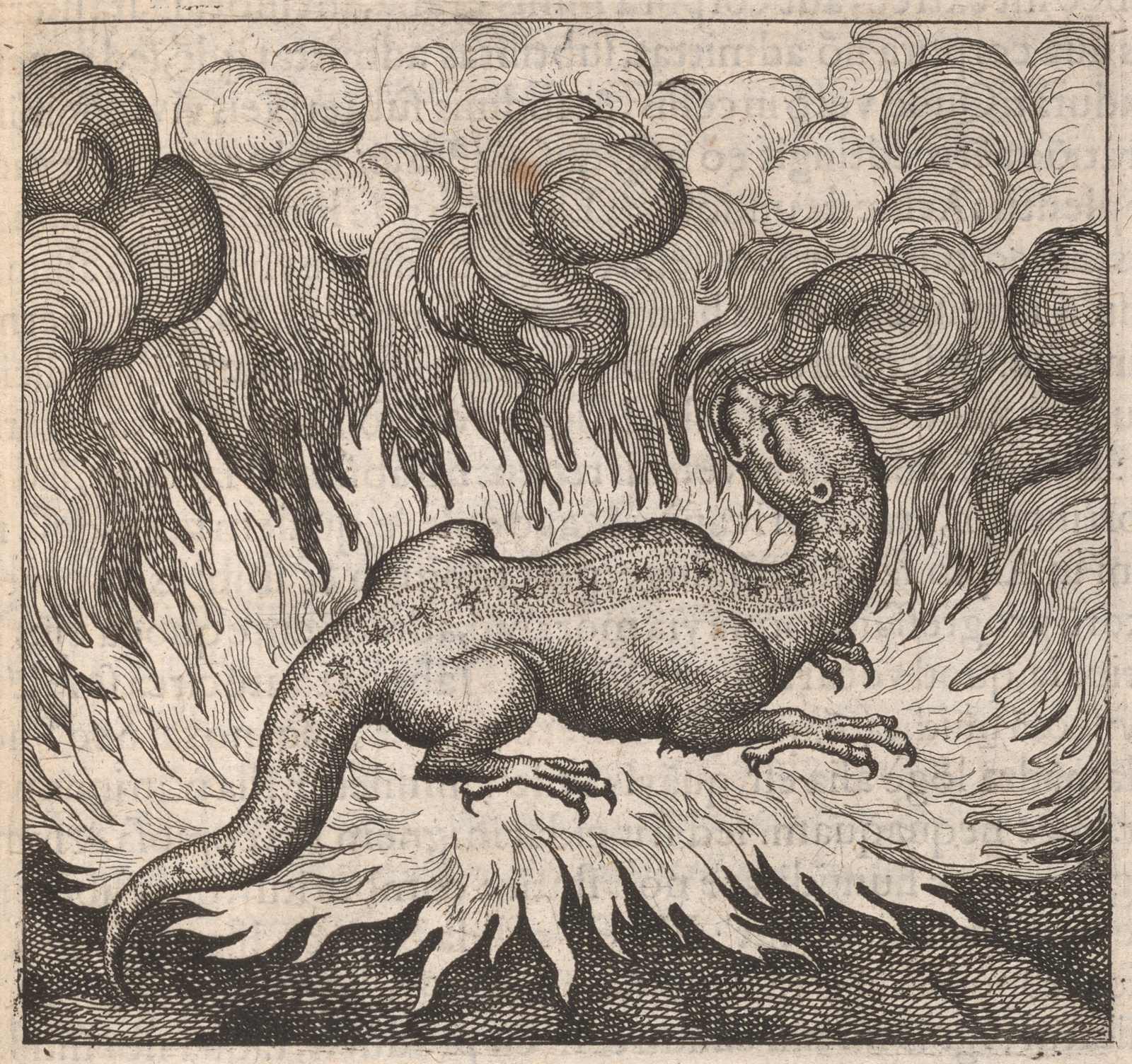
Classical natural history endowed the salamander with a singular property: the ability to live in fire and even extinguish flames by the coldness of its body. Pliny recorded the belief in his Natural History, and it passed through Isidore of Seville and the medieval bestiaries into common currency. Maier himself reports having seen salamanders in the Alps, emerging from crevasses after thunderstorms—a creature the local farmers called a 'Molch'—and notes that its slimy coating allows it to pass through fire without harm. But he is careful to distinguish the common salamander from the Philosophical Salamander, which is something altogether different.
In the alchemical tradition, the salamander represents the Philosopher's Stone in its final, perfected state—the stage at which it has become absolutely fixed and indestructible by fire. Avicenna's Tractatulus de Alchimia, which De Jong identifies as the source of Emblem XXIX's motto, states it plainly: 'The philosophers have called this stone our Salamander, because like a salamander it is fed exclusively by fire and lives in it, that is to say, is perfected by it, and so is our stone.' Where the common salamander merely endures fire due to its excess of moisture, the Philosophical Salamander is born in fire—it is hot and dry by nature, the offspring of flame itself.
De Jong's commentary on Emblem XXIX explains the underlying chemistry with precision. The Stone cannot become a Salamander until it has 'learned to endure the fire patiently,' and this takes a long time. The discourse describes how, in a perfectly balanced substance—one that is as warm as it is cold, as dry as it is wet—the four elements check each other so thoroughly that Vulcan's fire cannot destroy any one of them without the others rushing to its defense. Earth prevents fire from converting water to air; water prevents fire from reducing earth to ite ashes. The result is an equilibrium so stable that the 'executioner Vulcan' has no hold on it. This is the fixation test: when the substance placed in fire neither burns, volatilizes, nor changes, it has achieved the salamander nature.
De Jong connects this emblem to the broader theme of habituation that runs through the Atalanta Fugiens. Emblem XXXV speaks of Achilles and Triptolemus, who obtained the salamander nature through a process of gradual exposure—just as the Stone must be slowly accustomed to higher and higher temperatures. The parallel with Lambsprinck's Emblem I is also noted, where the motto reads: 'The Salamander lived in the fire, and the fire changed the Salamander into the most excellent colour.' Lambsprinck explains that this represents the reiteration, gradation, and amelioration of the Tincture—the final augmentation whereby the perfected Stone converts all imperfection it touches into its own perfection.
Chemically, the salamander encodes the final calcination and fixation of the Stone. A substance that can be placed in intense heat and emerge unchanged—neither volatilizing nor oxidizing—has achieved the goal of the entire opus. In practical terms, this corresponds to the production of a stable, deeply colored metallic calx (often gold-based) that resists further chemical change. The salamander is thus the emblem of completion: the Work is finished when the Stone lives in fire as comfortably as a lizard in the Alpine rain.
The Owl (Vulture)
Nocturnal Wisdom — The Philosophical Bird on the Mountain
The owl occupied an ambiguous position in the classical world: sacred to Athena as the bird of wisdom, yet also feared as a nocturnal harbinger of death. In Maier's wider writings, the owl features prominently. Forshaw describes a work in which the Phoenix acts as judge in a legal dispute among the birds, with all species ganging up on the poor owl—Athena's bird, the goddess of wisdom—until a hawk acts as her defender and she is ultimately vindicated. Forshaw sees this ornithological drama as characteristic of Maier's singular fascination with birds as vehicles for alchemical meaning.
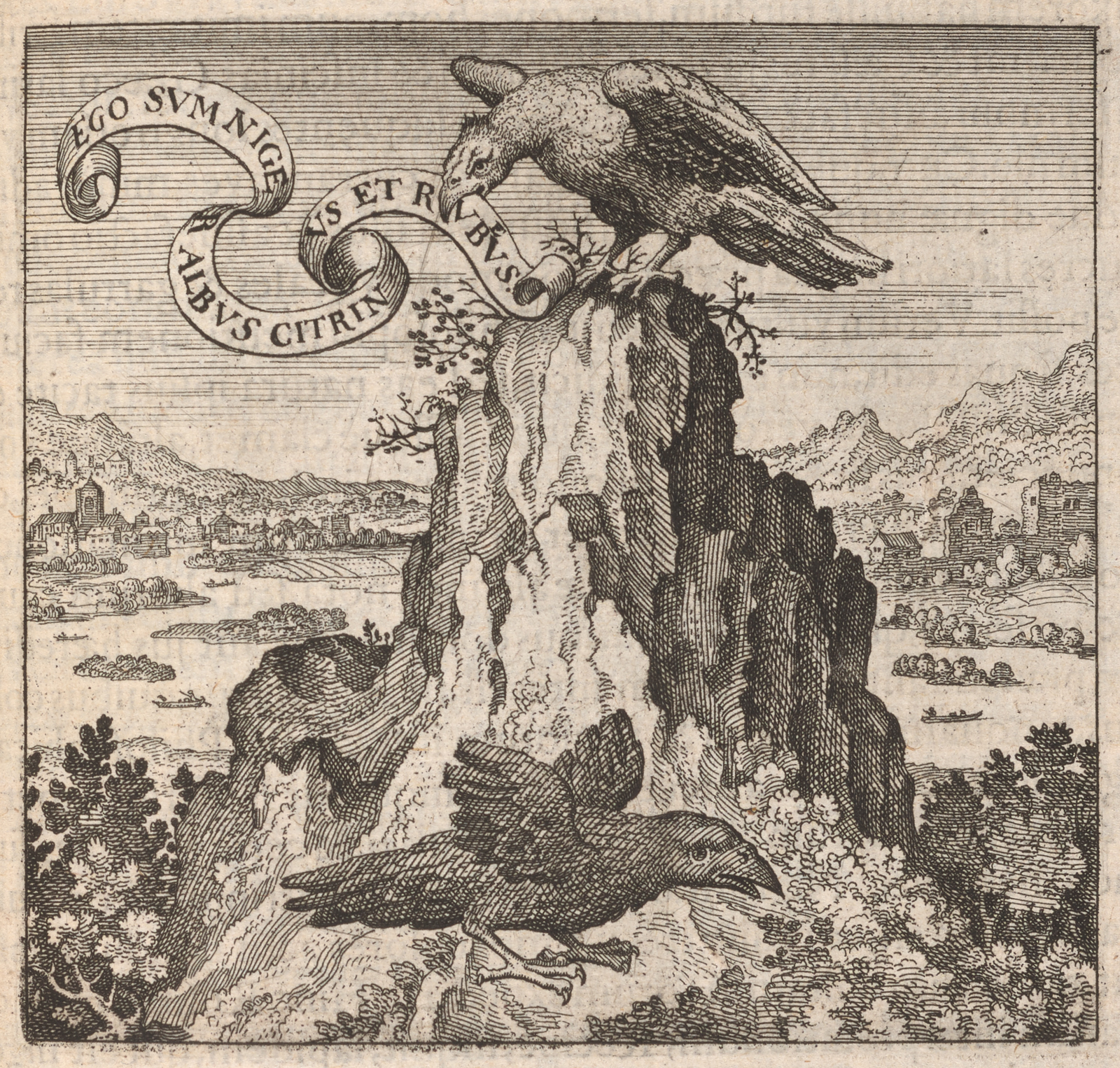
In the Atalanta Fugiens, Emblem XLIII does not use the word 'owl' directly but presents a closely related figure: the vulture standing on a mountaintop, calling out its own nature in a loud voice. The motto reads: 'Listen to the garrulous vulture, which does not deceive you at all.' The bird proclaims itself to be black, white, yellow, and red—the four principal colors of the alchemical opus in their prescribed sequence. De Jong identifies the source as the Tractatus Aureus attributed to Hermes Trismegistus, where the vulture cries: 'I am the white of the black, and the red of the white, and the yellow of the red, and I am very truthful.'
De Jong's commentary establishes that the vulture and raven together symbolize the circular motion of the alchemical process. The black raven represents the putrefactio (the stage of decomposition); the vulture represents its completion and, as such, contains within itself the initial stage and all intermediate stages—it is black, yellow, and red in succession. The Philosophical Bird is called a vulture because, like that scavenger, it is slow in flight, black in color, and becomes pregnant of its own accord. The Rosarium says: 'It is the Dragon which marries itself, fertilizes itself, and produces on the same day.' This self-generating quality makes it a figure for philosophical mercury, which is both agent and patient of its own transformation.
The connection between the vulture of Emblem XLIII and De Jong's reading of the wingless raven at the foot of the mountain (mentioned in the commentary on Emblem XVI) creates a topographic allegory. The eagle sits on the mountaintop—the volatile spirit that has risen to the apex of the vessel—while the dark, clipped-wing raven stays below, representing the heavy residue. Their eventual union produces the Philosophical Bird that possesses all four colors and can neither be destroyed nor contained. The mountain itself, as Rhazes says, is where the Stone is found.
Chemically, the vulture-on-the-mountain represents the entire sequence of color changes that the alchemist observes in the vessel: the black of putrefaction, the white of purification, the yellow (or peacock's-tail iridescence) of transition, and the final red of the perfected tincture. The bird's cry is a mnemonic: the adept who can identify and correctly sequence these four colors has mastered the art. That the bird 'flies without wings in the dark of night and in the clear daylight' signals a substance that circulates within the sealed vessel, ascending and descending without ever escaping—philosophical mercury in perpetual sublimation.
The Dog
The Western Beast — Mercury as Fixed Body
The dog—loyal, fierce, but ultimately tameable—serves in alchemical symbolism as a counterpart to the wolf. Where the wolf is wild, eastern, and sulphurous, the dog is western, mercurial, and associated with the cold, moist, dissolving principle. Abraham's Dictionary treats the dog under the entry 'dog and bitch,' where the Corascene dog and the Armenian bitch represent the two primary substances—philosophical sulphur and argent vive—whose violent coupling produces the mercurial water. Flamel described their union in memorably gory terms: they bite one another cruelly, until 'both of them by their slavering venome and mortall hurts, be all of a goare bloud.'
In Emblem XLVII of the Atalanta Fugiens, the dog comes from the West to meet the wolf from the East. The motto, drawn from Rhazes, states that they bite each other and become furious, mutually killing one another, until from their bodies arise both poison and medicine (toxicum et tyriaca). De Jong explains that the dog represents Mercury from the Occident—soft, mouldable, cold, and moist—while the wolf represents Sulphur from the Orient—choleric and furious. When they meet, the dog gains the first victory on account of its size, half-killing the wolf; but the wolf recovers and kills the dog, expending all its own strength in the process, so that both perish together.
De Jong notes that the distinction between wolf and dog is deliberately slight: 'the dog has the shape of a wolf, and the wolf has almost become tame by a long line of descent.' This mirrors the alchemical teaching that Sulphur and Mercury mutually descend from one another—Mercury produces Sulphur and Sulphur purifies Mercury. The chemical operation described is the repeated mutual dissolution and coagulation of two reactive metallic substances, each alternately consuming and being consumed by the other, until a stable compound emerges from their combat.
Abraham notes that Maier chose the wolf-and-dog pairing in preference to the more traditional dog-and-bitch, which appears in Flamel and Philalethes. De Jong identifies the visual source as Lambsprinck's Emblem V, which shows wolf and dog dwelling in one house with the motto: 'Wolf and Dog stay in one house; nevertheless a unity arises out of them at the end.' The dog in De Jong's reading is the volatile mercury, connected with the dark, chthonic side of Luna—the nocturnal, dissolving, feminine counterpart to the solar, fixing, masculine wolf.
The Bird (Philosophical Chick)
Sublimation and Condensation in the Alchemical Nest
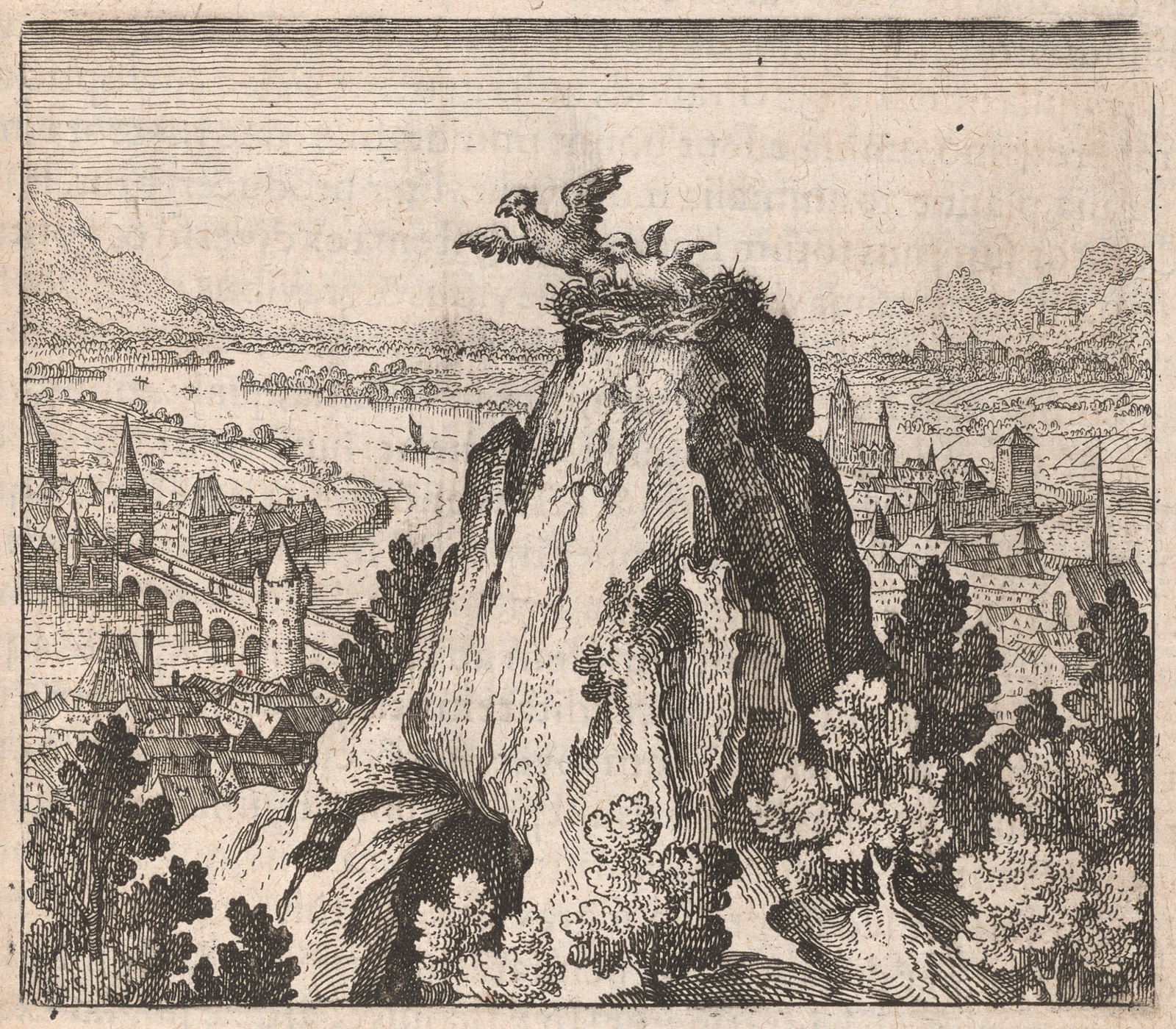
The image of a young bird attempting to fly from its nest, only to be pulled back by a wingless sibling, is one of the most physically intuitive allegories in the Atalanta Fugiens. Emblem VII depicts an eagle's nest built in a hollow rock, where one fledgling rises on light wings while its wingless brother holds it back. The motto reads: 'A young bird came into being, flying up from the nest, and fell back into the nest again.' The epigram advises: 'Connect them, head to tail, and you will succeed.'
De Jong identifies the source as Senior's Tabula Chimica, which works out the comparison of winged and wingless birds at length and is 'certainly the source of Maier's emblem.' The wingless bird represents the heavy elements (earth and water) while the winged bird represents the light elements (fire and air). In the philosophical work, the light elements first gain mastery over the heavy ones, but they are eventually conquered by the strength of the heavy elements. Over time, the eagle's wings get torn, and the two birds become one large bird—like an ostrich, which can eat iron and walks more on earth than it flies, although it has wings.
The allegory maps precisely onto the process of sublimation and condensation within a sealed vessel. When the alchemist heats the matter, volatile components rise as vapor (the winged bird flies upward). But because the vessel is sealed, the vapor cannot escape; it encounters the cooler upper portions, condenses, and falls back down (the wingless bird drags it back to the nest). This cycle repeats until the volatile and fixed components are thoroughly integrated—neither able to fly away without the other. The discourse compares this to a falcon seizing a heron in mid-air: the falcon's speed carries it higher, but the heron's dead weight drags both to the ground.
De Jong connects this emblem to the broader series of volatile-fixed pairings in the Atalanta Fugiens: the winged and wingless lions of Emblem XVI, the cock and hen of Emblem XXX, and the wolf and dog of Emblem XLVII. All encode the same fundamental principle: volatile substances must be fixed, and fixed substances must be volatilized, until a single homogeneous substance results. Petrus Bonus's observation, cited in the discourse, captures the chemical reality: in camphor, the light elements predominate and it evaporates completely; in gold, the elements remain bound together even in flame. The alchemist must achieve an intermediate state—solid, firm, and hard—where 'the wingless bird will hold back the winged one and the solid matter will bind the volatile matter.'
Abraham discusses the philosophical chick under the entry for 'Bird of Hermes,' noting that the birth of the Stone from the chemical wedding is frequently compared to the hatching of a bird from the philosopher's egg. The vessels themselves are named after birds—pelican, cormorant, stork—and the four main stages of the opus are symbolized by a succession of birds: the black crow of the nigredo, the multi-colored peacock of the transition, the white swan or dove of the albedo, and the red phoenix of the rubedo.
The Coral
Soft Underwater, Hard in Air — The Vegetable Stone
Coral is not, strictly speaking, a creature, but it occupied a strange borderland in early modern natural philosophy—neither fully plant, animal, nor mineral, but participating in all three kingdoms. Ovid's Metamorphoses told how coral was soft and pliant underwater but hardened to stone when exposed to air, a transformation that delighted the alchemists because it so closely mirrored the behavior of their own Stone. In Maier's bestiary of analogies, coral earns its place alongside the lion and the dragon by virtue of this metamorphic property.
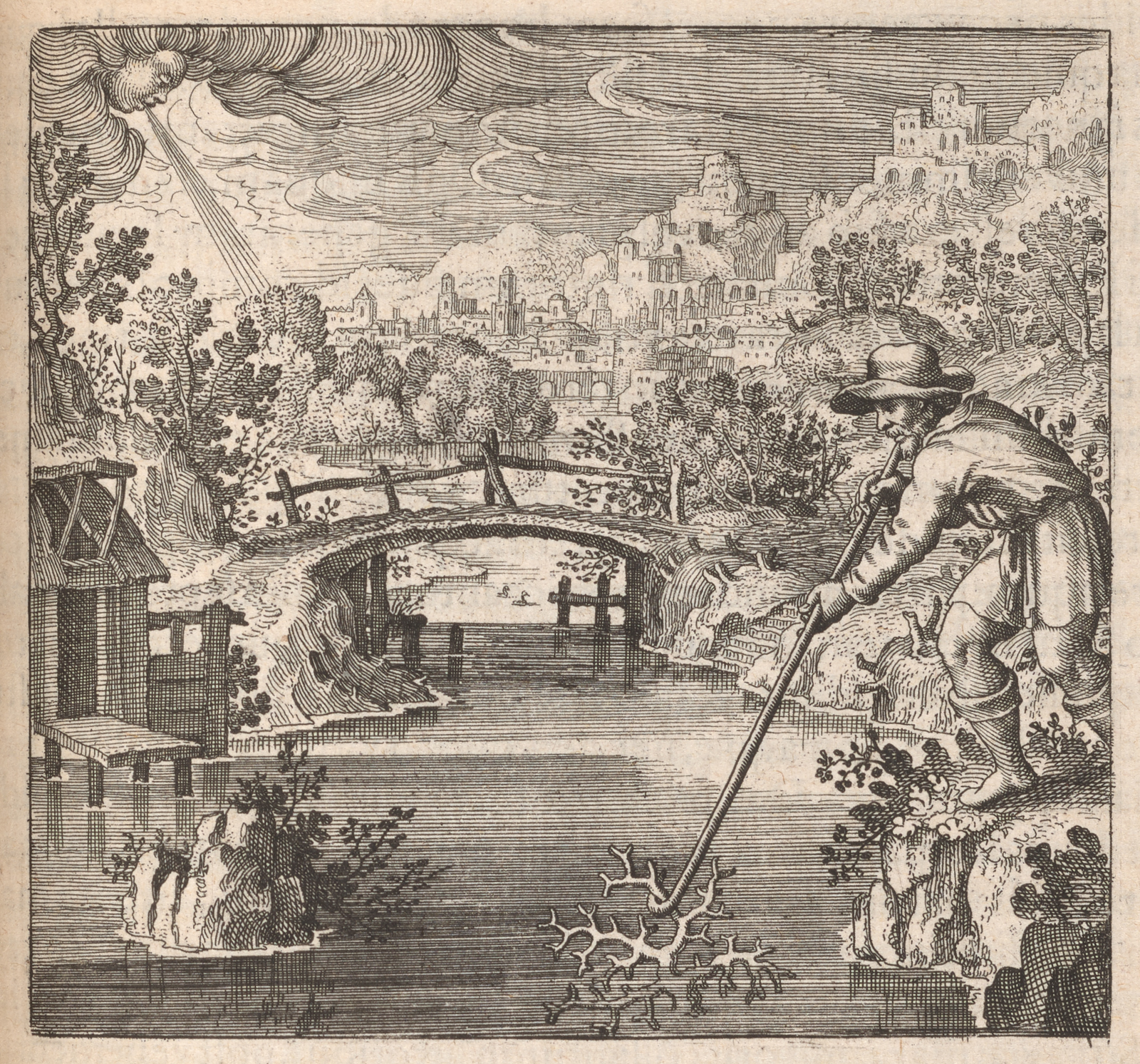
Emblem XXXII of the Atalanta Fugiens bears the motto: 'As coral grows under water, and, exposed to the air, gets hard, so also the stone.' The epigram describes a moist plant living under the waves near Sicily, multiplying its branches in tepid water, hardening when the north wind (Boreas) sends frost from the cold north, becoming stone with many ramifications and a red color—'a suitable image for the Stone of Nature.' De Jong explains that the philosophers call their stone 'vegetable' because it grows and multiplies like a plant—an assertion that seems incredible to the ignorant, since stones do not normally grow.
The discourse asks where the petrifying and coloring force comes from: does it belong to earth, air, or water? Underwater, coral is soft and pliable, of an earthy nature; when it is cut and exposed to air, it becomes hard and fragile like stone. De Jong attributes this to the cold, dry air of the north wind drawing out superfluous moisture, leaving behind an earth-body hardened by the properties of coldness and dryness. The analogy to the alchemical process is exact: the Stone grows in the mercury-water (the liquid medium within the vessel), and when the superfluous moisture is driven off by carefully controlled heat, what remains solidifies, turns red, and becomes the tincture.
Abraham confirms the identification: coral is a synonym for the red stone and red tincture attained at the rubedo, the final stage of the opus. Synesius listed it alongside 'the bloody Stone, the purple, red Coral, the precious Ruby, red Mercury, and the red Tincture.' Maier's own words, quoted by Abraham, make the parallel explicit: 'The Philosopher's Stone may be compared with coral. For just as coral grows in water and gets its food out of the earth, in the same way the Philosopher's Stone grows out of the mercury water. Just like coral, the Stone gets a red colour, when it becomes solidified, and is then called tincture and has a colouring power.'
De Jong adds a practical dimension: the Philosophical Coral has to be cut very carefully underwater, so that its juice and blood are not lost, leaving nothing but 'earthly chaos, without its own true form.' The only great difficulty is separating the superfluous liquid, which kills the Stone and prevents it from becoming hard and red. This corresponds to the critical operation of decantation or careful evaporation, where too much heat drives off not just the excess water but the essential mercurial spirit along with it. The coral—growing patiently in its dark marine environment, turning to beautiful red stone only at the precise moment of its exposure to air—is thus a figure for the alchemist's patience and the Stone's slow ripening from formless liquid to perfected solid.
The Phoenix
The Self-Regenerating Fire-Bird — Rubedo Perfected
The phoenix—the mythical bird that immolates itself on a pyre and rises reborn from its own ashes—is perhaps the most universally recognized alchemical symbol, yet it does not appear as the subject of any single emblem plate in the Atalanta Fugiens. Its absence from Merian's engravings is compensated by its pervasive presence in Maier's wider corpus. Hereward Tilton titled his major study of Maier The Quest for the Phoenix, identifying the self-regenerating fire-bird as the master symbol for everything Maier sought: the Philosopher's Stone as a substance that consumes itself and is reborn in perfected form.
In the alchemical color sequence documented by Abraham, the phoenix represents the final red stage, the rubedo, which crowns the entire opus. The progression runs: the black crow or raven of the nigredo (putrefaction), the multi-colored peacock's tail of the transitional stage, the white swan or dove of the albedo (purification), and finally the red phoenix of the rubedo (perfection). Abraham notes that Paracelsus described this succession of stages: 'This black substance is the bird which flies by night without wings,' transformed through stages until it reaches its final fiery form.
Within the Atalanta Fugiens itself, the phoenix appears in De Jong's commentary on Emblem XLIII, where the vulture on the mountaintop is explicitly identified with the phoenix. Citing Ausonius, De Jong quotes: 'Thrice the raven outruns the swift-footed stag in length of years; while that bird which renews its life, the Phoenix, multiplies ninefold the raven's years.' The vulture and phoenix are said to be identical—both symbolize the completed Stone that contains within itself all previous stages (black, white, yellow, red) and possesses the power of self-regeneration. The Stone, like the phoenix, is born from fire, consumes itself in fire, and rises from fire renewed and multiplied.
Forshaw discusses Maier's ornithological fascination in connection with another of his works, where the Phoenix presides as judge over a disputatious parliament of birds—an image borrowed from the medieval literary tradition of the bird-debate. In this text, the Phoenix represents the highest attainment of the alchemical art, adjudicating between lesser substances (the raven, the nightingale, the owl) as the Stone adjudicates between base metals, transforming each according to its nature. Forshaw emphasizes that Maier had 'more of an interest than most in alchemical birds,' weaving ornithology into alchemy with genuine enthusiasm.
Chemically, the phoenix encodes the process of multiplicatio—the augmentation of the Stone's power through repeated cycles of dissolution and coagulation at the red stage. Each time the perfected Stone is dissolved and reconstituted, its tinctural power is said to increase tenfold. The phoenix's self-immolation and rebirth is thus not a single event but a repeatable operation, each cycle producing a more potent tincture. The Stone that has passed through this multiplication is, in alchemical parlance, 'phoenix-like': it can project its red color onto enormous quantities of base metal, just as the mythical bird's single feather was said to confer immortality.
The Pelican
Self-Sacrifice and Circulatory Distillation
The pelican of medieval bestiaries was believed to feed its young with blood from its own breast—a legend that made it a symbol of Christ's sacrifice in Christian iconography and, by a different but parallel logic, a symbol of the self-dissolving, self-nourishing Stone in alchemical tradition. The pelican does not appear as the subject of a dedicated emblem in the Atalanta Fugiens, but its influence pervades the work through the apparatus named after it and through the broader symbolism of self-sacrifice that structures Maier's emblem sequence.
In practical alchemy, the pelican was a specific type of distillation vessel—a circulatory apparatus in which liquid evaporated from the lower body, condensed in the upper portion, and flowed back down through side-tubes to be redistilled, in a continuous closed cycle. Giovanni Baptista della Porta illustrated this vessel in his De Distillatione (1608). The name derived from the vessel's shape, with its curved return-tubes resembling the pelican's beak turning back toward its own breast. Abraham notes that the pelican vessel was used for the opus circulatorium—the circular work of repeated dissolution and coagulation that gradually refines the matter of the Stone.
Abraham identifies the pelican as a symbol of the stage known as the multiplicatio, where the quality and quantity of the Stone are augmented by repeated cycles of solve et coagula. In this reading, the pelican's self-wounding becomes a figure for the Stone's ability to dissolve itself (releasing its own 'blood' or tincture) and then reconstitute from that very dissolution in a more concentrated form. Each cycle of self-sacrifice produces a more powerful Stone—just as each legendary pelican revives its offspring with the cost of its own blood.
The pelican's symbolism intersects with several emblems in the Atalanta Fugiens, even without a dedicated plate. The toad suckling at the woman's breast in Emblem V mirrors the pelican's self-feeding logic: the nursing mother gives up her substance so that the monstrous child may grow. The philosophical chick of Emblem VII, born from the egg in the sealed vessel, evokes the pelican's nest and its blood-nourished offspring. And the entire circular process that the Atalanta Fugiens describes—matter ascending, condensing, falling back, and ascending again—is the action that takes place inside the pelican vessel.
Maier's choice to name his emblematic work after Atalanta—the fleeing woman, the fugue, the chase that circles back on itself—resonates with the pelican's circulatory symbolism. Both figures encode the same insight: that the alchemical process is not linear but circular, that giving is receiving, that the substance that sacrifices itself is the substance that is reborn. The pelican, feeding its young from its own veins inside a sealed glass vessel, is perhaps the most compact image the alchemists ever devised for the self-sufficiency of the perfected Stone.