Szulakowska on Maier
The Religious Politics of Alchemical Illustration
Urszula Szulakowska's three monographs — The Sacrificial Body and the Day of Doom (Brill), The Alchemy of Light (Brill), and The Alchemical Virgin Mary (Cambridge Scholars) — offer a dimension of Maier scholarship found nowhere else: the religious and political context of alchemical illustration. Where De Jong traces each emblem to its textual sources and Tilton situates Maier within Rosicrucianism, Szulakowska reveals the Reformation theology, Eucharistic controversy, and Habsburg court politics encoded in the same images.
I. The Khunrath-Maier-Fludd Triad
Szulakowska positions Maier within a triad of late-Renaissance Paracelsian alchemists — Heinrich Khunrath (1560-1605), Michael Maier (1568-1622), and Robert Fludd (1574-1637) — who collectively transformed alchemical illustration from medieval Christological imagery into a new classicizing visual language. She argues that Maier's emblems in the Atalanta Fugiens 'set the style for alchemical illustration for the next three centuries, replacing the earlier Christological motifs.' Fludd and Johann Daniel Mylius subsequently copied and adapted Maier's visual innovations, with Mylius reproducing AF emblems in detail in his Philosophia Reformata (1622).\n\nWhat distinguishes the triad is not merely their artistry but their theological ambition. Szulakowska argues that all three regarded their chemical procedures 'as being essentially the same rite as the mass' — a 'symbolic usurpation of the highest spiritual and political authority since the right to offer Communion was jealously guarded.' The alchemical laboratory becomes, in this reading, an alternative altar where the transmutation of matter re-enacts the Eucharistic transformation of bread and wine into the body and blood of Christ.\n\nYet Maier is the most reticent of the three. Where Khunrath openly identified Christ with the philosopher's stone, and Fludd developed elaborate cosmological diagrams, Maier 'disguised his religious references in barely decipherable signifiers.' His classical mythological surface — Atalanta, Hippomenes, Osiris, Oedipus — conceals what Szulakowska identifies as a fundamentally Eucharistic understanding of alchemical transformation. The reader who sees only pagan myth misses the sacramental structure beneath.
II. The Alchemical Mass
Szulakowska's most sustained analysis of Maier concerns the alchemical mass illustration from the Symbola Aureae Mensae Duodecim Nationum (1617). Maier reprinted a fifteenth-century treatise by Nicolaus Melchior Cibinensis (Processus sub forma missae) and commissioned Matthaeus Merian to engrave an accompanying illustration of the Virgin Mary as the Apocalyptic Woman from Revelation 12:1 — 'a woman clothed with the sun, with the moon under her feet, and on her head a crown of twelve stars.'\n\nSzulakowska argues that Maier's illustration is 'a far more radical disquisition on the alchemical mass than Cibinensis' discrete original text.' Where the fifteenth-century author had cautiously discontinued his account before the consecration of bread and wine, Maier's engraving 'clearly identifies Christ with the lapis philosophorum and the elixir of life.' The chasuble of the officiating priest, the gestures of consecration, the presence of the Apocalyptic Woman — all constitute a bold exposition of the alchemical process as a re-enactment, not merely a symbolization, of the Catholic Communion.\n\nIn The Alchemical Virgin Mary, Szulakowska connects this image to the 'Turkish Madonna' tradition — Marian imagery linked to the Ottoman wars and the defense of Christendom. Emperor Rudolf II, Maier's patron, had been heavily involved in military campaigns against the Turks. The Apocalyptic Woman in Maier's illustration may thus function simultaneously as the Virgin Mary, as the alchemical lac virginis (virgin's milk), and as a political emblem of Christian resistance to Ottoman expansion — a triple register that exemplifies the density of meaning Szulakowska finds in Maier's visual program.
III. Atalanta Fugiens: The Sacrificial Body
In The Sacrificial Body, Szulakowska reads six AF emblems through the lens of bodily transformation, Eucharistic symbolism, and Reformation theology. Her central argument is that the theme of dismemberment and resurrection — pervasive in the AF — encodes a specifically Christian soteriology beneath its classical surface.
Emblem XIX — The Four Warriors
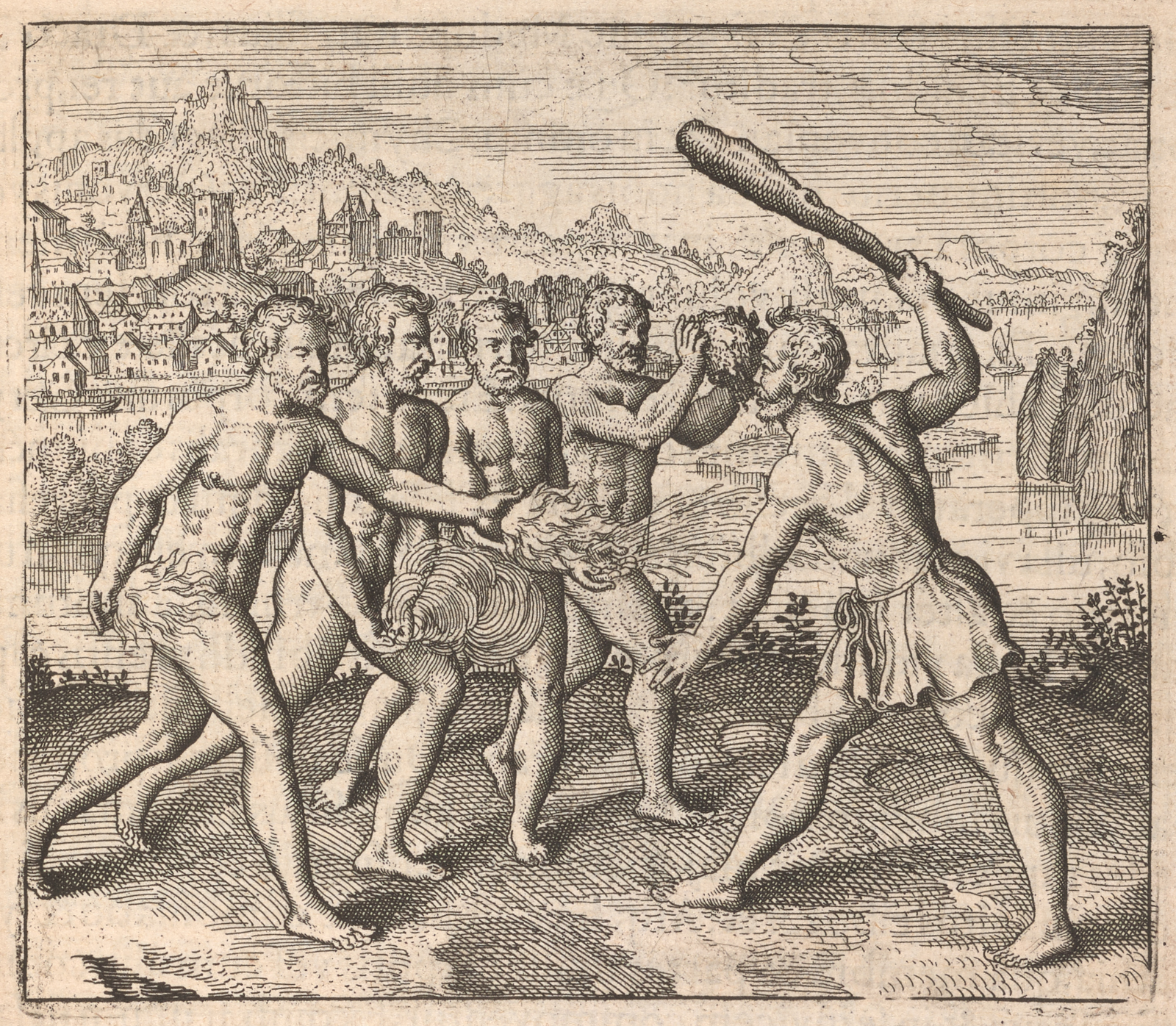
Szulakowska reads the four interconnected warriors (representing the four elements whose death is mutual) as a Christological allegory. She identifies Maier's reference to Hermes testifying that 'our Son shall live and the dead King shall come out of the fire' as a disguised reference to Christ's resurrection. When 'this dead one arises, then death, darkness and the waters of the abyss shall flee from him.' The dragon that guards the abyss flees from the sun-beams — 'our Son' — in language that maps precisely onto Christian eschatology.\n\nWhere De Jong identifies the source as the myth of Geryon and the Turba Philosophorum's teaching about elemental inseparability, Szulakowska adds the Christological layer: the four warriors are not merely four elements but four aspects of the sacrificial body that must die together before resurrection is possible. Maier 'mitigates the degree of physical violence exhibited in his visual symbols' compared to earlier alchemical imagery, but retains their salvific meaning.
Emblem XXIV — The Wolf Devouring the King
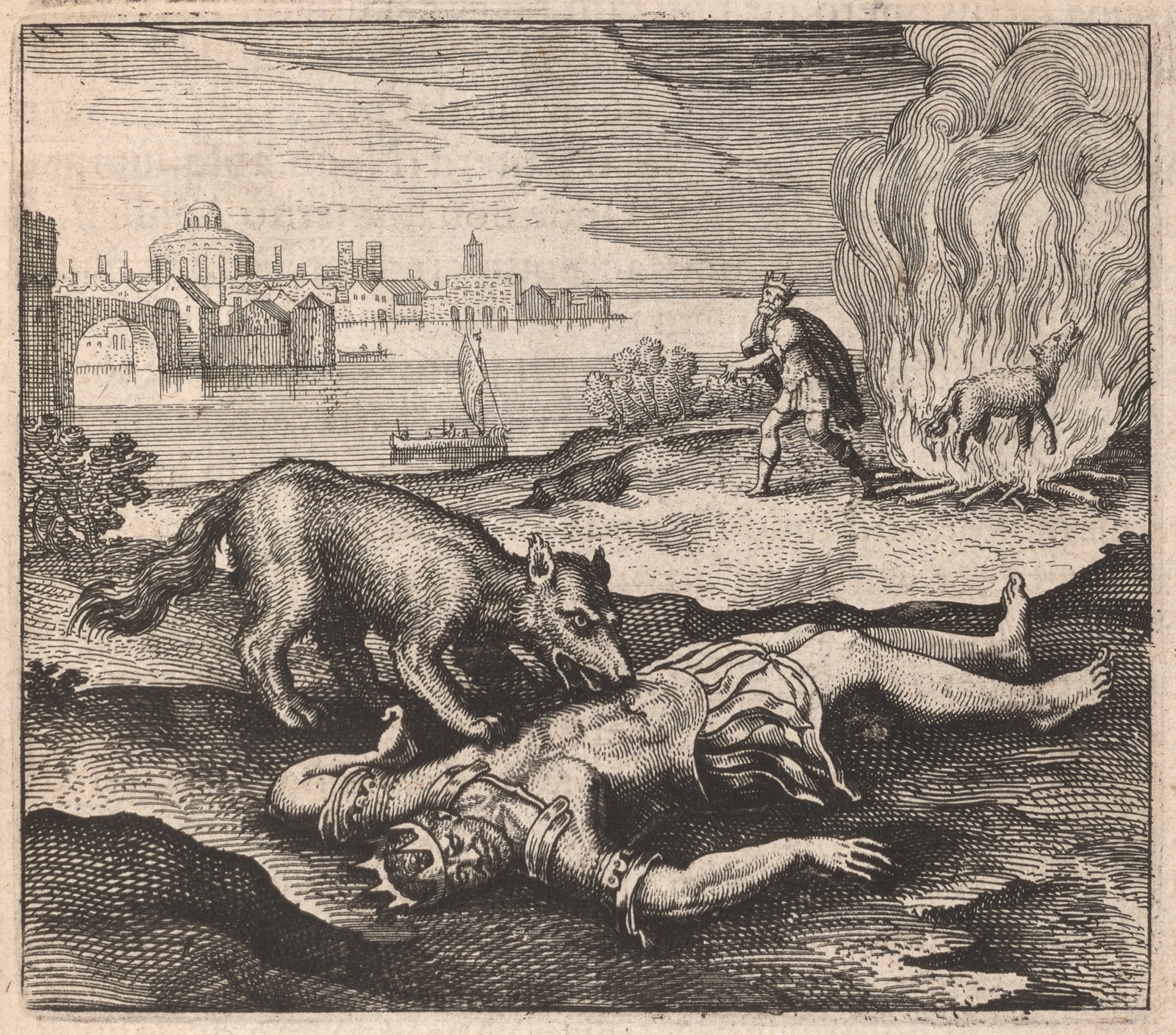
The wolf (antimony) devours the crowned king (Saturn/prime matter), then the wolf is consumed by fire, and the king returns to life 'in a young and vigorous form as the tincture that cures every disease.' Szulakowska traces this allegory to Basil Valentine's Twelve Keys, where the wolf symbolizes the mineral antimony used to separate gold from its matrix.\n\nLawrence Principe has identified the metallurgical reality behind this imagery: antimony sulphide was used in assaying to extract gold from base alloys. Szulakowska reads beyond the chemistry to identify the sacrificial-body theology: the king's dismemberment and reconstitution mirrors the Eucharistic sacrifice where the body of Christ is broken and distributed before being mystically reunited in the Resurrection.
Emblem XXVIII — King Duenech in the Steam Bath
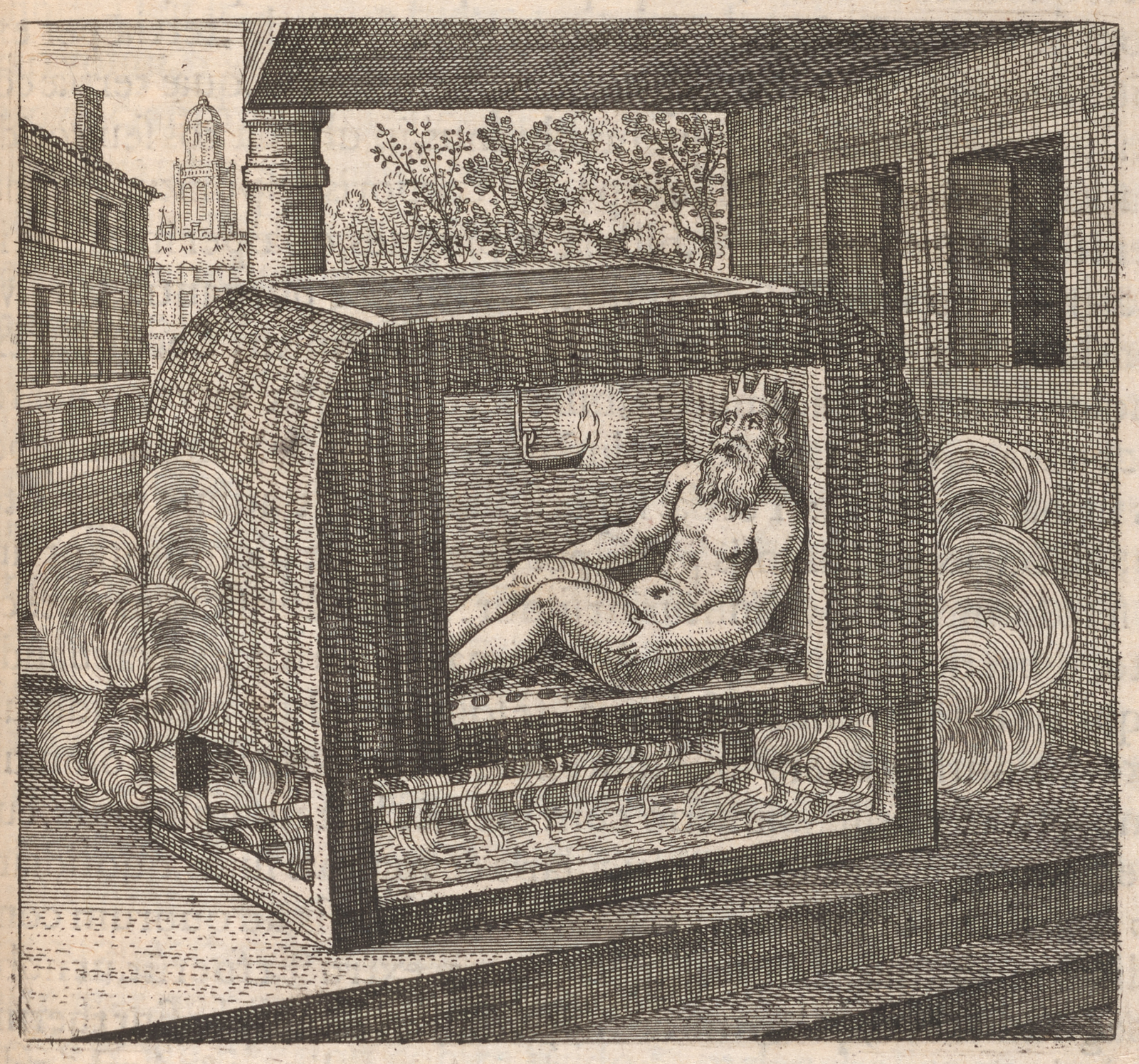
King Duenech sits immersed in a steaming bath while black bile (aqua foetida) drains from his body, attended by physicians who regulate the temperature. Szulakowska connects this emblem to the alchemical understanding of bodily purification through the humoral system: 'alchemists used baths in order to improve the proportions of the humours in their chemicals, to produce healthy blood in the body and to convert cold and moist materials into warm and dry ones.'\n\nShe notes that Maier 'refers to himself as a cook at the golden table' — a reference to the Symbola Aureae Mensae — connecting the domestic imagery of cooking and bathing to the Rosicrucian fraternity described as being 'seated at a golden table.' The purification is simultaneously medical (humoral rebalancing), chemical (distillation), and sacramental (baptismal cleansing).
Emblem XXXV — Digestion and Feeding
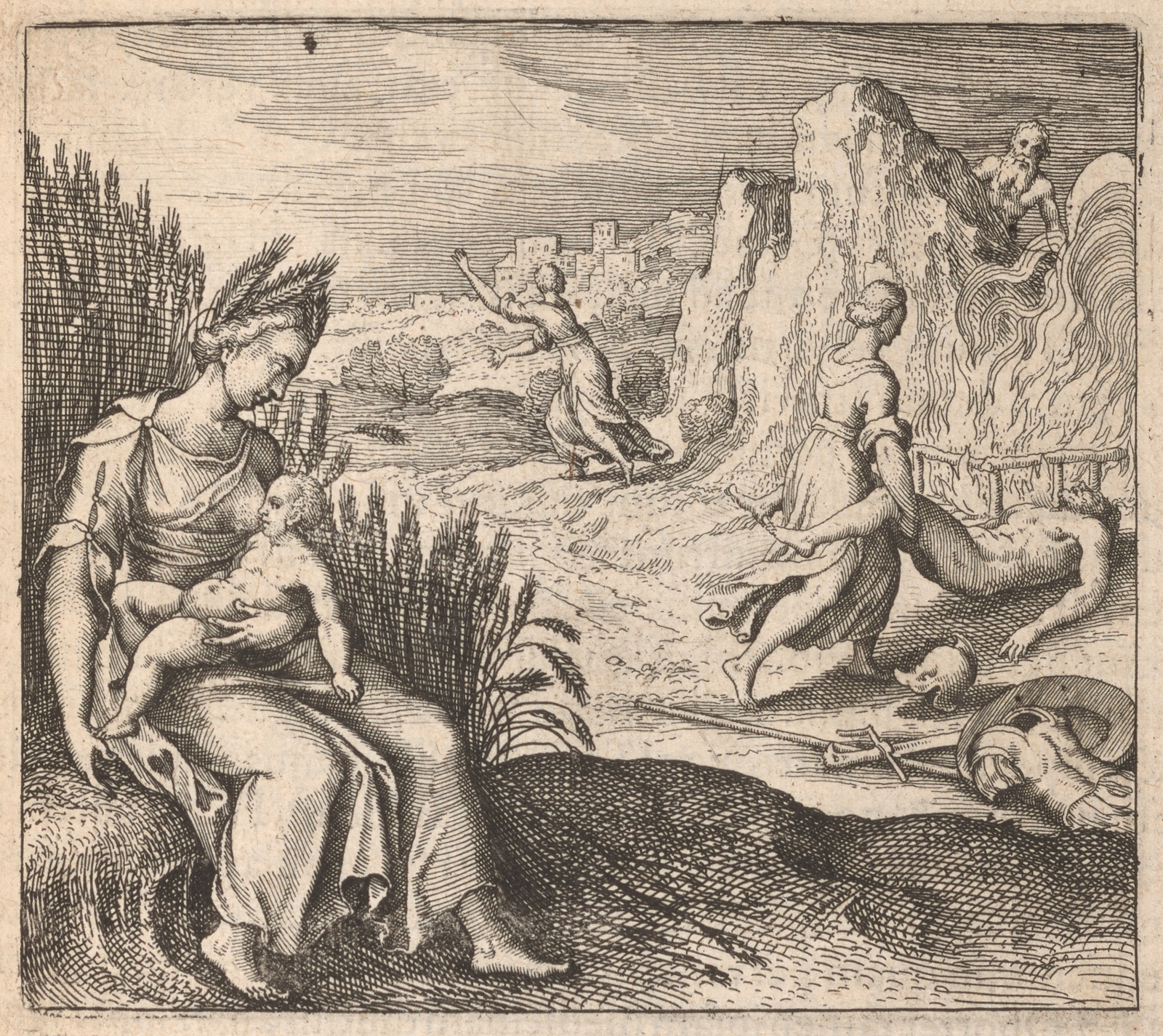
Szulakowska discusses Maier's treatment of digestion as 'an indispensable stage in alchemical practice, comparable to the feeding of a young child and to agricultural processes.' Where wider Reformation culture treated bodily functions as taboo, the alchemists continued to regard digestion as a positive process, 'due to the very nature of their chemical process whose essential function was to change substance.'\n\nThis rehabilitation of the body is, for Szulakowska, a specifically alchemical contribution to Reformation culture — a refusal to accept the Protestant separation of spirit and matter that was reshaping European attitudes toward the physical body.
Emblem XL — The Two Fountains
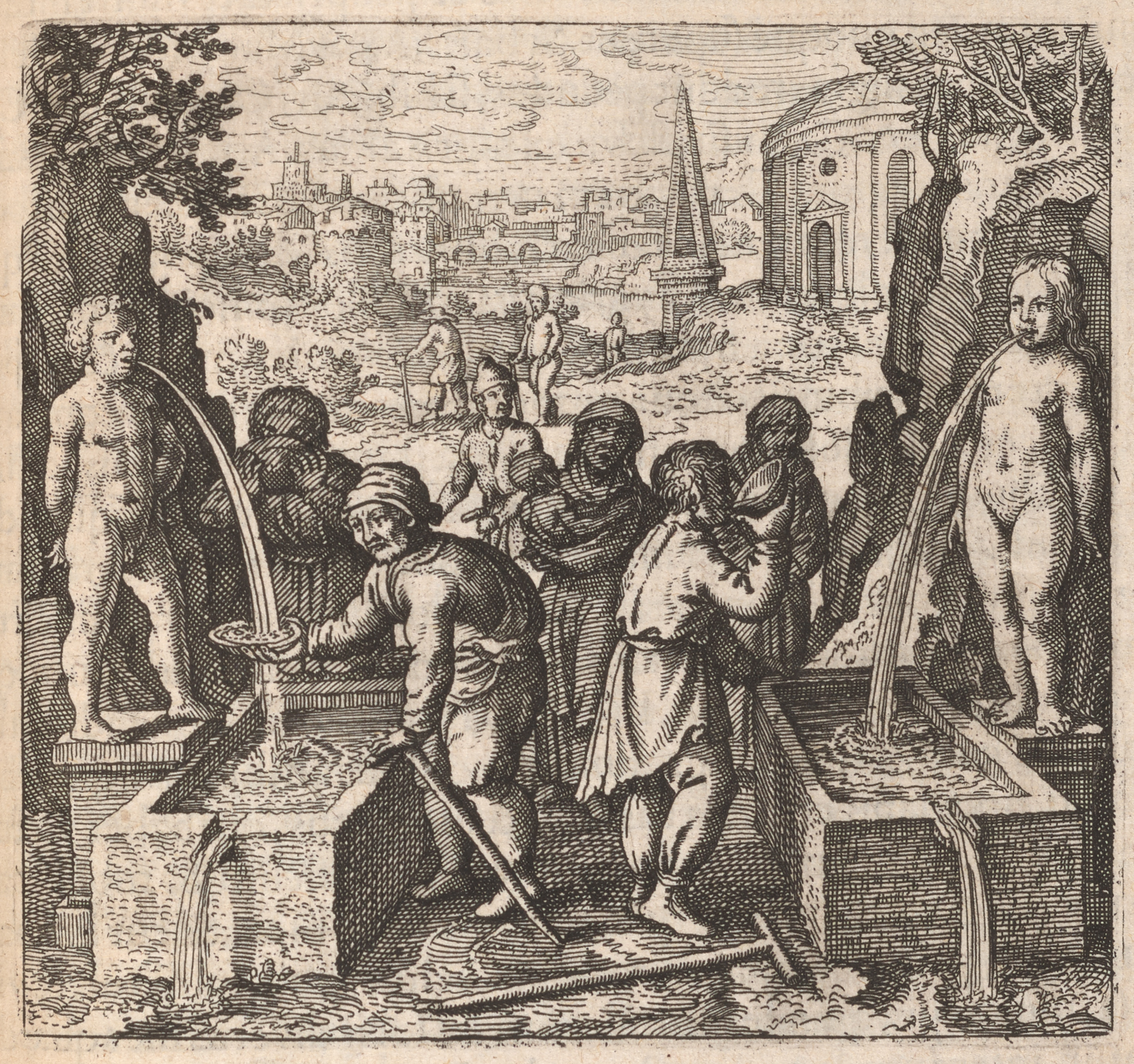
Two streams merge into a single pool — the 'water of holiness.' Szulakowska identifies this as one of the 'slightly more overt references to the alchemical sacrament' in AF. Maier states that the elixir's meaning is 'analogous to the water of life of Christ, meaning by this both the sacrament of Baptism and also that of the Eucharist.'\n\nDe Jong traced the source to the Lullian elixir tradition. Szulakowska adds the sacramental dimension: the two waters represent the two sacraments (Baptism and Eucharist) unified in the alchemical operation. This is as close as Maier comes to explicitly naming the Christian sacramental meaning that Szulakowska argues pervades the entire series.
Emblem XLIV — Osiris Dismembered and Reassembled
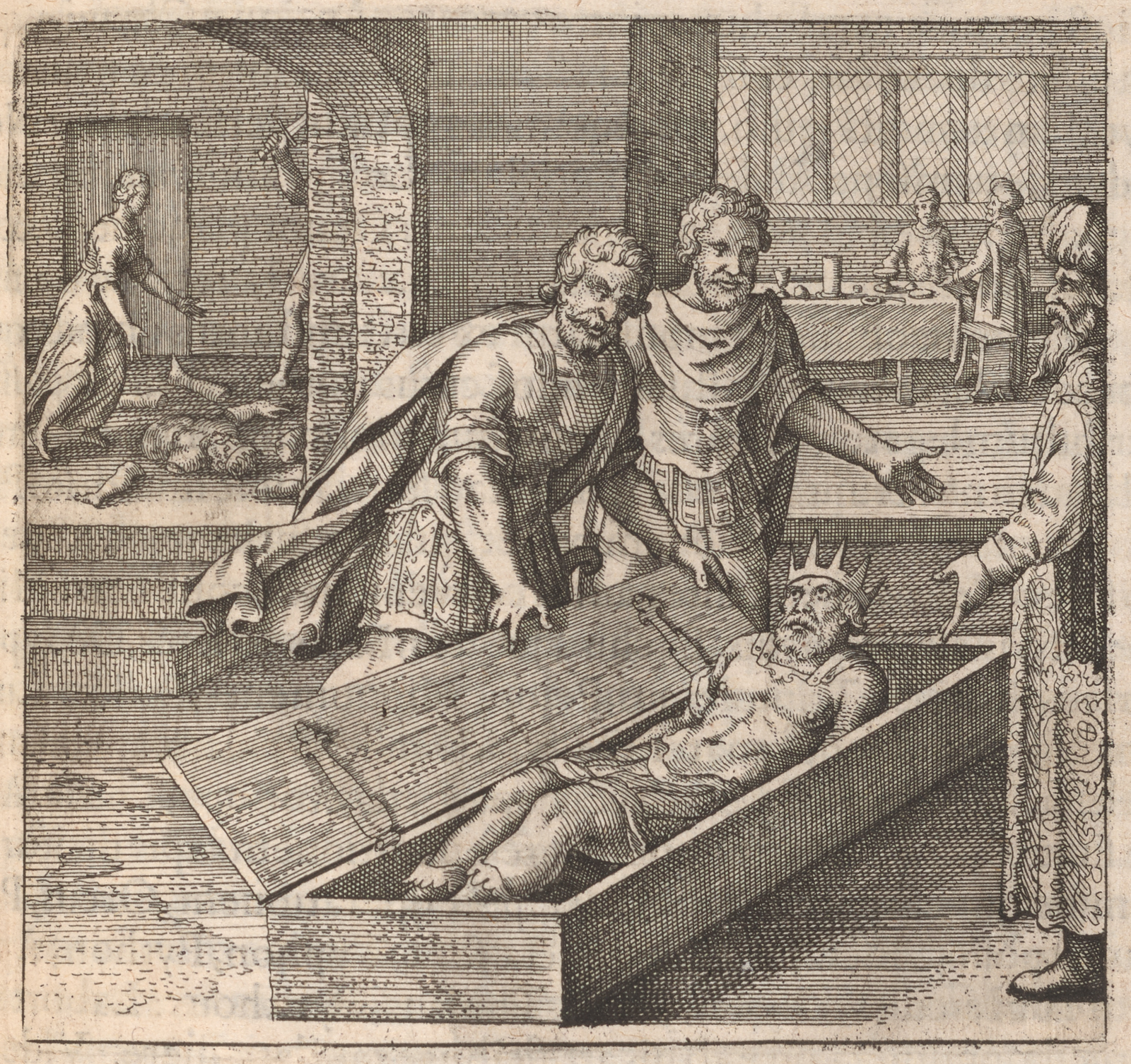
Typhon murders Osiris and scatters his limbs; Isis gathers them. Szulakowska identifies the figure of Belinus — a late Hellenistic version of Osiris drawn from the Rosarium Philosophorum — as a Christ-figure. She quotes the text: 'when you have taken me partly out of my nature, and my wife out of hers and after you have killed these natures and we are raised by a new and incorporeal resurrection, so that after that we cannot die any more.'\n\nThe language of 'incorporeal resurrection' maps directly onto Christian eschatology. Szulakowska argues that this is the most explicit Christological moment in the AF — the Egyptian myth of Osiris serving as a classical-mythological vehicle for what is essentially the death, dismemberment, and bodily resurrection of Christ.
IV. The Alchemy of Light: Maier's Solar Geometry
In her most technically detailed analysis of Maier, Szulakowska devotes Chapter 11 of The Alchemy of Light to 'Michael Maier's Alchemical Geometry of the Sun.' She begins by distinguishing Maier's courtly, classicizing style from Khunrath's pietistic intensity and Fludd's cosmological ambition. Maier's work 'emerges from the context of courtly humanism, rather than out of the academic discourses of the Protestant universities.' The Atalanta Fugiens, she argues, 'takes the form of a masque, with stage sets displaying scenes from classical mythology, accompanied by a musical score' — entertainment designed to instruct.\n\nSzulakowska traces Maier's theoretical program to his treatise De Circulo Physico, Quadrato (1616), which she identifies as 'an account of the role of the sun in the making of potable gold.' Maier argued that gold's essential form is the circle — the Platonic form of eternal Being — and that the incorrupt nature of gold proves the circle 'is not an abstract mathematical concept, but a physical reality.' The static circle is nature perfected, manifesting as red, coagulated sulphur — that is, gold.
Emblem XXI — The Geometric Formula
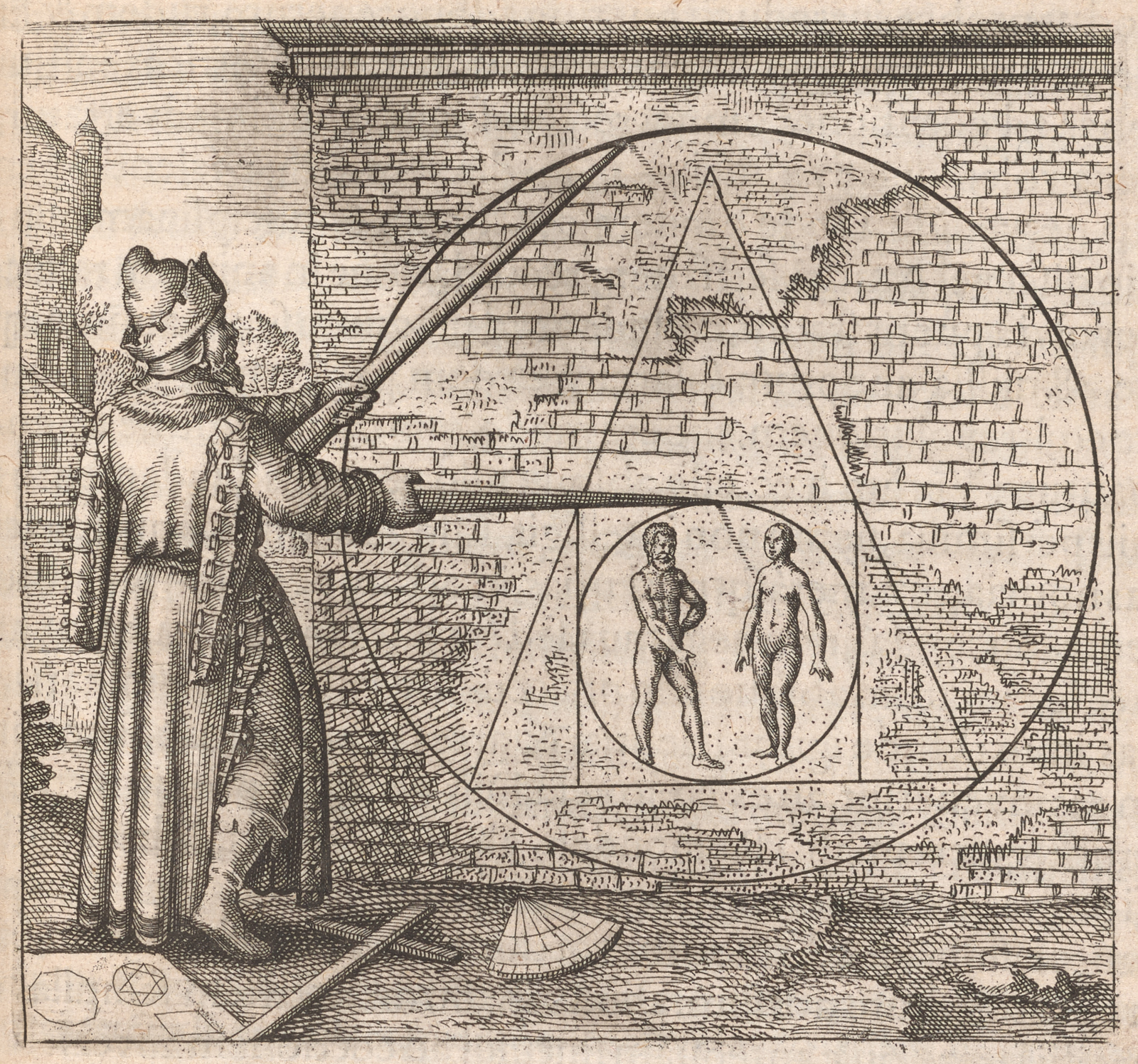
Szulakowska connects the famous geometric diagram of Emblem XXI — circle, square, triangle, circle — to Maier's treatise on squaring the circle and to the Rosarium Philosophorum. The circle represents the primal matter (Chaos) and the perfected stone; the square symbolizes the four elements and the four seasons; the triangle represents the Paracelsian body, spirit, and soul (though Maier himself is not Paracelsian in method). The same geometric sequence appears in the seventh key of Basil Valentine's De Lapide Sapientum, which Maier published in his Tripus Aureus (1618).
Emblem VIII — The Theurgical Egg
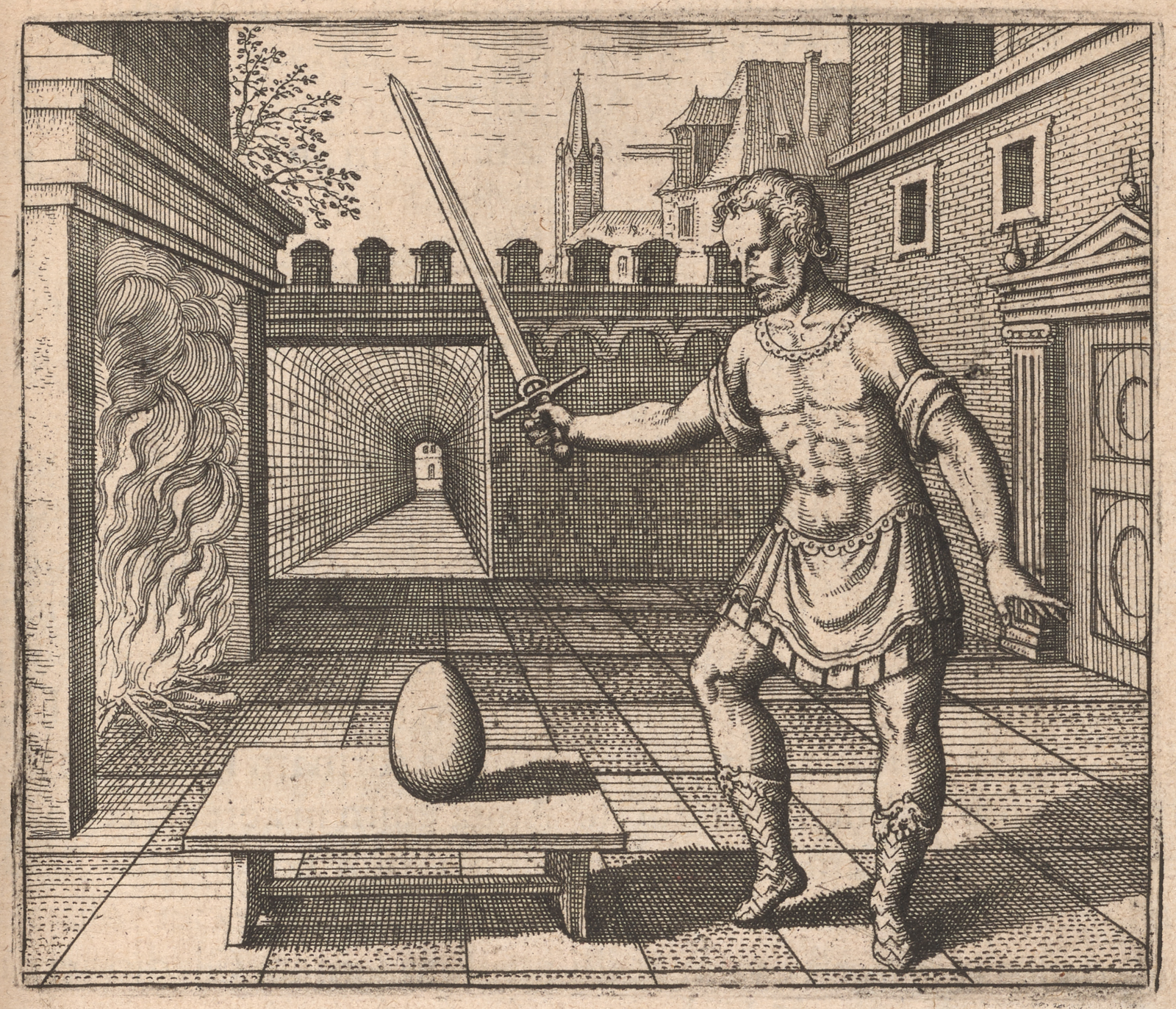
Szulakowska's most original reading concerns Emblem VIII, which she interprets through the lens of optical alchemy. The illustration shows an armed warrior (Mars) shattering the alchemical egg with a sword before a roaring fire. Behind him, a battlemented wall is pierced by 'a curious tunnel drawn in a diagrammatic form according to the rules of single-point perspective.' The tunnel's 'excessive depth does not correspond with the actual thickness of the wall' — it is not realistic architecture but, Szulakowska argues, a catoptrical diagram representing the concentration of solar rays.\n\nSzulakowska connects this perspectival structure to the use of catoptrical mirrors (burning glasses) described by John Dee in the Propaedeumata Aphoristica and to Khunrath's optical imagery in the Amphitheatrum. She reads the tunnel as representing solar force being focused onto the alchemical egg — analogous to a burning glass concentrating sunlight. De Jong had compared the egg to Dee's macro-microcosmic egg in the Monas Hieroglyphica; Szulakowska extends this comparison to argue that the composition encodes an optical-alchemical program. This is a provocative reading that goes beyond what the image alone can confirm, but it usefully draws attention to the geometric and optical sophistication of Merian's engravings.
The Fugues as Theurgical Talismans
Szulakowska's most provocative argument concerns the fugues themselves. She proposes that Maier's Pythagorean musical score was intended to operate on the same astral-magical principles as Dee's and Khunrath's geometric sigils — that the musical ratios encoded correspondences with celestial forces. She argues that the fifth interval (diapente), whose ratio of 3:2 Ficino had identified with the proportional distance from earth to the sun, served as a musical signifier of solar virtue.\n\nThis interpretation — that the fugues function as something like astral-magical instruments — is characteristic of Szulakowska's willingness to push interpretive boundaries. It should be noted that Forshaw and other scholars in the new historiography of alchemy prefer to read AF as a work of alchemical synthesis rather than active theurgy, and Maier himself describes his emblems as 'chemical' rather than magical. Pamela H. Smith's framework of artisanal knowledge — where alchemy is understood as a sophisticated craft practice rather than either mysticism or modern chemistry — offers a more grounded interpretive model. Nonetheless, Szulakowska usefully draws attention to the Pythagorean mathematical structure of the fugues, which has not been adequately explored by other scholars, and to the broader context of Ficinian music theory within which Maier's compositions operated.
V. Maier and the Rosarium Tradition
In The Alchemical Virgin Mary, Szulakowska draws on De Jong's research to situate Maier's AF within the tradition of the Rosarium Philosophorum (Basel, 1550). She writes that De Jong 'has revealed' that Maier 'was basing himself substantially on the Rosarium (as well as on the Aurora Consurgens and the much older Turba Philosophorum)' — the same sources that contained Marian and Christological imagery that Maier transformed into his classicizing emblems.\n\nThe alchemical marriage in the Rosarium tradition involved an incestuous coupling of brother and sister (Sol and Luna), who then 'died' and putrefied — the same sequence Maier develops across multiple AF emblems (IV, XXX, XXXIII, XXXVIII). Szulakowska notes that this alchemical coniunctio drew on Marian theology through the Rosarium's mediation: the Virgin Mary as the vessel of transformation, the lac virginis as the volatile spirit that nourishes the philosophical embryo.\n\nSzulakowska also identifies Adam McLean's observation that the Splendor Solis of Salomon Trismosin (1598) 'acts as a bridge between the Rosarium and the Rosicrucian period' — and argues that Maier's AF occupies the Rosicrucian end of this bridge, transforming the Rosarium's medieval Christian imagery into a classicized, humanist visual language while preserving its sacramental core.
VI. Why Szulakowska Matters
Szulakowska's contribution is unique because she reads the same images that De Jong analyzes source-critically and that Forshaw reads mytho-alchemically through a third lens: the religious politics of the Reformation. Her argument that Maier, Khunrath, and Fludd constituted an alchemical counter-church — performing a chemical Eucharist that usurped the Catholic sacramental monopoly — adds a political dimension that purely textual or symbolic readings miss.\n\nHer most original contribution, from The Alchemy of Light, is her attention to the Pythagorean mathematical structure of both the geometric diagrams and the fugues. While her interpretation of these as astral-magical instruments goes further than most scholars in the field would endorse, she rightly identifies an underexplored dimension of the AF: the relationship between its mathematical structures (geometric, musical, arithmetical) and the alchemical content they accompany. This is territory that Forshaw's quadrivium analysis also addresses, from a more measured perspective.\n\nTaken together, Szulakowska's three books reveal a Maier who is more politically and theologically engaged than either De Jong's source-critical method or Tilton's Rosicrucian framing alone suggest. Read alongside Smith's artisanal-knowledge framework and Forshaw's mytho-alchemical analysis, Szulakowska's religious-political lens adds a dimension that enriches without displacing these other approaches. The classical surface of the Atalanta Fugiens, in her reading, conceals not merely chemical knowledge in allegorical form but a sacramental theology and a political program — registers that become visible only when the images are read against the full backdrop of Reformation religious controversy.