Emblem XXX — Emblem XXX RUBEDO
Original Source
What You See
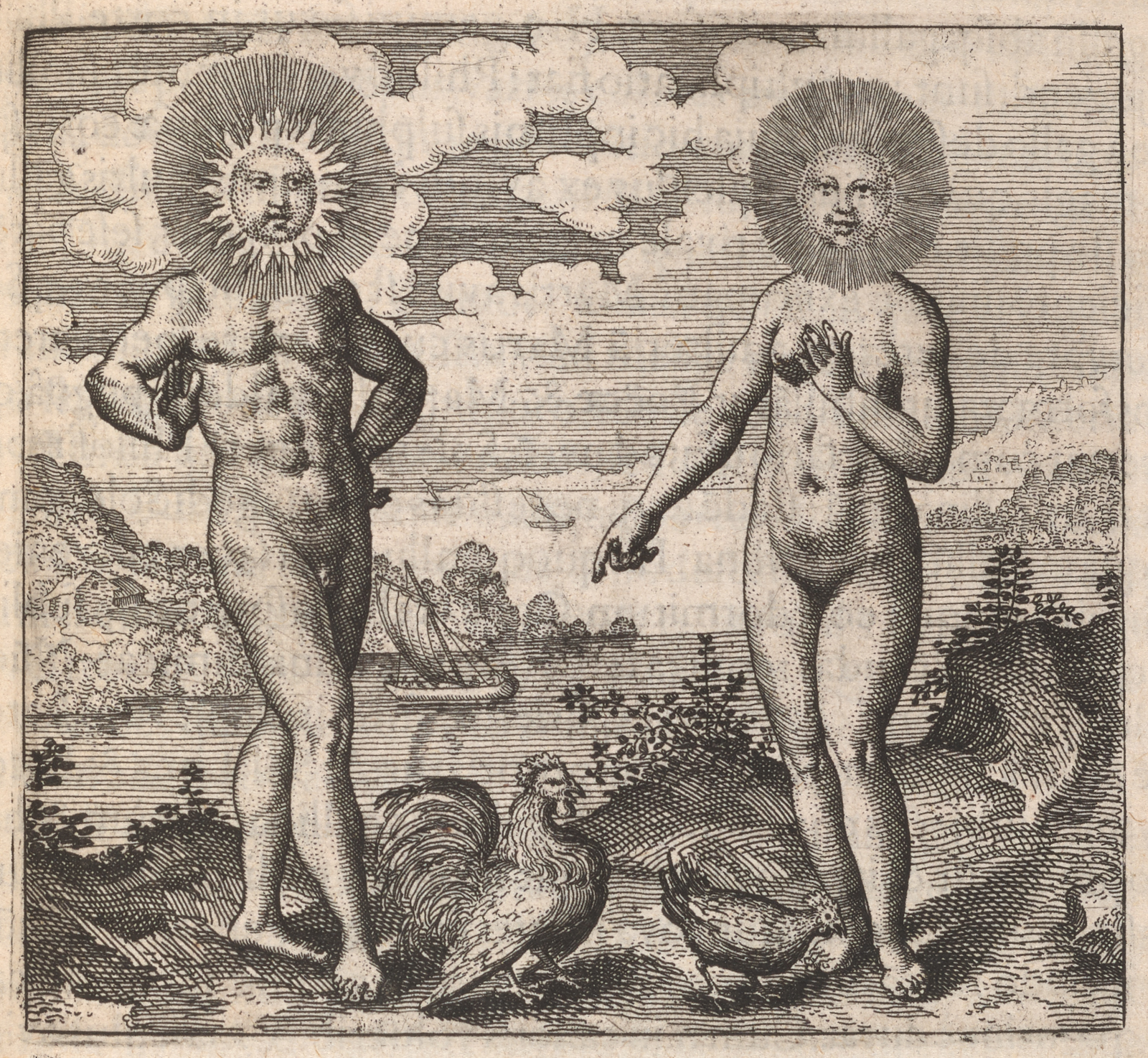
A figure with both male and female characteristics — the Hermaphrodite or Rebis — lies in darkness, motionless as if dead, upon a bed or bier. The surrounding space is black or deeply shadowed. A fire or torch approaches from one side, about to illuminate and revive the prostrate figure. The Hermaphrodite's dual-gendered body is visible, combining male and female attributes in a single form.
The Hermaphrodite, lying in darkness like a dead man, needs fire.
Epigram
The Hermaphrodite, lying in darkness like a dead man, Needs fire to be brought back to life. Without warmth, the joined substance lies inert; With it, the union stirs and breathes. Born of two mountains, of Mercury and Venus, The Rebis awaits the alchemist's art.Discourse Summary
Maier argues that the Hermaphrodite — the unified philosophical substance combining masculine and feminine principles — lies inert in darkness until awakened by fire. He develops this as an allegory for the transition from nigredo (the death-like darkness) to the active stages of the work: the combined substance has been successfully joined but remains dormant until heat reactivates it. Drawing on the myth of the Hermaphrodite born from the two mountains of Mercury and Venus, Maier connects the figure to Morienus's teaching that the Rebis (the 'two-thing') is found not in books but through living masters. The discourse frames the Hermaphrodite as the philosophical Mercury's two-topped Parnassus, where Apollo and the Muses reside.
Overview
Emblem XXX bears the motto: "The Hermaphrodite, lying in darkness like a dead man, needs fire."
Maier's Discourse
Maier argues that the Hermaphrodite — the unified philosophical substance combining masculine and feminine principles — lies inert in darkness until awakened by fire. He develops this as an allegory for the transition from nigredo (the death-like darkness) to the active stages of the work: the combined substance has been successfully joined but remains dormant until heat reactivates it.
Source Texts
De Jong's source-critical analysis identifies the textual traditions Maier draws upon for this emblem.
The discourse draws on alchemical sources: Rosarium Philosophorum.
Alchemical Significance
H.M.E. de Jong: De Jong identifies the source in the Rosarium Philosophorum's account of the Rebis, connecting the Hermaphrodite born of two mountains (Mercury and Venus) to Morienus's teaching that the substance must be found through living masters rather than books. She traces the two-topped Parnassus allegory to the philosophical Mercury's dual nature.
Scholarly Commentary
H.M.E. de Jong ALCHEMICAL HIGH
De Jong identifies the source in the Rosarium Philosophorum's account of the Rebis, connecting the Hermaphrodite born of two mountains (Mercury and Venus) to Morienus's teaching that the substance must be found through living masters rather than books. She traces the two-topped Parnassus allegory to the philosophical Mercury's dual nature.