Emblem XII — Emblem XII ALBEDO
Original Source
What You See
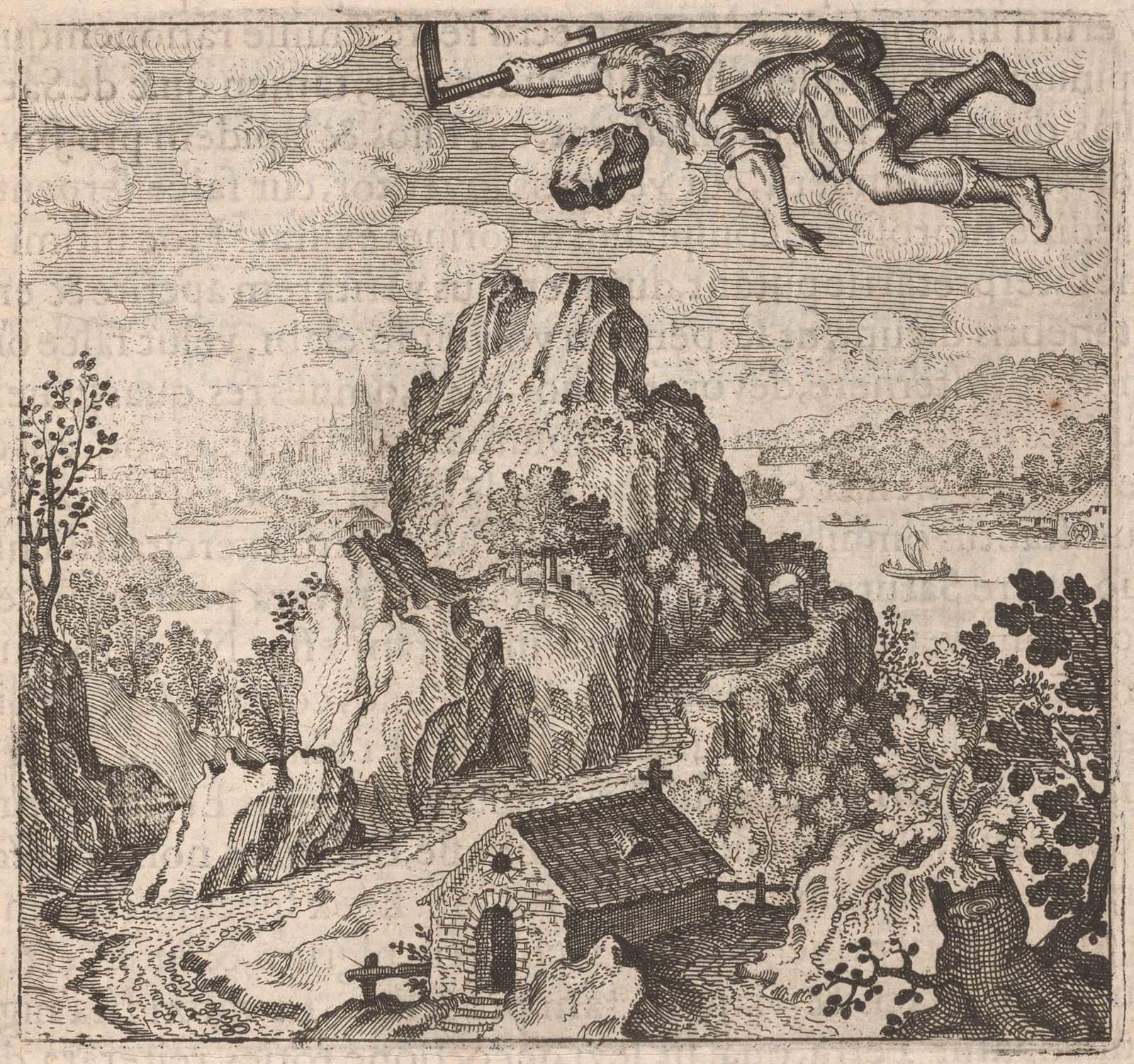
The composition closely parallels Emblem XI: the figure of Latona appears again in the process of being whitened, while books and scrolls are visibly torn or discarded. The emphasis shifts slightly to the completed act of purification — Latona is lighter or whiter than in the previous emblem, suggesting progress in the albedo. The torn books lie definitively abandoned on the ground.
Make Latona white and tear up the books.
Epigram
Make Latona white and tear up the books, So that your hearts may not be torn apart; For she who is bright-skinned is whiter in the Stone, And out of white lead originates red lead, Which is the beginning and the end. Without this process, the art is in vain.Discourse Summary
Maier continues the argument of Emblem XI, now emphasizing the bewildering variety and obscurity of alchemical writings as the reason books must be abandoned. He argues that the sheer volume of contradictory texts drives seekers to despair, and that the only path forward is direct engagement with the material. The discourse develops the Latona allegory further: she is an impure body of mixed Sol and Luna that must be found in a humble place, immersed in dung where she becomes white lead, from which red lead originates. Maier presents this as the beginning and end of the opus — the albedo whitening that initiates the final reddening toward the rubedo.
Overview
Emblem XII bears the motto: "Make Latona white and tear up the books."
Maier's Discourse
Maier continues the argument of Emblem XI, now emphasizing the bewildering variety and obscurity of alchemical writings as the reason books must be abandoned. He argues that the sheer volume of contradictory texts drives seekers to despair, and that the only path forward is direct engagement with the material. The discourse develops the Latona allegory further: she is an impure body of mixed Sol and Luna that must be found in a humble place, immersed in dung where she becomes white lead, from which red lead originates.
Source Texts
De Jong's source-critical analysis identifies the textual traditions Maier draws upon for this emblem.
The discourse draws on alchemical sources: Aurora Consurgens, Rosarium Philosophorum. The discourse draws on biblical sources: Solomonic / Biblical Wisdom Tradition (Proverbs). The discourse draws on classical sources: Ovid, Metamorphoses X.560-704.
Alchemical Significance
Hereward Tilton: Tilton connects discourse 12's retelling of the Chronos/Saturn myth (devouring children, tricked by a stone) to the broader Saturnian framework of Maier's alchemy. The difficult ascent of Helicon to see the stone parallels the alchemical ladder of the Scala Arcis Philosophicae.
H.M.E. de Jong: De Jong traces the source of the dropsical ore metaphor to the Clangor Buccinae and identifies the underlying process as the repeated washing and purification of impure philosophical mercury. She connects the Naaman baptism story to the albedo purification sequence running through Emblems XI-XIII.
Key Alchemical Concepts
Substance: Aqua Regia
Scholarly Commentary
Hereward Tilton MYTHOLOGICAL MEDIUM
Tilton connects discourse 12's retelling of the Chronos/Saturn myth (devouring children, tricked by a stone) to the broader Saturnian framework of Maier's alchemy. The difficult ascent of Helicon to see the stone parallels the alchemical ladder of the Scala Arcis Philosophicae.
Citation: Ch. III, p. 96 (cf. Examen Fucorum)
H.M.E. de Jong ALCHEMICAL HIGH
De Jong traces the source of the dropsical ore metaphor to the Clangor Buccinae and identifies the underlying process as the repeated washing and purification of impure philosophical mercury. She connects the Naaman baptism story to the albedo purification sequence running through Emblems XI-XIII.