← All Folios
Signature h1r
Folio 57r, Quire h
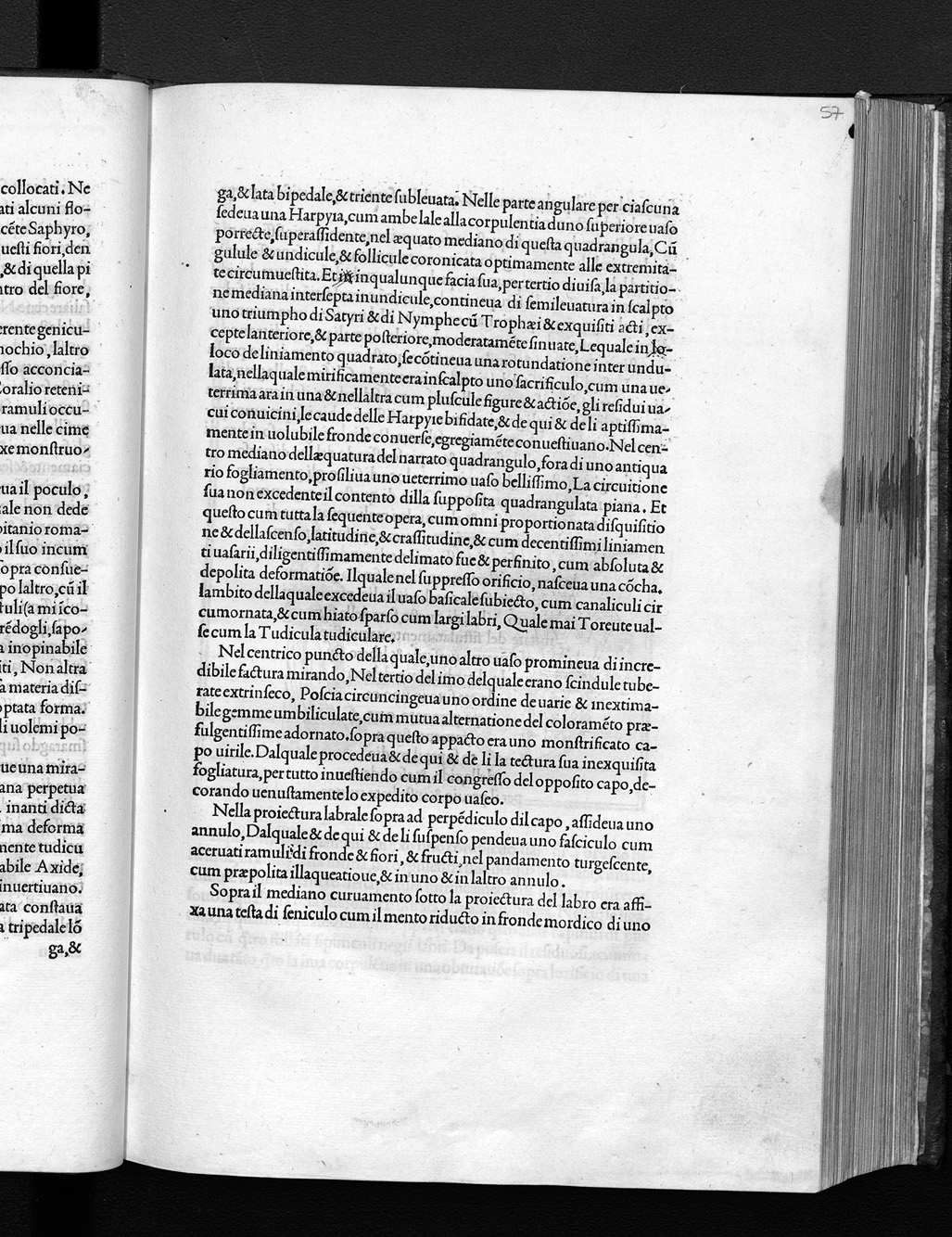
Biblioteca degli Intronati, Siena — O.III.38
HIGH Unverified
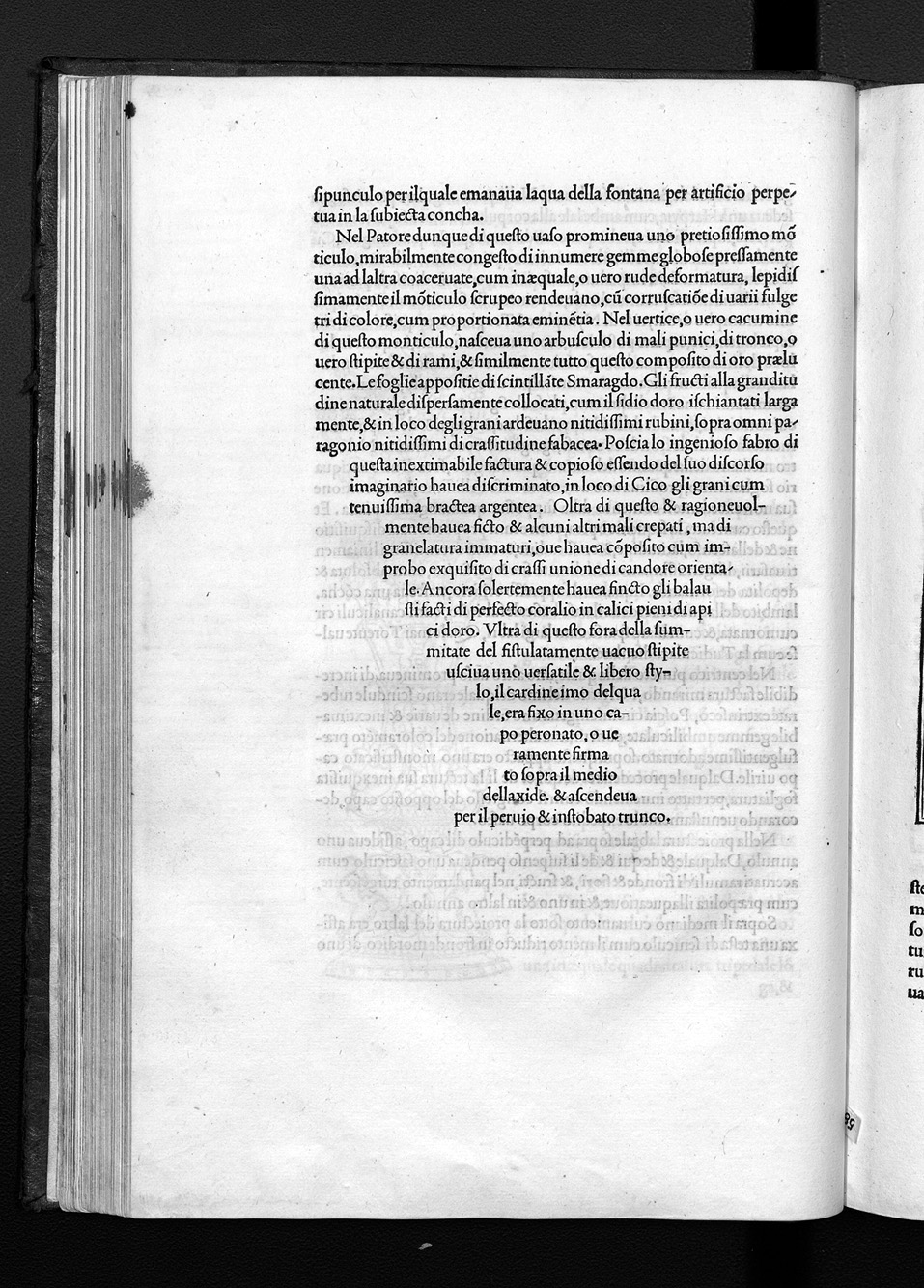
Biblioteca degli Intronati, Siena — O.III.38
HIGH Unverified
Alchemical Analysis
The Chess Match: Three Rounds of Distillation
The HP's elaborate chess match between 32 maidens (16 silver, 16 gold) becomes, in Hand E's reading, an allegory of iterative alchemical refinement. In Round 1, silver wins: the annotator writes 'Argentum' with a crescent moon sketch and 'Rex ex argento factus victor remanet' (The king made of silver remains victor). Round 2: silver wins again. Round 3: gold finally triumphs -- but E's annotation undergoes a telling correction. He first writes 'Rex ex auro' (king of gold), then revises to 'Regina' (queen) and 'aura' and 'victrix' (feminine victor), with the sun symbol. The final word is 'Auru(m)' -- Gold, the perfected metal. The correction reveals E recognizing the hermaphroditic outcome: the triumphant figure combines king and queen, masculine and feminine, Sol and Luna.
Element: Silver (Luna) yielding to Gold (Sol); Hermaphrodite
Process: Iterative distillation (three rounds); coincidentia oppositorum
Framework: pseudo-Geber: transmutation through repeated refinement
Russell, pp. 189-190
LLM-assisted synthesis from Russell
Alchemical Symbols Present
| Symbol |
Metal |
Planet |
Gender |
Hand |
Conf. |
| Hermaphrodite |
|
|
hermaphroditic |
Hand E |
HIGH |
| Luna |
Silver (Argentum) |
Moon |
feminine |
Hand E |
HIGH |
| Sol |
Gold (Aurum) |
Sun |
masculine |
Hand E |
HIGH |
Vision Reading (Phase 3 deep analysis)
Primary hand: Multiple (at least 3) · Hands: 3 · Type: text_page · Sig: h1r
Transcription Attempts
top · Latin · LOW
Ergo in singulo [...] pretij [...] dest [...] Fides autum cu [...] fortia [...]
'Ergo' (therefore), 'pretij' (of value/price), 'Fides' (faith/trust), 'fortia' (strength). Reader is making moral/philosophical commentary
left_margin_upper · Latin · LOW
Symbolam [...] de [...] prospiciunt [...] lustrando [...]
'Symbolam' (symbol), 'prospiciunt' (they foresee), 'lustrando' (by examining/purifying). 'lustrando' can mean both 'examining' and 'ritually purifying' — the latter has alchemical resonance
right_margin · Latin · MEDIUM
Fides [...] Gratia [...] Termitas [...] Venerantas [...] persepcion [...] Volun [...]
'Fides' (faith), 'Gratia' (grace), 'Venerantas' (veneration). These are theological virtues. The reader is mapping a virtue scheme onto the narrative — this is moralized allegory
bottom · Latin/Italian · LOW
Curtius [...] cortigianos [...] la [...] to [...] est [...]
'Curtius' could reference Quintus Curtius (historian of Alexander) or Machiavelli's concept of the courtier. 'cortigianos' = courtiers
Greek_printed · Greek · HIGH
Ο ΤΗΣ ΦΥΣΕΩΣ ΘΑΛΟΣ
PRINTED: 'The branch/shoot of nature'. A Greek motto/inscription in the text
Scholarly Significance
Page 113 shows a reader applying a systematic theological-moral allegoresis: 'Fides', 'Gratia', 'Venerantas' map the cardinal and theological virtues onto the HP narrative. This is a different hermeneutic from the alchemical reading (Hand B) or the architectural reading — it's a moralized reading in the tradition of late medieval allegoresis. The printed Greek motto 'Ο ΤΗΣ ΦΥΣΕΩΣ ΘΑΛΟΣ' (the branch of nature) would also have been legible to the alchemical reader as a nature-philosophy reference.
Cross-references: Photo 125 (p.112 — extremely dense adjacent page), Photo 139 (p.126, THEODOXIA/theological reading)
Vision reading (Claude Code, Phase 3)
Annotations
INDEX_ENTRY (2)MARGINAL_NOTE (2)SYMBOL (3)
Hand E: Anonymous (pseudo-Geber (Jabir ibn Hayyan)) Alchemist
Symbol
“King”
rgento). This is the inverse of the Geberian ideal, indicating that
the process of transmutation has yet to take place
The annotator then observes that the process results in the transformation of the king out
of silver and into gold. Although the ‘King’, Sol, is traditionally associated with gold, within
the Geberian schema, silver and gold are creative inverses of one another, and so as a
consequence a King can indeed be wrought out of the traditionally feminine silver.
Detail, ...
Russell, PhD Thesis, p. 189 (Ch. 7)
Hand E: Anonymous (pseudo-Geber (Jabir ibn Hayyan)) Alchemist
Symbol
“King”
rgento). This is the inverse of the Geberian ideal, indicating that
the process of transmutation has yet to take place
The annotator then observes that the process results in the transformation of the king out
of silver and into gold. Although the ‘King’, Sol, is traditionally associated with gold, within
the Geberian schema, silver and gold are creative inverses of one another, and so as a
consequence a King can indeed be wrought out of the traditionally feminine silver.
Detail, ...
Russell, PhD Thesis, p. 189 (Ch. 7)
Hand E: Anonymous (pseudo-Geber (Jabir ibn Hayyan)) Alchemist
Symbol
“Auru(m)”
age and the eventual triumph of
the more refined element. Surprisingly, the silver side wins the first match. The annotator
records this fact, writing ‘Argentum,’ and draws in a small sketch of a moon’s crescent,
representing Luna. Below he writes ‘Rex ex argento factus victor remanet.’ One would
expect Gold to be the initial victor, but the highest of elements wins out only after multiple
rounds of play, presumably symbolizing distillations.
Silver wins the second round as well (g8v-...
Russell, PhD Thesis, p. 189 (Ch. 7)
Hand E: Anonymous (pseudo-Geber (Jabir ibn Hayyan)) Alchemist
Symbol
“Auru(m)”
age and the eventual triumph of
the more refined element. Surprisingly, the silver side wins the first match. The annotator
records this fact, writing ‘Argentum,’ and draws in a small sketch of a moon’s crescent,
representing Luna. Below he writes ‘Rex ex argento factus victor remanet.’ One would
expect Gold to be the initial victor, but the highest of elements wins out only after multiple
rounds of play, presumably symbolizing distillations.
Silver wins the second round as well (g8v-...
Russell, PhD Thesis, p. 189 (Ch. 7)
Hand E: Anonymous (pseudo-Geber (Jabir ibn Hayyan)) Alchemist
Symbol
“dedicated to the ambiguous gods.”
179
Detail, (h1r)
The issue of the alchemical marriage is a hermaphrodite, representing the combination of
opposite qualities or coincidentia oppositorum. One reader found what he perceived to be a
reference to this figure in an epigram on one side of the base of the statue of the horse,
reading D.AMBIG.DD, or ‘dedicated to the ambiguous gods.’ (b5r) E interprets the
‘ambiguous gods’ as referring to such alchemical hermaphrodites.
diis ambiguis id est metallis hermafroditis guarda...
Russell, PhD Thesis, p. 190 (Ch. 7)
Hand E: Anonymous (pseudo-Geber (Jabir ibn Hayyan)) Alchemist
Symbol
“dedicated to the ambiguous gods.”
179
Detail, (h1r)
The issue of the alchemical marriage is a hermaphrodite, representing the combination of
opposite qualities or coincidentia oppositorum. One reader found what he perceived to be a
reference to this figure in an epigram on one side of the base of the statue of the horse,
reading D.AMBIG.DD, or ‘dedicated to the ambiguous gods.’ (b5r) E interprets the
‘ambiguous gods’ as referring to such alchemical hermaphrodites.
diis ambiguis id est metallis hermafroditis guarda...
Russell, PhD Thesis, p. 190 (Ch. 7)
Index Entry
“terzo ballo ò gioco”
192
Another instance of Chigi subdividing a description into phases is that of the human
chess match. He marks out the beginning of the game itself, while also marking a starting
point or boundary for the sub-comments that are to follow. On g8r he writes ‘comincia a
descrivere il ballo in figura del gioco di scacchi cosa bella’. Like the Buffalo annotator, he
records the beginning of the three rounds the match as follows.
g8v: ‘Torna di nuovo al gioco ò ballo’
h1r: ‘terzo ballo ò g...
Russell, PhD Thesis, p. 203 (Ch. 7)
Index Entry
“terzo ballo ò gioco”
192
Another instance of Chigi subdividing a description into phases is that of the human
chess match. He marks out the beginning of the game itself, while also marking a starting
point or boundary for the sub-comments that are to follow. On g8r he writes ‘comincia a
descrivere il ballo in figura del gioco di scacchi cosa bella’. Like the Buffalo annotator, he
records the beginning of the three rounds the match as follows.
g8v: ‘Torna di nuovo al gioco ò ballo’
h1r: ‘terzo ballo ò g...
Russell, PhD Thesis, p. 203 (Ch. 7)
Marginal Note
“finito il 3o ballo la regina parla al Polifilo e gli dice che vada dalla regina Telosia.”
Another instance of Chigi subdividing a description into phases is that of the human
chess match. He marks out the beginning of the game itself, while also marking a starting
point or boundary for the sub-comments that are to follow. On g8r he writes ‘comincia a
descrivere il ballo in figura del gioco di scacchi cosa bella’. Like the Buffalo annotator, he
records the beginning of the three rounds the match as follows.
g8v: ‘Torna di nuovo al gioco ò ballo’
h1r: ‘terzo ballo ò gioco’
...
Russell, PhD Thesis, p. 203 (Ch. 7)
Marginal Note
“finito il 3o ballo la regina parla al Polifilo e gli dice che vada dalla regina Telosia.”
Another instance of Chigi subdividing a description into phases is that of the human
chess match. He marks out the beginning of the game itself, while also marking a starting
point or boundary for the sub-comments that are to follow. On g8r he writes ‘comincia a
descrivere il ballo in figura del gioco di scacchi cosa bella’. Like the Buffalo annotator, he
records the beginning of the three rounds the match as follows.
g8v: ‘Torna di nuovo al gioco ò ballo’
h1r: ‘terzo ballo ò gioco’
...
Russell, PhD Thesis, p. 203 (Ch. 7)
Marginal Note
“the third dance finishes, the queen speaks to Poliphilo and tells him to go to the queen Telosia”
elf, while also marking a starting
point or boundary for the sub-comments that are to follow. On g8r he writes ‘comincia a
descrivere il ballo in figura del gioco di scacchi cosa bella’. Like the Buffalo annotator, he
records the beginning of the three rounds the match as follows.
g8v: ‘Torna di nuovo al gioco ò ballo’
h1r: ‘terzo ballo ò gioco’
h1r: ‘finito il 3o ballo la regina parla al Polifilo e gli dice che vada dalla regina Telosia.’
g8v: ‘Returns again to the game or dance’
...
Russell, PhD Thesis, p. 203 (Ch. 7)
Marginal Note
“the third dance finishes, the queen speaks to Poliphilo and tells him to go to the queen Telosia”
elf, while also marking a starting
point or boundary for the sub-comments that are to follow. On g8r he writes ‘comincia a
descrivere il ballo in figura del gioco di scacchi cosa bella’. Like the Buffalo annotator, he
records the beginning of the three rounds the match as follows.
g8v: ‘Torna di nuovo al gioco ò ballo’
h1r: ‘terzo ballo ò gioco’
h1r: ‘finito il 3o ballo la regina parla al Polifilo e gli dice che vada dalla regina Telosia.’
g8v: ‘Returns again to the game or dance’
...
Russell, PhD Thesis, p. 203 (Ch. 7)
Index Entry
“TEMPUS AMISSIO”
arting
point or boundary for the sub-comments that are to follow. On g8r he writes ‘comincia a
descrivere il ballo in figura del gioco di scacchi cosa bella’. Like the Buffalo annotator, he
records the beginning of the three rounds the match as follows.
g8v: ‘Torna di nuovo al gioco ò ballo’
h1r: ‘terzo ballo ò gioco’
h1r: ‘finito il 3o ballo la regina parla al Polifilo e gli dice che vada dalla regina Telosia.’
g8v: ‘Returns again to the game or dance’
h1r: ‘third dance or game’
...
Russell, PhD Thesis, p. 203 (Ch. 7)
Index Entry
“TEMPUS AMISSIO”
arting
point or boundary for the sub-comments that are to follow. On g8r he writes ‘comincia a
descrivere il ballo in figura del gioco di scacchi cosa bella’. Like the Buffalo annotator, he
records the beginning of the three rounds the match as follows.
g8v: ‘Torna di nuovo al gioco ò ballo’
h1r: ‘terzo ballo ò gioco’
h1r: ‘finito il 3o ballo la regina parla al Polifilo e gli dice che vada dalla regina Telosia.’
g8v: ‘Returns again to the game or dance’
h1r: ‘third dance or game’
...
Russell, PhD Thesis, p. 203 (Ch. 7)