Signature F3r
Folio 215r, Quire f
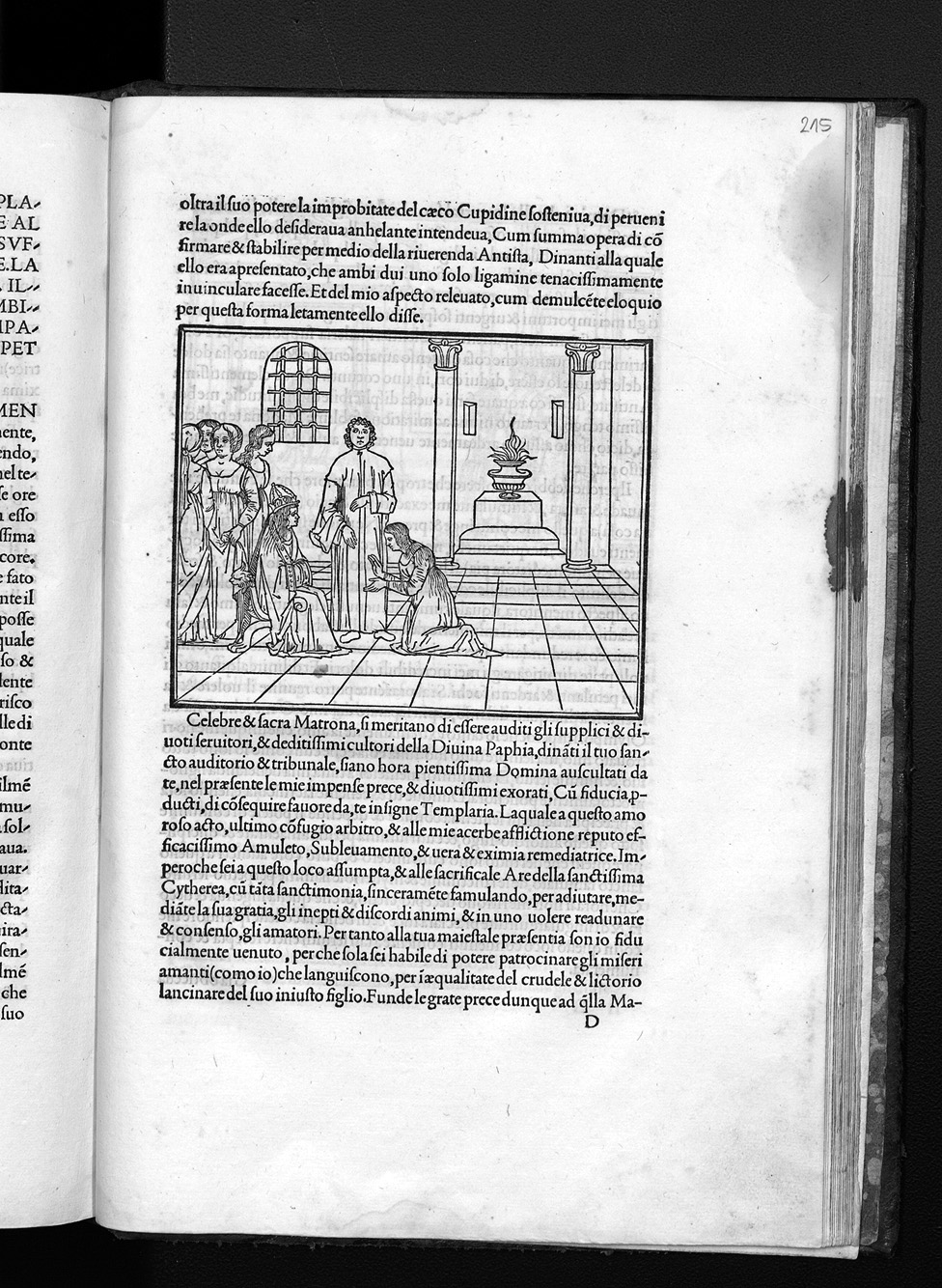
Biblioteca degli Intronati, Siena — O.III.38
HIGH Unverified
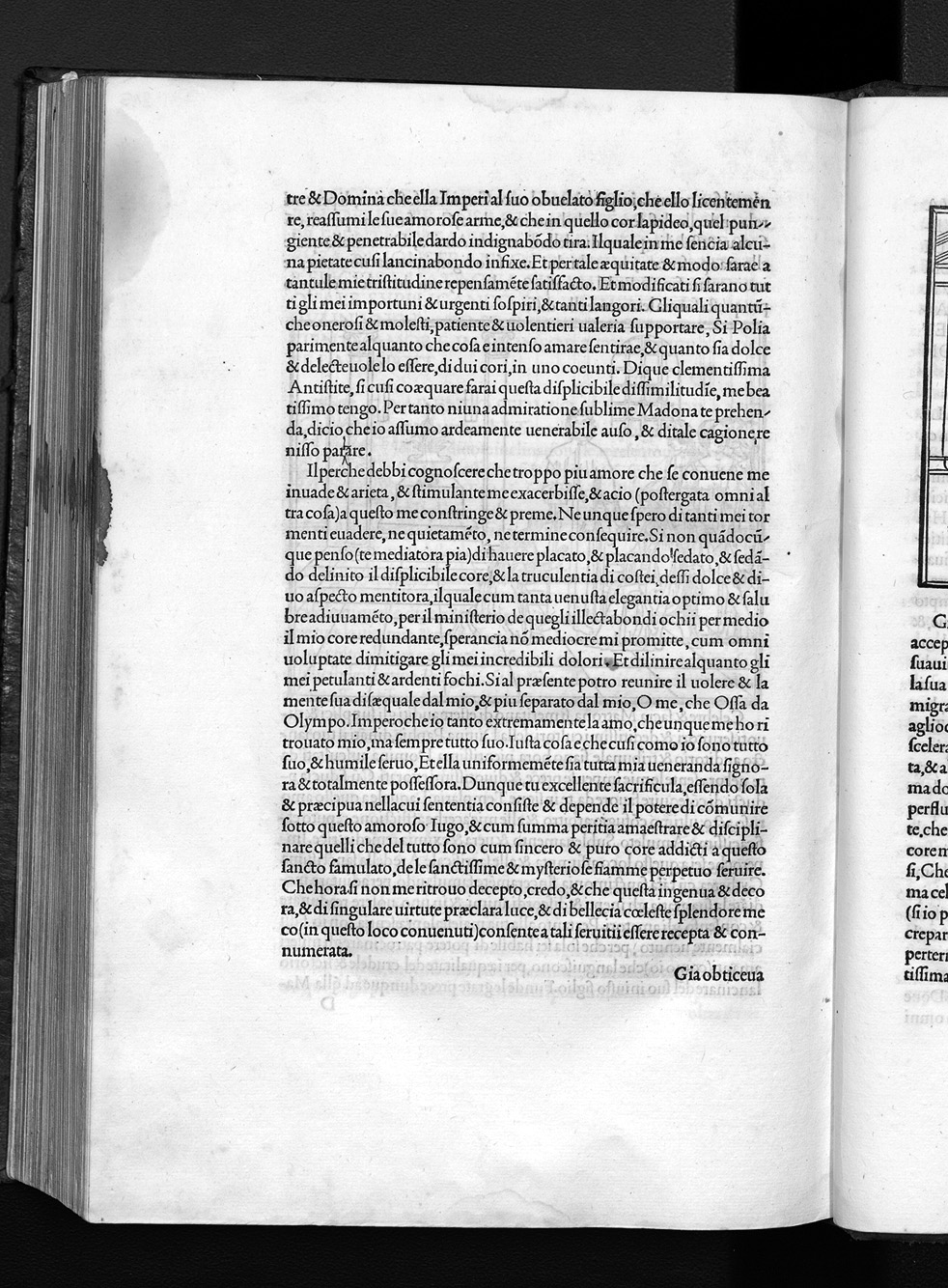
Biblioteca degli Intronati, Siena — O.III.38
HIGH Unverified
Annotations
CROSS_REFERENCE (1)EMENDATION (1)INDEX_ENTRY (2)MARGINAL_NOTE (2)
Cross Reference
h which will provide avenues of entry into the
copy for future scholars, as the work of Brancato and Graves did for this present study.
Bibliographic Description
This is a perfect copy of the 1499 edition, containing the often-excised errata leaf and Priapic
image. The first attested date in the provenance is 1739. An ex libris following the HP’s
valedictory poem states that the copy was donated by Lord George Leslie to the English
Jesuit College of St Omer at Calais.3
Detail, ...
Russell, PhD Thesis, p. 169 (Ch. 6)
Cross Reference
h which will provide avenues of entry into the
copy for future scholars, as the work of Brancato and Graves did for this present study.
Bibliographic Description
This is a perfect copy of the 1499 edition, containing the often-excised errata leaf and Priapic
image. The first attested date in the provenance is 1739. An ex libris following the HP’s
valedictory poem states that the copy was donated by Lord George Leslie to the English
Jesuit College of St Omer at Calais.3
Detail, ...
Russell, PhD Thesis, p. 169 (Ch. 6)
Hand Primary: Anonymous
Marginal Note
“Tereus, Tereus raped me.”
e, a
traditional symbol of romantic love, concludes the novel by singing ‘Τηρεὺς Τηρεὺς ἐμὲ
ἐβιάσατο’, ‘Tereus, Tereus raped me.’
Et quivi Philomela anteluculo flendo promeva, tra gli spinosi rubi operta, et tra boscheti pressi di
opaca coma di querculi, involuti della obliquante Periclymeno le violentie dell’adultero et infido
Tereo, cum canoro garrito dicendo, Τηρεὺς Τηρεὺς ἐμὲ ἐβιάσατο sospirando emerso et absoluto dal
dolce somno repentuscule me lucubrai dicendo. Vale ergo Polia. ...
Russell, PhD Thesis, p. 234 (Ch. 9)
Hand Primary: Anonymous
Index Entry
“Vale, Polia”
I
awoke and emerged with a start from my sweet dream, saying with a sigh: ‘Farewell, then, Polia’. (G
465)
This juxtaposition of Poliphilo’s sweet romantic adieu with a lamentation for a rape forms an
unsettling conclusion to the novel. The reader also experiences a double, redundant
circularity. This scene is palliated by Poliphilo’s awakening, and the reassurance that this
entire novel was only a dream, the last words of which were addressed to his beloved.
The annotations found on ...
Russell, PhD Thesis, p. 235 (Ch. 9)
Hand Primary: Anonymous
Index Entry
“Vale, Polia”
a dream, the last words of which were addressed to his beloved.
The annotations found on F3r offer the disturbing suggestion that Τηρεὺς Τηρεὺς ἐμὲ
ἐβιάσατο was in fact intended to be the last line of the novel. The annotator wrote a
strikethrough line across the ‘Τηρεὺς...’ phrase in the above paragraph, then rewrote the
phrase in its entirely below and after the ‘Vale, Polia’. This raises the possibility that the
novel does not end with a valediction, but in a nightmare.
Detail, F...
Russell, PhD Thesis, p. 235 (Ch. 9)
Hand Primary: Anonymous
Emendation
“A FLOWER SO DRY NEVER REVIVES. FAREWELL.”
her research into the
biographies of the proposed candidates for in order to establish any correlation between the
evidence which may become available for authorial intent, and the responses of readers.
Poliphilo concluded the HP with a lament for Polia, writing ‘FLOS SIC
EXSICCATUS, NUNQUAM REVIVISCIT.’3 If this thesis has had the opposite effect, in
any way enlivening HP studies, then it will have accomplished its purpose.
3 ...
Russell, PhD Thesis, p. 242 (Ch. 9)
Cross Reference
h which will provide avenues of entry into the
copy for future scholars, as the work of Brancato and Graves did for this present study.
Bibliographic Description
This is a perfect copy of the 1499 edition, containing the often-excised errata leaf and Priapic
image. The first attested date in the provenance is 1739. An ex libris following the HP’s
valedictory poem states that the copy was donated by Lord George Leslie to the English
Jesuit College of St Omer at Calais.3
Detail, ...
Russell, PhD Thesis, p. 169 (Ch. 6)
Cross Reference
h which will provide avenues of entry into the
copy for future scholars, as the work of Brancato and Graves did for this present study.
Bibliographic Description
This is a perfect copy of the 1499 edition, containing the often-excised errata leaf and Priapic
image. The first attested date in the provenance is 1739. An ex libris following the HP’s
valedictory poem states that the copy was donated by Lord George Leslie to the English
Jesuit College of St Omer at Calais.3
Detail, ...
Russell, PhD Thesis, p. 169 (Ch. 6)
Hand Primary: Anonymous
Marginal Note
“Tereus, Tereus raped me.”
e, a
traditional symbol of romantic love, concludes the novel by singing ‘Τηρεὺς Τηρεὺς ἐμὲ
ἐβιάσατο’, ‘Tereus, Tereus raped me.’
Et quivi Philomela anteluculo flendo promeva, tra gli spinosi rubi operta, et tra boscheti pressi di
opaca coma di querculi, involuti della obliquante Periclymeno le violentie dell’adultero et infido
Tereo, cum canoro garrito dicendo, Τηρεὺς Τηρεὺς ἐμὲ ἐβιάσατο sospirando emerso et absoluto dal
dolce somno repentuscule me lucubrai dicendo. Vale ergo Polia. ...
Russell, PhD Thesis, p. 234 (Ch. 9)
Hand Primary: Anonymous
Index Entry
“Vale, Polia”
I
awoke and emerged with a start from my sweet dream, saying with a sigh: ‘Farewell, then, Polia’. (G
465)
This juxtaposition of Poliphilo’s sweet romantic adieu with a lamentation for a rape forms an
unsettling conclusion to the novel. The reader also experiences a double, redundant
circularity. This scene is palliated by Poliphilo’s awakening, and the reassurance that this
entire novel was only a dream, the last words of which were addressed to his beloved.
The annotations found on ...
Russell, PhD Thesis, p. 235 (Ch. 9)
Hand Primary: Anonymous
Index Entry
“Vale, Polia”
a dream, the last words of which were addressed to his beloved.
The annotations found on F3r offer the disturbing suggestion that Τηρεὺς Τηρεὺς ἐμὲ
ἐβιάσατο was in fact intended to be the last line of the novel. The annotator wrote a
strikethrough line across the ‘Τηρεὺς...’ phrase in the above paragraph, then rewrote the
phrase in its entirely below and after the ‘Vale, Polia’. This raises the possibility that the
novel does not end with a valediction, but in a nightmare.
Detail, F...
Russell, PhD Thesis, p. 235 (Ch. 9)
Hand Primary: Anonymous
Emendation
“A FLOWER SO DRY NEVER REVIVES. FAREWELL.”
her research into the
biographies of the proposed candidates for in order to establish any correlation between the
evidence which may become available for authorial intent, and the responses of readers.
Poliphilo concluded the HP with a lament for Polia, writing ‘FLOS SIC
EXSICCATUS, NUNQUAM REVIVISCIT.’3 If this thesis has had the opposite effect, in
any way enlivening HP studies, then it will have accomplished its purpose.
3 ...
Russell, PhD Thesis, p. 242 (Ch. 9)