← All Folios
Signature E8v
Folio 212r, Quire e
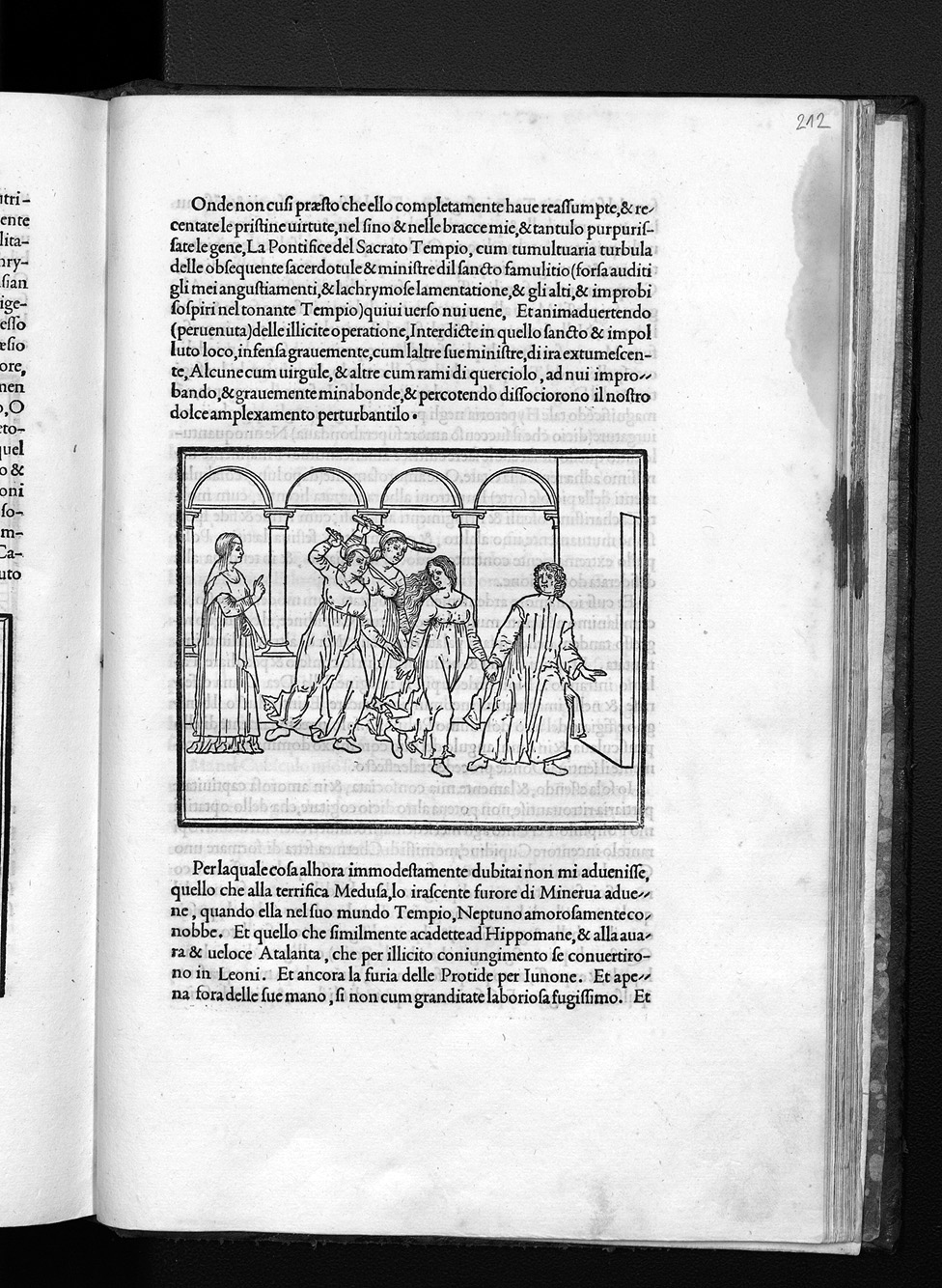
Biblioteca degli Intronati, Siena — O.III.38
HIGH Unverified
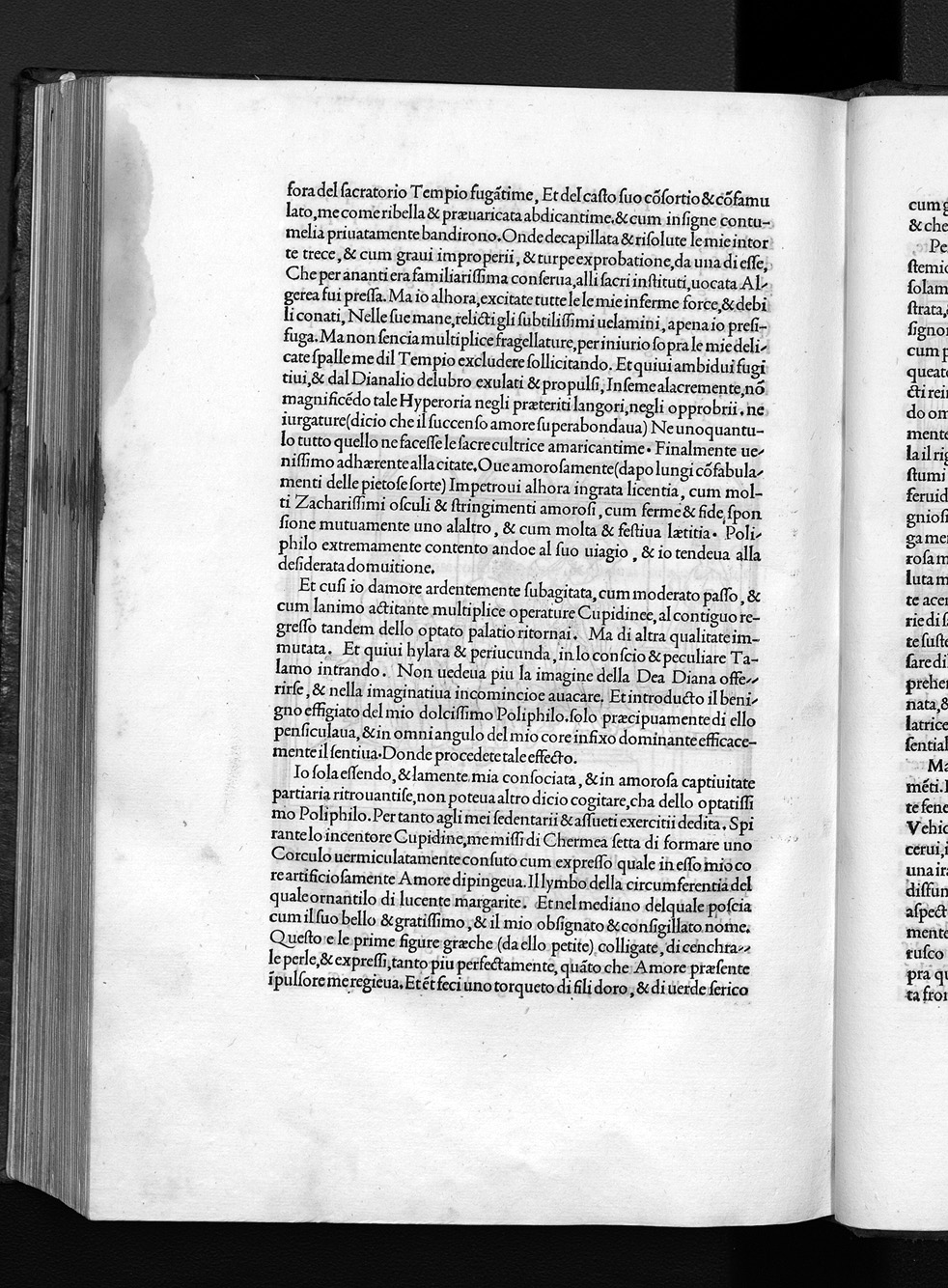
Biblioteca degli Intronati, Siena — O.III.38
HIGH Unverified
Alchemical Analysis
Venus Persists: The Alchemist's Stamina
Deep into Book II -- where most annotators' energy has long since flagged -- Hand B is still at work, replacing the goddess Venus's name with her alchemical symbol: the text reads 'Veneris' but the annotation substitutes the Venus/copper ideogram with the Latin case ending '-eris' appended. Russell observes that this demonstrates the alchemist's remarkable persistence: 'notes decline in frequency and alchemical significance in Book II' but the symbolic vocabulary is maintained to the end. Venus (copper) is the feminine planetary metal in the d'Espagnet system.
Element: Venus / Copper (feminine planetary metal)
Process: Persistent symbolic substitution through Book II
Framework: d'Espagnet: planetary-metal associations maintained throughout
Russell, p. 157
LLM-assisted synthesis from Russell
Alchemical Symbols Present
| Symbol |
Metal |
Planet |
Gender |
Hand |
Conf. |
| Sol |
Gold (Aurum) |
Sun |
masculine |
Hand B |
HIGH |
Vision Reading (Phase 3 deep analysis)
Primary hand: Multiple · Hands: 3 · Type: full_page_woodcut · Sig: f2v
Woodcut: Elaborate multi-tiered fountain with nude female figure
Full-page woodcut of an ornate Renaissance fountain. Three tiers: (1) base with four sea-horses or marine creatures in a circular pool; (2) middle tier with grotesque masks, winged putti/sphinxes, and volutes; (3) top tier with a nude female figure (possibly Venus/nymph) standing on a shell/pedestal under arching water jets, holding a vessel that crowns the fountain. Water streams from multiple points. This is one of the HP's most celebrated architectural woodcuts.
Condition: Good. Clean impression
Transcription Attempts
left_margin_top · Latin · MEDIUM
[...] [...] Hydriatica [...] gratia [...] Bona [...]portio [...] nobilia [...] Cornucopia
'Hydriatica' (relating to water vessels), 'Cornucopia' (horn of plenty). Reader is labeling the fountain's iconographic elements. The word 'Cornucopia' may identify a specific decorative element in the woodcut
left_margin_bottom · Latin · LOW
[...] mortem [...] in [...] de [...] memo[riam]
'mortem' (death), 'memoriam' (memory). Reader meditating on the fountain as memento mori despite its apparent beauty
right_margin · Latin/Italian · LOW
Grad[...] [...] no [...] lapis [...] de [...]
'lapis' (stone) — could be architectural description or alchemical reference to lapis philosophorum (philosopher's stone)
bottom · Latin · LOW
[...] de [...] fa [...] concreto [...] conclamatus [...] in [...] quin [...] super [...] [...] mature [...]
'concreto' (solidified/concrete), 'mature' (ripely/timely). Possibly describing the fountain's material construction
Scholarly Significance
The fountain woodcut is one of the HP's most reproduced images and a touchstone for Renaissance architectural fantasy. The annotations show readers engaged with both its architectural vocabulary ('Hydriatica', 'Cornucopia') and its symbolic dimension ('mortem', 'memoriam'). The word 'lapis' in the right margin is ambiguous — it could be purely architectural or could carry alchemical overtones (lapis philosophorum). This ambiguity exemplifies the double reading the HP invites.
Cross-references: Photo 82 (p.69, fountain section begins), Russell thesis Ch. 4 (architectural ekphrasis), HP reception history: fountain as emblem of Renaissance imagination
Vision reading (Claude Code, Phase 3)
Annotations
SYMBOL (2)
Hand B: Anonymous (possibly Royal Society circle) (Jean d'Espagnet (Enchiridion Physicae Restitutae)) Alchemist
Symbol
“-ra”
146
Detail, (b6v)
The annotator consistently uses in-text ideograms throughout his annotation. The hand is
heavy throughout the book, although notes decline in frequency and alchemical significance
in Book II. Nevertheless, even on (E8v) the symbol of Venus is still used as a replacement
for the goddess’ name.
Detail, (E8v)
The Latin inflexions suffixed to the symbols serve to disambiguate each sign by
identifying its gender and case, as well as allowing the ideogram to fun...
Russell, PhD Thesis, p. 157 (Ch. 6)
Hand B: Anonymous (possibly Royal Society circle) (Jean d'Espagnet (Enchiridion Physicae Restitutae)) Alchemist
Symbol
“-ra”
146
Detail, (b6v)
The annotator consistently uses in-text ideograms throughout his annotation. The hand is
heavy throughout the book, although notes decline in frequency and alchemical significance
in Book II. Nevertheless, even on (E8v) the symbol of Venus is still used as a replacement
for the goddess’ name.
Detail, (E8v)
The Latin inflexions suffixed to the symbols serve to disambiguate each sign by
identifying its gender and case, as well as allowing the ideogram to fun...
Russell, PhD Thesis, p. 157 (Ch. 6)
Hand B: Anonymous (possibly Royal Society circle) (Jean d'Espagnet (Enchiridion Physicae Restitutae)) Alchemist
Symbol
“-ra”
146
Detail, (b6v)
The annotator consistently uses in-text ideograms throughout his annotation. The hand is
heavy throughout the book, although notes decline in frequency and alchemical significance
in Book II. Nevertheless, even on (E8v) the symbol of Venus is still used as a replacement
for the goddess’ name.
Detail, (E8v)
The Latin inflexions suffixed to the symbols serve to disambiguate each sign by
identifying its gender and case, as well as allowing the ideogram to fun...
Russell, PhD Thesis, p. 157 (Ch. 6)
Hand B: Anonymous (possibly Royal Society circle) (Jean d'Espagnet (Enchiridion Physicae Restitutae)) Alchemist
Symbol
“-ra”
146
Detail, (b6v)
The annotator consistently uses in-text ideograms throughout his annotation. The hand is
heavy throughout the book, although notes decline in frequency and alchemical significance
in Book II. Nevertheless, even on (E8v) the symbol of Venus is still used as a replacement
for the goddess’ name.
Detail, (E8v)
The Latin inflexions suffixed to the symbols serve to disambiguate each sign by
identifying its gender and case, as well as allowing the ideogram to fun...
Russell, PhD Thesis, p. 157 (Ch. 6)
Hand B: Anonymous (possibly Royal Society circle) (Jean d'Espagnet (Enchiridion Physicae Restitutae)) Alchemist
Symbol
“-ra”
146
Detail, (b6v)
The annotator consistently uses in-text ideograms throughout his annotation. The hand is
heavy throughout the book, although notes decline in frequency and alchemical significance
in Book II. Nevertheless, even on (E8v) the symbol of Venus is still used as a replacement
for the goddess’ name.
Detail, (E8v)
The Latin inflexions suffixed to the symbols serve to disambiguate each sign by
identifying its gender and case, as well as allowing the ideogram to fun...
Russell, PhD Thesis, p. 157 (Ch. 6)
Hand B: Anonymous (possibly Royal Society circle) (Jean d'Espagnet (Enchiridion Physicae Restitutae)) Alchemist
Symbol
“-ra”
146
Detail, (b6v)
The annotator consistently uses in-text ideograms throughout his annotation. The hand is
heavy throughout the book, although notes decline in frequency and alchemical significance
in Book II. Nevertheless, even on (E8v) the symbol of Venus is still used as a replacement
for the goddess’ name.
Detail, (E8v)
The Latin inflexions suffixed to the symbols serve to disambiguate each sign by
identifying its gender and case, as well as allowing the ideogram to fun...
Russell, PhD Thesis, p. 157 (Ch. 6)
Hand B: Anonymous (possibly Royal Society circle) (Jean d'Espagnet (Enchiridion Physicae Restitutae)) Alchemist
Symbol
“-ra”
146
Detail, (b6v)
The annotator consistently uses in-text ideograms throughout his annotation. The hand is
heavy throughout the book, although notes decline in frequency and alchemical significance
in Book II. Nevertheless, even on (E8v) the symbol of Venus is still used as a replacement
for the goddess’ name.
Detail, (E8v)
The Latin inflexions suffixed to the symbols serve to disambiguate each sign by
identifying its gender and case, as well as allowing the ideogram to fun...
Russell, PhD Thesis, p. 157 (Ch. 6)
Hand B: Anonymous (possibly Royal Society circle) (Jean d'Espagnet (Enchiridion Physicae Restitutae)) Alchemist
Symbol
“-ra”
146
Detail, (b6v)
The annotator consistently uses in-text ideograms throughout his annotation. The hand is
heavy throughout the book, although notes decline in frequency and alchemical significance
in Book II. Nevertheless, even on (E8v) the symbol of Venus is still used as a replacement
for the goddess’ name.
Detail, (E8v)
The Latin inflexions suffixed to the symbols serve to disambiguate each sign by
identifying its gender and case, as well as allowing the ideogram to fun...
Russell, PhD Thesis, p. 157 (Ch. 6)