← All Folios
Signature C5v
Folio 193r, Quire c
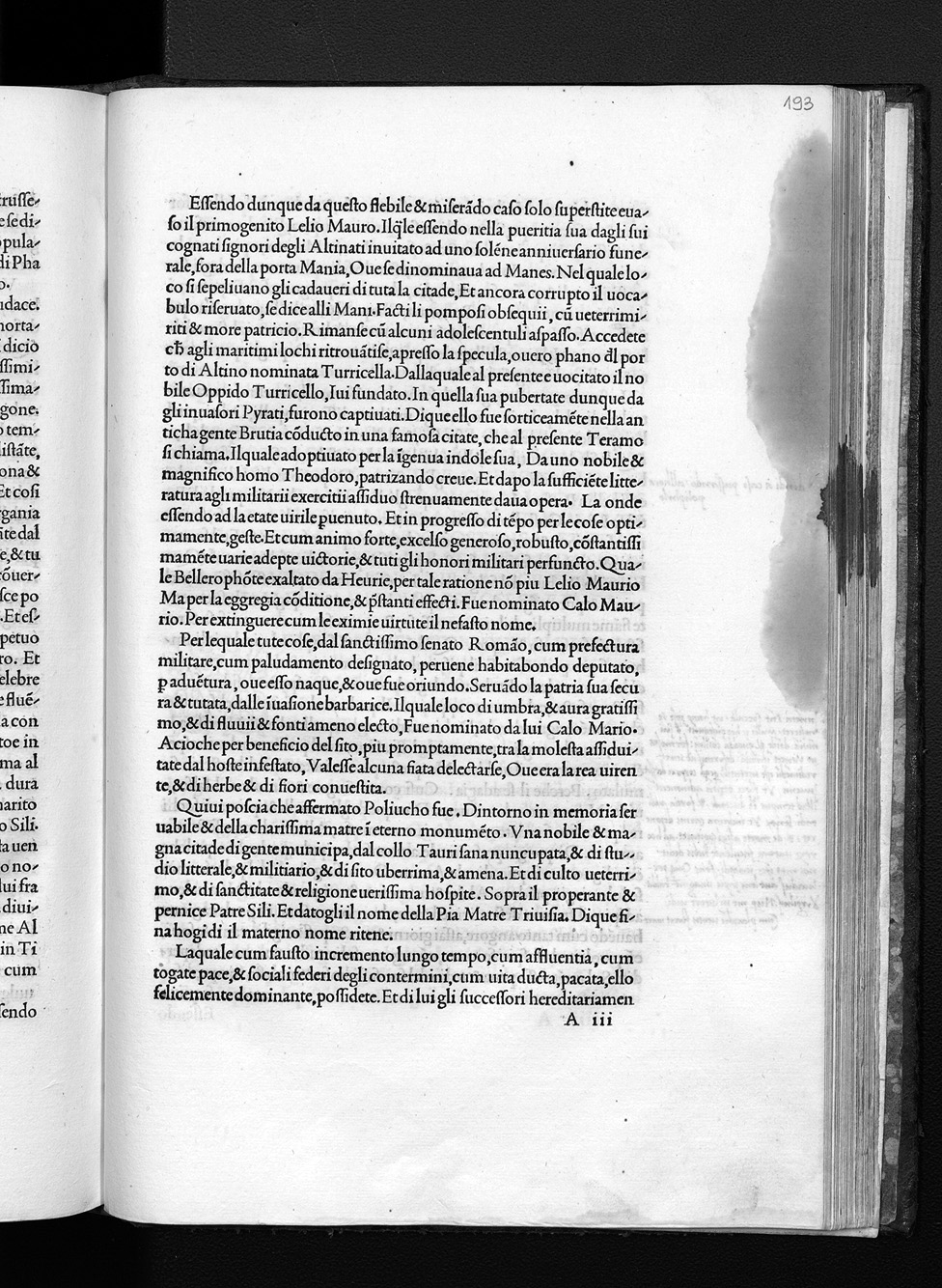
Biblioteca degli Intronati, Siena — O.III.38
HIGH Unverified
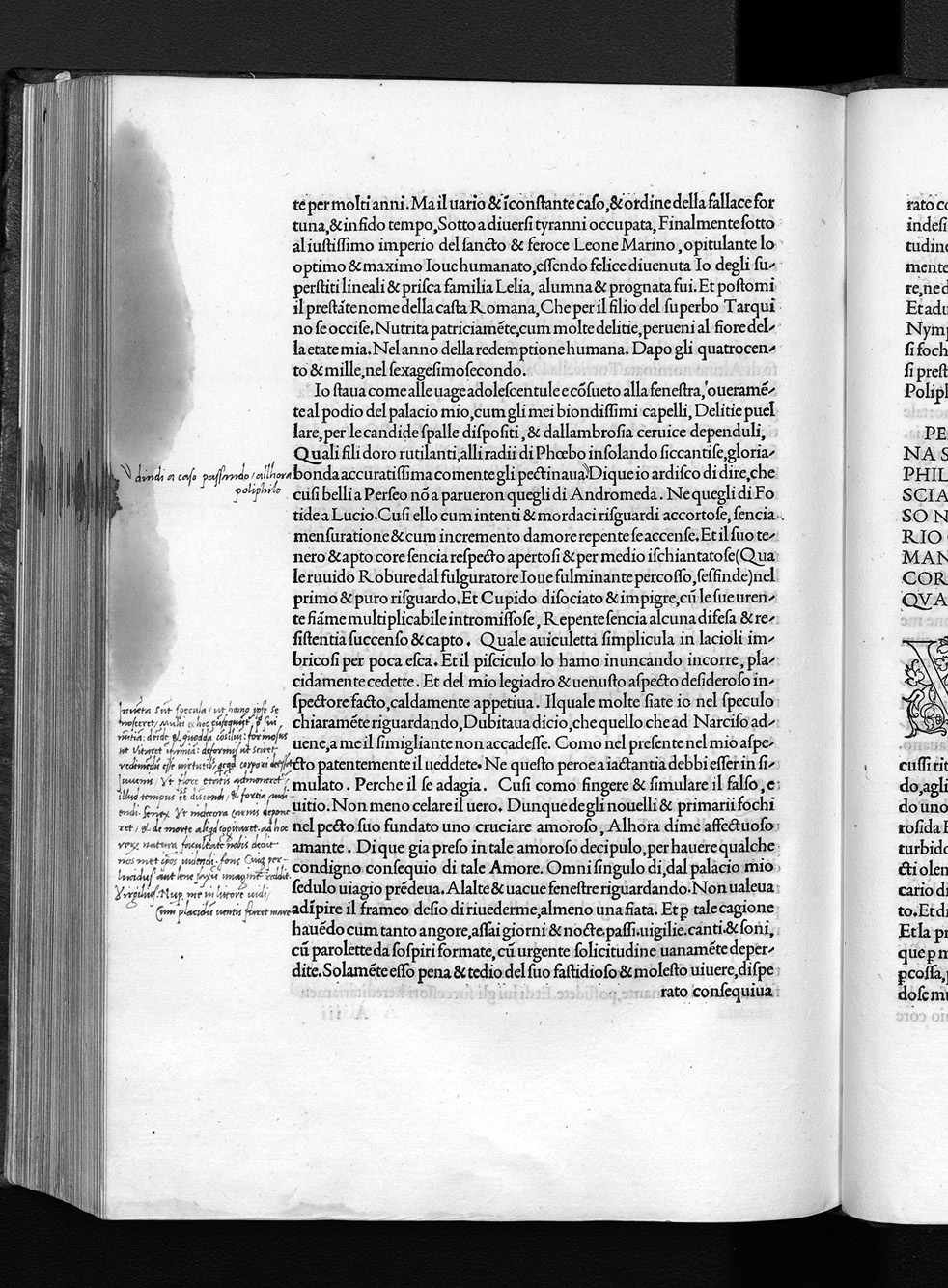
Biblioteca degli Intronati, Siena — O.III.38
HIGH Unverified
Vision Reading (Phase 3 deep analysis)
Primary hand: Multiple (at least 3) · Hands: 3 · Type: text_page · Sig: c5v
Transcription Attempts
top_left · English · MEDIUM
to y[...] most faithful mother [...] Bacchus [...]
English annotation at top of page. References Bacchus — the printed text here contains the Greek inscription to Aphrodite and Dionysus (ΘΕΟΙΣ ΑΦΡΟΔΙΤΙΚΟΝ ΤΩ ΥΙΩ ΕΡΟΤΟΔΙΟΝΥΣΟΣ ΚΑΙ ΔΗΜΗΤΡΑ). The English reader is responding to the mythological content
top · Greek · HIGH
ΘΕΟΙΣ ΑΦΡΟΔΙΤΙΚΟΝ ΤΩ ΥΙΩ ΕΡΟΤΟΔΙΟΝΥΣΟΣ ΚΑΙ ΔΗΜΗΤΡΑ ΕΚ ΤΩΝ ΙΔΙΩΝ ΜΥΡΤΙ ΣΥΜΒΙΟΘΕΣΤΑΤΗ
PRINTED TEXT (not annotation): Greek inscription in the HP text. 'To the gods, an Aphroditic offering, to the son Erotodionysos and Demeter, from their own, with the most symbiotic myrtle.' This is one of the HP's famous multilingual inscriptions
left_margin · Latin · LOW
[...] Bacchurio [...] fiat [...] Jacobini [...] mutatio [...] symbolum [...] [...] transf[...]
Dense left margin annotations. 'mutatio' (change/transformation), 'symbolum' (symbol), 'transf[ormatio]' (transformation). These are alchemical process terms. 'Jacobini' could be a personal name reference
bottom · Latin · MEDIUM
alteram [...] Symbola [...] est [...] aequitas [...] & [...] mutatio est [...] S[...] aspera trans[...]
KEY ALCHEMICAL TEXT: 'Symbola', 'mutatio' (change), 'aspera' (rough/harsh), 'transformatio'. Reader is explicitly interpreting the printed text's mythological content as alchemical symbolism. The transformation vocabulary is standard alchemical discourse
Symbols Detected
alchemical_symbol · bottom_left
Small symbols visible at bottom left margin — appears to include planetary/elemental marks. One looks like a cross with a loop (possibly ankh or Venus symbol). Another resembles a circle with rays
Scholarly Significance
This is a KEY ALCHEMICAL SITE. The printed Greek inscription to Aphrodite-Dionysus-Demeter was read by Hand B as an alchemical allegory of transformation ('mutatio', 'transformatio'). The alchemical symbols at bottom left appear to be the reader's shorthand notation system — possibly planetary symbols identifying which alchemical processes the mythological figures represent. The English annotation at top shows a later reader also engaged with the Bacchic content. This page demonstrates the alchemist reader's method: encounter mythological text → annotate with transformation vocabulary → mark with symbol shorthand.
Cross-references: Photo 3 (Master Mercury declaration), Photo 41 (bellua p.28), Photo 140 (Synostra Gloria mundi p.127), Russell thesis Ch. 5-6 (alchemical readings), Russell thesis Ch. 8 (symbol inventory)
Note (symbol_identification_needed): Bottom-left alchemical symbols need magnification or higher-resolution scan for definitive identification. Current resolution insufficient to distinguish planetary symbols from other marks.
Vision reading (Claude Code, Phase 3)
Annotations
CROSS_REFERENCE (1)
Cross Reference
“Corpora quod tactis inducit marmora rebus
Ovid metamor. Plinius etiam.”
o one of two men from the same family mentioned in Chapter 9. Both
citations could be interpreted as representing excess or opulence. Licianus Mucianus caught
a mullet fish of great size, for which gourmands would have paid a large price if it had been
caught near Rome.9 Licianus Murena was a Praetor who was the first to make wears for fish,
an example followed by other patrician families.10
B also found a source for Poliphilo’s resurrection from seeming-death through Polia’s
love (C5r-...
Russell, PhD Thesis, p. 177 (Ch. 7)
Cross Reference
“Corpora quod tactis inducit marmora rebus
Ovid metamor. Plinius etiam.”
o one of two men from the same family mentioned in Chapter 9. Both
citations could be interpreted as representing excess or opulence. Licianus Mucianus caught
a mullet fish of great size, for which gourmands would have paid a large price if it had been
caught near Rome.9 Licianus Murena was a Praetor who was the first to make wears for fish,
an example followed by other patrician families.10
B also found a source for Poliphilo’s resurrection from seeming-death through Polia’s
love (C5r-...
Russell, PhD Thesis, p. 177 (Ch. 7)
Cross Reference
“Corpora quod tactis inducit marmora rebus
Ovid metamor. Plinius etiam.”
o one of two men from the same family mentioned in Chapter 9. Both
citations could be interpreted as representing excess or opulence. Licianus Mucianus caught
a mullet fish of great size, for which gourmands would have paid a large price if it had been
caught near Rome.9 Licianus Murena was a Praetor who was the first to make wears for fish,
an example followed by other patrician families.10
B also found a source for Poliphilo’s resurrection from seeming-death through Polia’s
love (C5r-...
Russell, PhD Thesis, p. 177 (Ch. 7)
Cross Reference
“Corpora quod tactis inducit marmora rebus
Ovid metamor. Plinius etiam.”
o one of two men from the same family mentioned in Chapter 9. Both
citations could be interpreted as representing excess or opulence. Licianus Mucianus caught
a mullet fish of great size, for which gourmands would have paid a large price if it had been
caught near Rome.9 Licianus Murena was a Praetor who was the first to make wears for fish,
an example followed by other patrician families.10
B also found a source for Poliphilo’s resurrection from seeming-death through Polia’s
love (C5r-...
Russell, PhD Thesis, p. 177 (Ch. 7)