← All Folios
Signature b7v
Folio 15r, Quire b
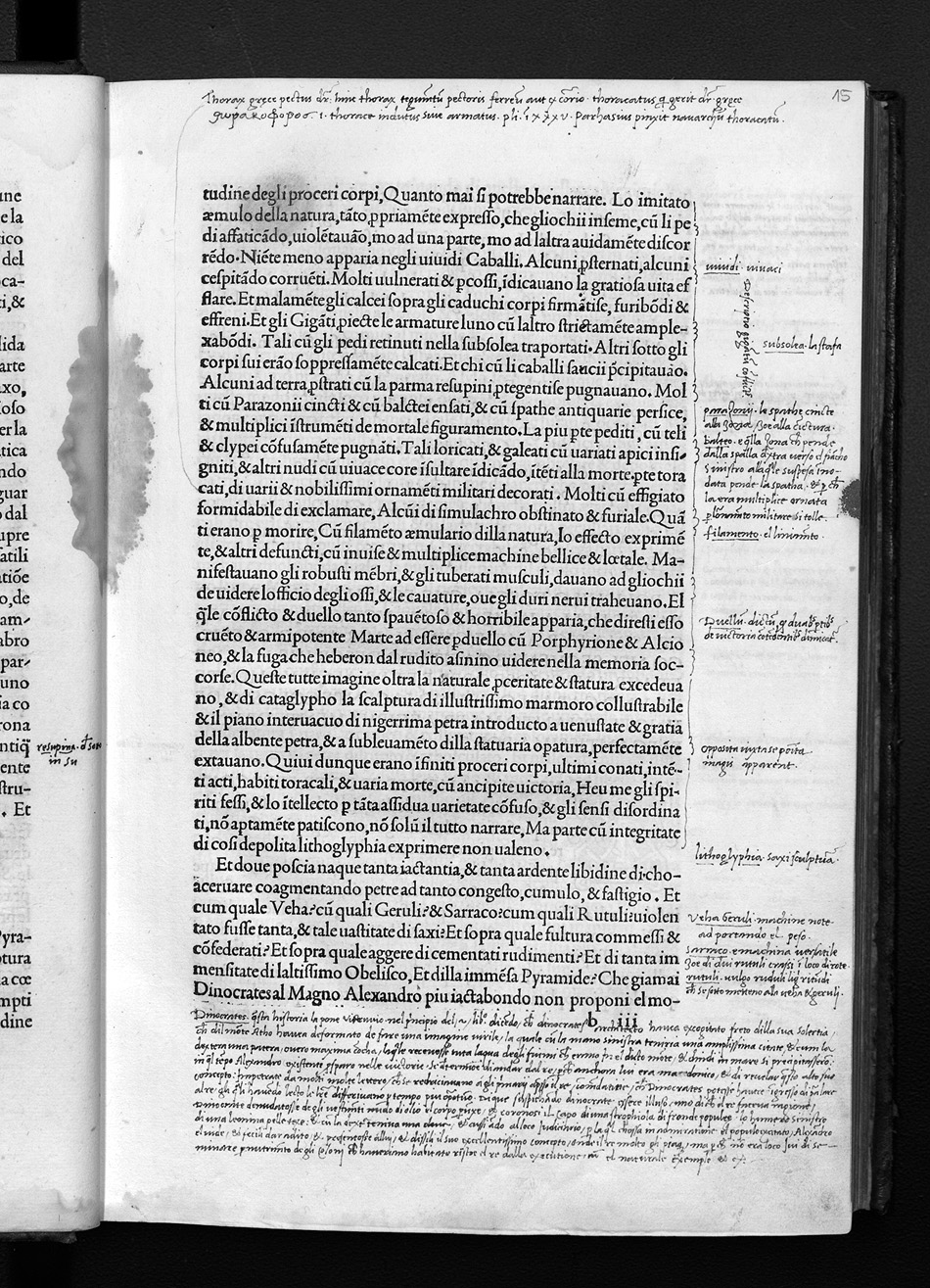
Biblioteca degli Intronati, Siena — O.III.38
HIGH Unverified
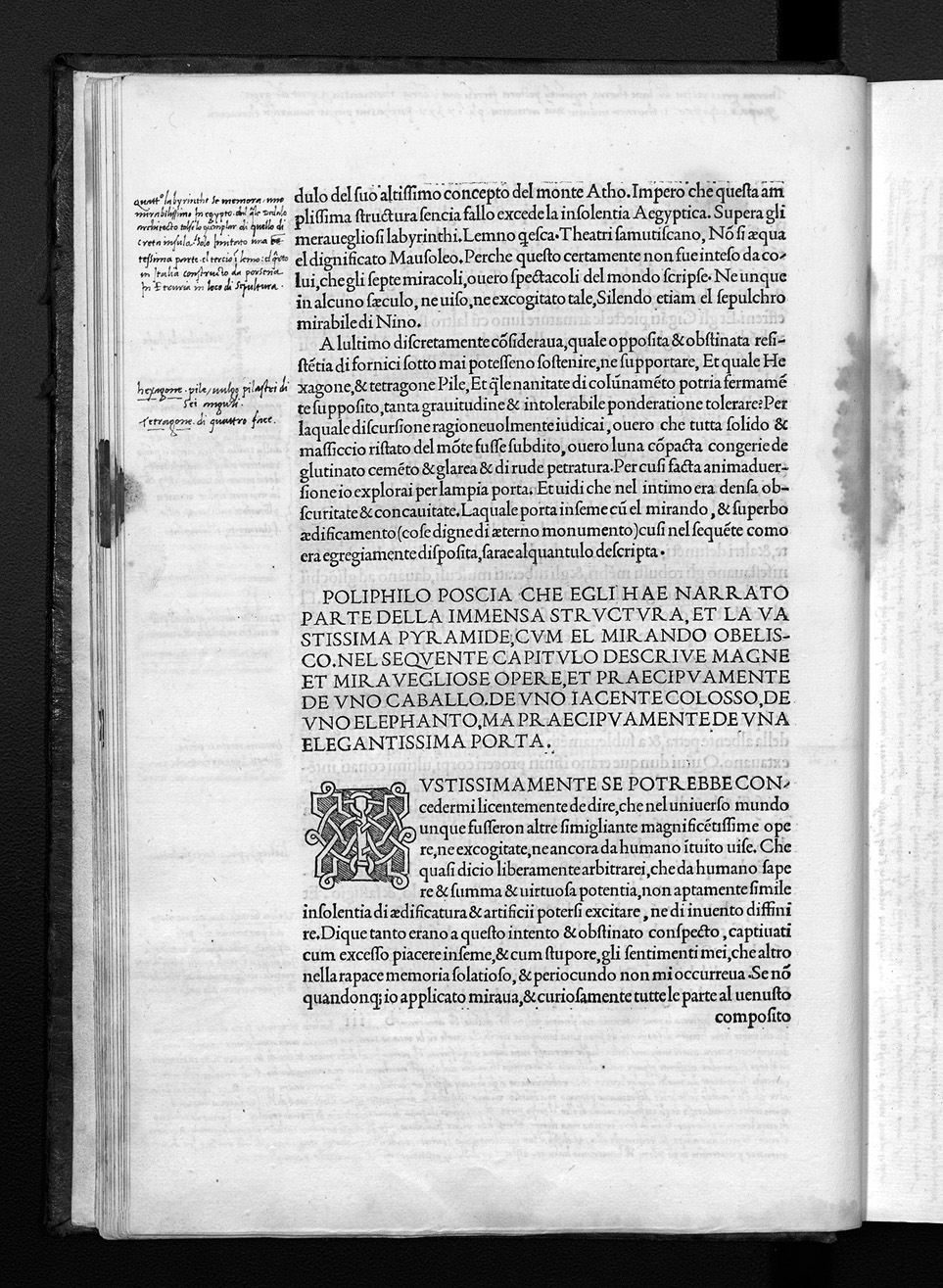
Biblioteca degli Intronati, Siena — O.III.38
HIGH Unverified
Vision Reading (Phase 3 deep analysis)
Primary hand: Multiple (3+) · Hands: 3 · Type: woodcut_page · Sig: b7v
Woodcut: Monument with female figure, lamp, Hebrew and Greek inscriptions
Large woodcut of a monument/stele with a standing female figure atop it holding a lamp or torch. Below: three tiers of inscriptions — Hebrew characters, Greek text (ΟΣΤΙΣ ΕΝ ΔΑΒΕΕΚ ΤΟΥ ΔΕ ΤΟΥ ΘΕΡΑΠΟΥ ΘΕΟΝ ΑΝΑΠΕΙΣΘΩ...), and Latin capitals (QVISQVIS ES QVANTVM CVNQVE LIBERI HVIVS THESAVRI DESIDERAS MONEO AVER CAPVT CORPVS NE TANGITO). A small aedicule with a seated figure appears at the bottom.
Condition: Good
Transcription Attempts
top · Latin · LOW
onnite [...] rifusa altera [...] Regena erat [...] cum [...] indice [...] partes [...] magnai [...] retro [...] ter [...] y [...] emissore
Top annotation across full width
left_margin · Latin/Greek · MEDIUM
Caput [...] phantasma [...]
'phantasma' — apparition/phantom. Reader classifying the figure as a phantasm
right_margin · Latin · MEDIUM
Manuscriptae erat [...]
'Manuscriptae erat' = 'it was handwritten'. Reader noting something about the inscription's mode of execution. This is a rare meta-observation about the materiality of the woodcut
bottom_left · Latin · LOW
Caput [...] populam [...]
Bottom annotations
bottom_right · Latin · LOW
[...] absolvem [...] dubitare [...] statio [...] Caelum [...] abacum [...]
'Caelum' (heaven), 'abacum' (abacus/counting board). Theological and mathematical vocabulary
Scholarly Significance
Page 30 — the most inscription-heavy page in the HP with trilingual Hebrew-Greek-Latin text. The annotations show intense decoding effort. The note 'Manuscriptae erat' is remarkable — a reader is commenting on how the inscription was produced (handwritten vs carved), which shows awareness of the difference between Colonna's fictional epigraphy and real ancient inscriptions. The word 'phantasma' suggests the reader views the monument figure as an apparition, connecting to the HP's dream framework.
Cross-references: Photo 42 (p.29, companion inscription page), Photo 44 (p.31, hieroglyphic frieze)
Vision reading (Claude Code, Phase 3)
Annotations
CROSS_REFERENCE (1)INDEX_ENTRY (1)MARGINAL_NOTE (3)
Marginal Note
“Labor
and Industry”
173
On a cursory reading, without a close eye to the text, the ΠΟΝΟΣ ΚΑΙ ΕΥΦΥΙΑ (‘Labor
and Industry’ image on b7v appears to be a detail of an epitaph which Poliphilo encounters
before reaching the elephant and obelisk.
Detail, b7v
This image is in fact a detail of a cloth hanging on the elephant’s forehead over its trunk.
The effect is disorienting, because the reader first sees the cloth from the front, before
viewing the entire elephant in profile. This cloth is obscured f...
Russell, PhD Thesis, p. 184 (Ch. 7)
Marginal Note
“Labor
and Industry”
173
On a cursory reading, without a close eye to the text, the ΠΟΝΟΣ ΚΑΙ ΕΥΦΥΙΑ (‘Labor
and Industry’ image on b7v appears to be a detail of an epitaph which Poliphilo encounters
before reaching the elephant and obelisk.
Detail, b7v
This image is in fact a detail of a cloth hanging on the elephant’s forehead over its trunk.
The effect is disorienting, because the reader first sees the cloth from the front, before
viewing the entire elephant in profile. This cloth is obscured f...
Russell, PhD Thesis, p. 184 (Ch. 7)
Index Entry
“Labor
and Industry”
173
On a cursory reading, without a close eye to the text, the ΠΟΝΟΣ ΚΑΙ ΕΥΦΥΙΑ (‘Labor
and Industry’ image on b7v appears to be a detail of an epitaph which Poliphilo encounters
before reaching the elephant and obelisk.
Detail, b7v
This image is in fact a detail of a cloth hanging on the elephant’s forehead over its trunk.
The effect is disorienting, because the reader first sees the cloth from the front, before
viewing the entire elephant in profile. This cloth is obscured f...
Russell, PhD Thesis, p. 184 (Ch. 7)
Index Entry
“Labor
and Industry”
173
On a cursory reading, without a close eye to the text, the ΠΟΝΟΣ ΚΑΙ ΕΥΦΥΙΑ (‘Labor
and Industry’ image on b7v appears to be a detail of an epitaph which Poliphilo encounters
before reaching the elephant and obelisk.
Detail, b7v
This image is in fact a detail of a cloth hanging on the elephant’s forehead over its trunk.
The effect is disorienting, because the reader first sees the cloth from the front, before
viewing the entire elephant in profile. This cloth is obscured f...
Russell, PhD Thesis, p. 184 (Ch. 7)
Marginal Note
“Pulcino”
ontaining this wealth of material from such a prominent figure, this copy has been
mentioned only tangentially in previous scholarship. Chigi’s copy has been noted with
reference to an obelisk setting in the piazza outside of Santa Maria Sopra Minerva,
affectionately termed the Pulcino della Minerva (‘Minerva’s Chick, from a corruption of
‘Porcino’, ‘Piglet’; hereafter ‘Pulcino’). Heckscher convincingly demonstrates that the statue
is derived from the image of the elephant and obelisk on ...
Russell, PhD Thesis, p. 192 (Ch. 7)
Marginal Note
“Pulcino”
ontaining this wealth of material from such a prominent figure, this copy has been
mentioned only tangentially in previous scholarship. Chigi’s copy has been noted with
reference to an obelisk setting in the piazza outside of Santa Maria Sopra Minerva,
affectionately termed the Pulcino della Minerva (‘Minerva’s Chick, from a corruption of
‘Porcino’, ‘Piglet’; hereafter ‘Pulcino’). Heckscher convincingly demonstrates that the statue
is derived from the image of the elephant and obelisk on ...
Russell, PhD Thesis, p. 192 (Ch. 7)
Marginal Note
“descrittione”
182
Bernini and Chigi regarding the Pulcino. Contrary to expectations, no discussion of the
Pulcino was found on (b7v), or anywhere else in the present copy, for that matter. Bernini’s
name was nowhere visible in the marginalia. The leaf from which the Pulcino is derived
features only one piece of annotation, a cross-reference to an image of the Trinitarian obelisk
on the sixty-sixth-leaf. Nor was there, ostensibly, any open discussion of Chigi’s building
program. Instead, the margi...
Russell, PhD Thesis, p. 193 (Ch. 7)
Marginal Note
“descrittione”
182
Bernini and Chigi regarding the Pulcino. Contrary to expectations, no discussion of the
Pulcino was found on (b7v), or anywhere else in the present copy, for that matter. Bernini’s
name was nowhere visible in the marginalia. The leaf from which the Pulcino is derived
features only one piece of annotation, a cross-reference to an image of the Trinitarian obelisk
on the sixty-sixth-leaf. Nor was there, ostensibly, any open discussion of Chigi’s building
program. Instead, the margi...
Russell, PhD Thesis, p. 193 (Ch. 7)
Cross Reference
“careful marginal index of topics”
scussion around the history of the Pulcino. In passing, Heckscher
makes mention of a copy annotated by Chigi, which is ‘everywhere described as “heavily
annotated.”’15 Heckscher thus implies the existence of prior studies of the text, without citing
his sources. Since Heckscher’s interest remained within his primary focus on elephant
iconography, he confined his examinations to those ‘relevant folios’ bearing on that topic.
He notes simply that the woodcut of an elephant and obelisk on ...
Russell, PhD Thesis, p. 196 (Ch. 7)
Cross Reference
“careful marginal index of topics”
scussion around the history of the Pulcino. In passing, Heckscher
makes mention of a copy annotated by Chigi, which is ‘everywhere described as “heavily
annotated.”’15 Heckscher thus implies the existence of prior studies of the text, without citing
his sources. Since Heckscher’s interest remained within his primary focus on elephant
iconography, he confined his examinations to those ‘relevant folios’ bearing on that topic.
He notes simply that the woodcut of an elephant and obelisk on ...
Russell, PhD Thesis, p. 196 (Ch. 7)
Marginal Note
“Labor
and Industry”
173
On a cursory reading, without a close eye to the text, the ΠΟΝΟΣ ΚΑΙ ΕΥΦΥΙΑ (‘Labor
and Industry’ image on b7v appears to be a detail of an epitaph which Poliphilo encounters
before reaching the elephant and obelisk.
Detail, b7v
This image is in fact a detail of a cloth hanging on the elephant’s forehead over its trunk.
The effect is disorienting, because the reader first sees the cloth from the front, before
viewing the entire elephant in profile. This cloth is obscured f...
Russell, PhD Thesis, p. 184 (Ch. 7)
Marginal Note
“Labor
and Industry”
173
On a cursory reading, without a close eye to the text, the ΠΟΝΟΣ ΚΑΙ ΕΥΦΥΙΑ (‘Labor
and Industry’ image on b7v appears to be a detail of an epitaph which Poliphilo encounters
before reaching the elephant and obelisk.
Detail, b7v
This image is in fact a detail of a cloth hanging on the elephant’s forehead over its trunk.
The effect is disorienting, because the reader first sees the cloth from the front, before
viewing the entire elephant in profile. This cloth is obscured f...
Russell, PhD Thesis, p. 184 (Ch. 7)
Index Entry
“Labor
and Industry”
173
On a cursory reading, without a close eye to the text, the ΠΟΝΟΣ ΚΑΙ ΕΥΦΥΙΑ (‘Labor
and Industry’ image on b7v appears to be a detail of an epitaph which Poliphilo encounters
before reaching the elephant and obelisk.
Detail, b7v
This image is in fact a detail of a cloth hanging on the elephant’s forehead over its trunk.
The effect is disorienting, because the reader first sees the cloth from the front, before
viewing the entire elephant in profile. This cloth is obscured f...
Russell, PhD Thesis, p. 184 (Ch. 7)
Index Entry
“Labor
and Industry”
173
On a cursory reading, without a close eye to the text, the ΠΟΝΟΣ ΚΑΙ ΕΥΦΥΙΑ (‘Labor
and Industry’ image on b7v appears to be a detail of an epitaph which Poliphilo encounters
before reaching the elephant and obelisk.
Detail, b7v
This image is in fact a detail of a cloth hanging on the elephant’s forehead over its trunk.
The effect is disorienting, because the reader first sees the cloth from the front, before
viewing the entire elephant in profile. This cloth is obscured f...
Russell, PhD Thesis, p. 184 (Ch. 7)
Marginal Note
“Pulcino”
ontaining this wealth of material from such a prominent figure, this copy has been
mentioned only tangentially in previous scholarship. Chigi’s copy has been noted with
reference to an obelisk setting in the piazza outside of Santa Maria Sopra Minerva,
affectionately termed the Pulcino della Minerva (‘Minerva’s Chick, from a corruption of
‘Porcino’, ‘Piglet’; hereafter ‘Pulcino’). Heckscher convincingly demonstrates that the statue
is derived from the image of the elephant and obelisk on ...
Russell, PhD Thesis, p. 192 (Ch. 7)
Marginal Note
“Pulcino”
ontaining this wealth of material from such a prominent figure, this copy has been
mentioned only tangentially in previous scholarship. Chigi’s copy has been noted with
reference to an obelisk setting in the piazza outside of Santa Maria Sopra Minerva,
affectionately termed the Pulcino della Minerva (‘Minerva’s Chick, from a corruption of
‘Porcino’, ‘Piglet’; hereafter ‘Pulcino’). Heckscher convincingly demonstrates that the statue
is derived from the image of the elephant and obelisk on ...
Russell, PhD Thesis, p. 192 (Ch. 7)
Marginal Note
“descrittione”
182
Bernini and Chigi regarding the Pulcino. Contrary to expectations, no discussion of the
Pulcino was found on (b7v), or anywhere else in the present copy, for that matter. Bernini’s
name was nowhere visible in the marginalia. The leaf from which the Pulcino is derived
features only one piece of annotation, a cross-reference to an image of the Trinitarian obelisk
on the sixty-sixth-leaf. Nor was there, ostensibly, any open discussion of Chigi’s building
program. Instead, the margi...
Russell, PhD Thesis, p. 193 (Ch. 7)
Marginal Note
“descrittione”
182
Bernini and Chigi regarding the Pulcino. Contrary to expectations, no discussion of the
Pulcino was found on (b7v), or anywhere else in the present copy, for that matter. Bernini’s
name was nowhere visible in the marginalia. The leaf from which the Pulcino is derived
features only one piece of annotation, a cross-reference to an image of the Trinitarian obelisk
on the sixty-sixth-leaf. Nor was there, ostensibly, any open discussion of Chigi’s building
program. Instead, the margi...
Russell, PhD Thesis, p. 193 (Ch. 7)
Cross Reference
“careful marginal index of topics”
scussion around the history of the Pulcino. In passing, Heckscher
makes mention of a copy annotated by Chigi, which is ‘everywhere described as “heavily
annotated.”’15 Heckscher thus implies the existence of prior studies of the text, without citing
his sources. Since Heckscher’s interest remained within his primary focus on elephant
iconography, he confined his examinations to those ‘relevant folios’ bearing on that topic.
He notes simply that the woodcut of an elephant and obelisk on ...
Russell, PhD Thesis, p. 196 (Ch. 7)
Cross Reference
“careful marginal index of topics”
scussion around the history of the Pulcino. In passing, Heckscher
makes mention of a copy annotated by Chigi, which is ‘everywhere described as “heavily
annotated.”’15 Heckscher thus implies the existence of prior studies of the text, without citing
his sources. Since Heckscher’s interest remained within his primary focus on elephant
iconography, he confined his examinations to those ‘relevant folios’ bearing on that topic.
He notes simply that the woodcut of an elephant and obelisk on ...
Russell, PhD Thesis, p. 196 (Ch. 7)