← All Folios
Signature b5r
Folio 13r, Quire b
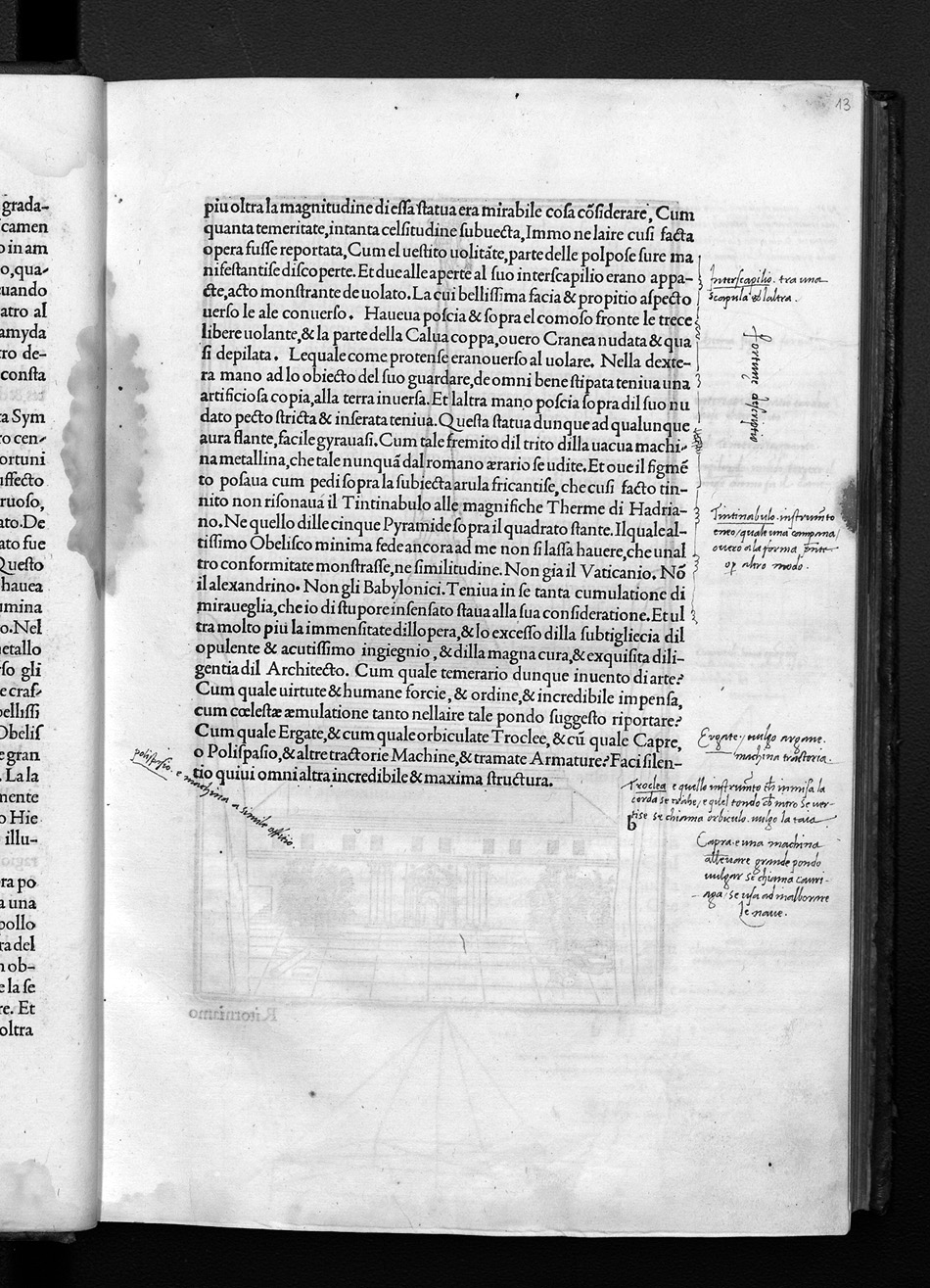
Biblioteca degli Intronati, Siena — O.III.38
HIGH Unverified
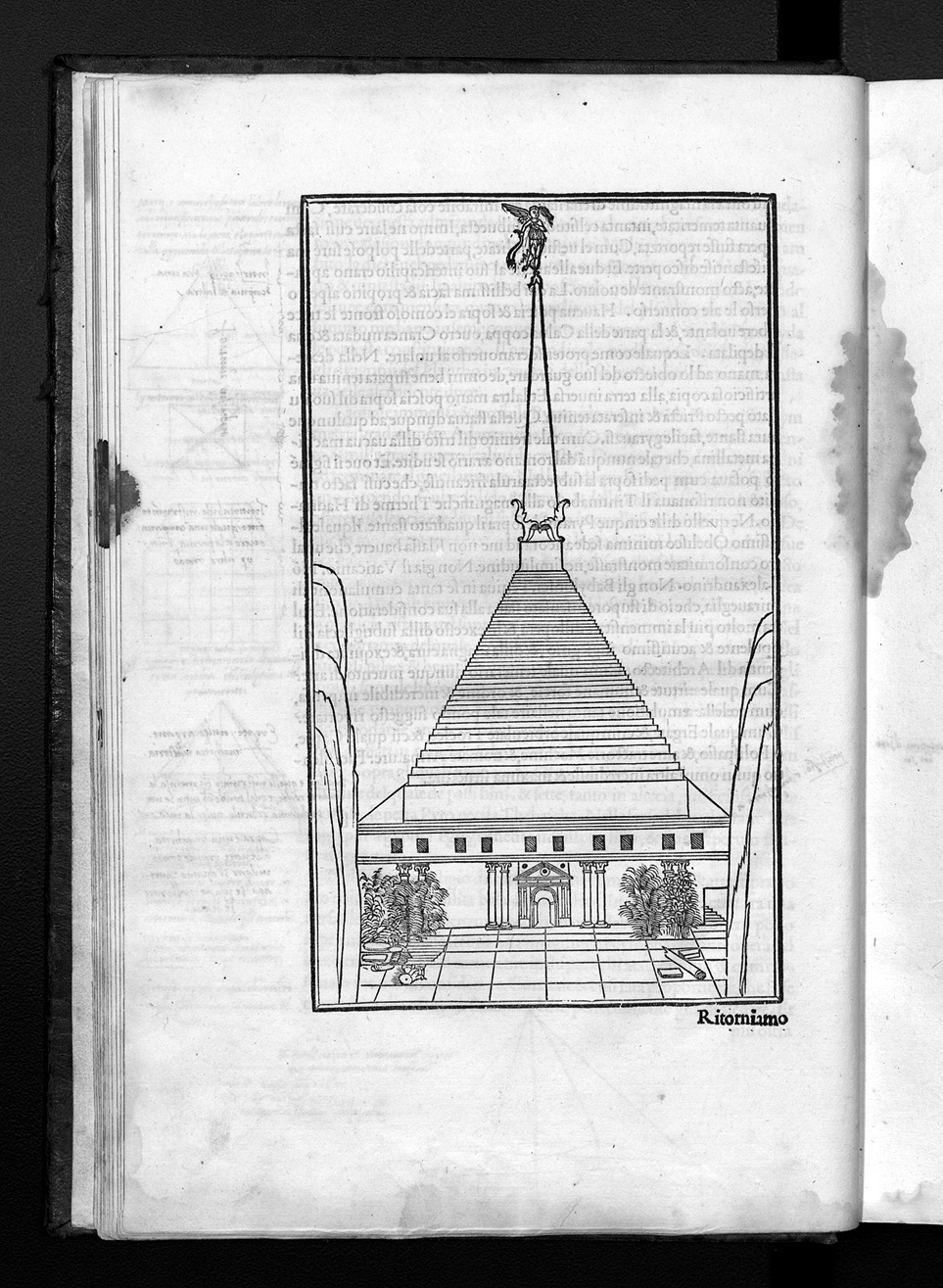
Biblioteca degli Intronati, Siena — O.III.38
HIGH Unverified
Alchemical Analysis
The Ambiguous Gods: Alchemical Hermaphrodites
An epigram reading 'D.AMBIG.DD' -- 'dedicated to the ambiguous gods' -- triggers Hand E's most explicit statement of Geberian theory. The annotation reads: 'diis ambiguis id est metallis hermafroditis guarda enim metalla sunt mas et foemina... aura-argentu enim in sua altitudine mas est in sua profunda foeminina argentum vero in sua altitudine est foemininum in suo profundo mas.' The 'ambiguous gods' are metals that possess both genders: gold is masculine 'in its height' but feminine 'in its depth'; silver is feminine in its height but masculine in its depth. This paradoxical gender-inversion is the fundamental principle of pseudo-Geber's system -- the engine that makes transmutation possible.
Element: Hermaphroditic metals (Gold-Silver gender inversion)
Process: Coincidentia oppositorum; gender-inversion as transmutation principle
Framework: pseudo-Geber: metals as masculine-feminine inverses
Russell, p. 190
LLM-assisted synthesis from Russell
Alchemical Symbols Present
| Symbol |
Metal |
Planet |
Gender |
Hand |
Conf. |
| Sulphur |
Brimstone |
|
masculine |
Hand E |
MEDIUM |
Vision Reading (Phase 3 deep analysis)
Primary hand: Multiple · Hands: 2 · Type: woodcut_page · Sig: b6r (TEMPVS group)
Woodcut: Group of classical figures in a garden, one holding objects
Woodcut of a group of figures in classical dress gathered in an outdoor setting. Trees and landscape visible. One figure appears to hold or present something to the group. Scene relates to Poliphilo's encounters with allegorical figures.
Condition: Good
Transcription Attempts
right_margin · Latin/Italian · LOW
colores [...] Spada [...] quadram [...] et [...] Hagis [...] portis [...]
'colores' (colors), 'Spada' (sword), 'quadram' (square). Reader cataloging visual elements
bottom · Latin · LOW
ossi [...] Lazar [...] magni [...] de [...] Philitas [...]
'Philitas' may reference the Hellenistic poet Philitas of Cos. A learned classical allusion
Scholarly Significance
Page 25. Annotations suggest a reader tracking classical allusions and visual elements in the woodcut. The possible Philitas reference, if confirmed, would connect to Alexandrian learned poetry — an appropriate classical parallel for Colonna's erudite style.
Cross-references: Photo 37 (p.24, TEMPVS woodcut)
Vision reading (Claude Code, Phase 3)
Annotations
INDEX_ENTRY (1)MARGINAL_NOTE (1)SYMBOL (1)
Marginal Note
“P 63.”
rchitecture. After Poliphilo escapes from a
dragon, he emerges from its subterranean lair onto a mountainside and descends toward a
marble bridge, which Poliphilo describes as follows.
Sotto el suppedio delle columne, era circumacta quanta la sua crassitudine, una lista de Porphyrite,
cum due collaterale di durissimo serpentino, cum l’ordine del Peristylio in circumductione. Il simile
vedevasi l’orificio della cisterna cincto nel pavimento, una lista de Porphyro et un’altra di Ophytes.
...
Russell, PhD Thesis, p. 177 (Ch. 7)
Marginal Note
“P 63.”
rchitecture. After Poliphilo escapes from a
dragon, he emerges from its subterranean lair onto a mountainside and descends toward a
marble bridge, which Poliphilo describes as follows.
Sotto el suppedio delle columne, era circumacta quanta la sua crassitudine, una lista de Porphyrite,
cum due collaterale di durissimo serpentino, cum l’ordine del Peristylio in circumductione. Il simile
vedevasi l’orificio della cisterna cincto nel pavimento, una lista de Porphyro et un’altra di Ophytes.
...
Russell, PhD Thesis, p. 177 (Ch. 7)
Hand E: Anonymous (pseudo-Geber (Jabir ibn Hayyan)) Alchemist
Symbol
“ambiguous gods”
179
Detail, (h1r)
The issue of the alchemical marriage is a hermaphrodite, representing the combination of
opposite qualities or coincidentia oppositorum. One reader found what he perceived to be a
reference to this figure in an epigram on one side of the base of the statue of the horse,
reading D.AMBIG.DD, or ‘dedicated to the ambiguous gods.’ (b5r) E interprets the
‘ambiguous gods’ as referring to such alchemical hermaphrodites.
diis ambiguis id est metallis hermafroditis guarda...
Russell, PhD Thesis, p. 190 (Ch. 7)
Hand E: Anonymous (pseudo-Geber (Jabir ibn Hayyan)) Alchemist
Symbol
“ambiguous gods”
179
Detail, (h1r)
The issue of the alchemical marriage is a hermaphrodite, representing the combination of
opposite qualities or coincidentia oppositorum. One reader found what he perceived to be a
reference to this figure in an epigram on one side of the base of the statue of the horse,
reading D.AMBIG.DD, or ‘dedicated to the ambiguous gods.’ (b5r) E interprets the
‘ambiguous gods’ as referring to such alchemical hermaphrodites.
diis ambiguis id est metallis hermafroditis guarda...
Russell, PhD Thesis, p. 190 (Ch. 7)
Hand Primary: Pope Alexander VII (Fabio Chigi)
Index Entry
“spaventato di Polia in sogno.”
tween
arguments. On the other hand, Roswitha Stewering has also observed Poliphilo’s lessening
fear and growing confidence toward the end of the novel.35 Perhaps the Pope, himself
attuned to these qualities of the HP through his own reading of devotional literature, would
also have noticed Poliphilo’s shift in character.
In the second book, Chigi notes Polia’s experience of fear as well, making the annotator
the only annotator to remark on the inner life of the novel’s deuteragonist. On ...
Russell, PhD Thesis, p. 213 (Ch. 8)
Hand Primary: Pope Alexander VII (Fabio Chigi)
Index Entry
“spaventato di Polia in sogno.”
tween
arguments. On the other hand, Roswitha Stewering has also observed Poliphilo’s lessening
fear and growing confidence toward the end of the novel.35 Perhaps the Pope, himself
attuned to these qualities of the HP through his own reading of devotional literature, would
also have noticed Poliphilo’s shift in character.
In the second book, Chigi notes Polia’s experience of fear as well, making the annotator
the only annotator to remark on the inner life of the novel’s deuteragonist. On ...
Russell, PhD Thesis, p. 213 (Ch. 8)
Marginal Note
“P 63.”
rchitecture. After Poliphilo escapes from a
dragon, he emerges from its subterranean lair onto a mountainside and descends toward a
marble bridge, which Poliphilo describes as follows.
Sotto el suppedio delle columne, era circumacta quanta la sua crassitudine, una lista de Porphyrite,
cum due collaterale di durissimo serpentino, cum l’ordine del Peristylio in circumductione. Il simile
vedevasi l’orificio della cisterna cincto nel pavimento, una lista de Porphyro et un’altra di Ophytes.
...
Russell, PhD Thesis, p. 177 (Ch. 7)
Marginal Note
“P 63.”
rchitecture. After Poliphilo escapes from a
dragon, he emerges from its subterranean lair onto a mountainside and descends toward a
marble bridge, which Poliphilo describes as follows.
Sotto el suppedio delle columne, era circumacta quanta la sua crassitudine, una lista de Porphyrite,
cum due collaterale di durissimo serpentino, cum l’ordine del Peristylio in circumductione. Il simile
vedevasi l’orificio della cisterna cincto nel pavimento, una lista de Porphyro et un’altra di Ophytes.
...
Russell, PhD Thesis, p. 177 (Ch. 7)
Hand E: Anonymous (pseudo-Geber (Jabir ibn Hayyan)) Alchemist
Symbol
“ambiguous gods”
179
Detail, (h1r)
The issue of the alchemical marriage is a hermaphrodite, representing the combination of
opposite qualities or coincidentia oppositorum. One reader found what he perceived to be a
reference to this figure in an epigram on one side of the base of the statue of the horse,
reading D.AMBIG.DD, or ‘dedicated to the ambiguous gods.’ (b5r) E interprets the
‘ambiguous gods’ as referring to such alchemical hermaphrodites.
diis ambiguis id est metallis hermafroditis guarda...
Russell, PhD Thesis, p. 190 (Ch. 7)
Hand E: Anonymous (pseudo-Geber (Jabir ibn Hayyan)) Alchemist
Symbol
“ambiguous gods”
179
Detail, (h1r)
The issue of the alchemical marriage is a hermaphrodite, representing the combination of
opposite qualities or coincidentia oppositorum. One reader found what he perceived to be a
reference to this figure in an epigram on one side of the base of the statue of the horse,
reading D.AMBIG.DD, or ‘dedicated to the ambiguous gods.’ (b5r) E interprets the
‘ambiguous gods’ as referring to such alchemical hermaphrodites.
diis ambiguis id est metallis hermafroditis guarda...
Russell, PhD Thesis, p. 190 (Ch. 7)
Hand Primary: Pope Alexander VII (Fabio Chigi)
Index Entry
“spaventato di Polia in sogno.”
tween
arguments. On the other hand, Roswitha Stewering has also observed Poliphilo’s lessening
fear and growing confidence toward the end of the novel.35 Perhaps the Pope, himself
attuned to these qualities of the HP through his own reading of devotional literature, would
also have noticed Poliphilo’s shift in character.
In the second book, Chigi notes Polia’s experience of fear as well, making the annotator
the only annotator to remark on the inner life of the novel’s deuteragonist. On ...
Russell, PhD Thesis, p. 213 (Ch. 8)
Hand Primary: Pope Alexander VII (Fabio Chigi)
Index Entry
“spaventato di Polia in sogno.”
tween
arguments. On the other hand, Roswitha Stewering has also observed Poliphilo’s lessening
fear and growing confidence toward the end of the novel.35 Perhaps the Pope, himself
attuned to these qualities of the HP through his own reading of devotional literature, would
also have noticed Poliphilo’s shift in character.
In the second book, Chigi notes Polia’s experience of fear as well, making the annotator
the only annotator to remark on the inner life of the novel’s deuteragonist. On ...
Russell, PhD Thesis, p. 213 (Ch. 8)