Signature b1r
Folio 9r, Quire b
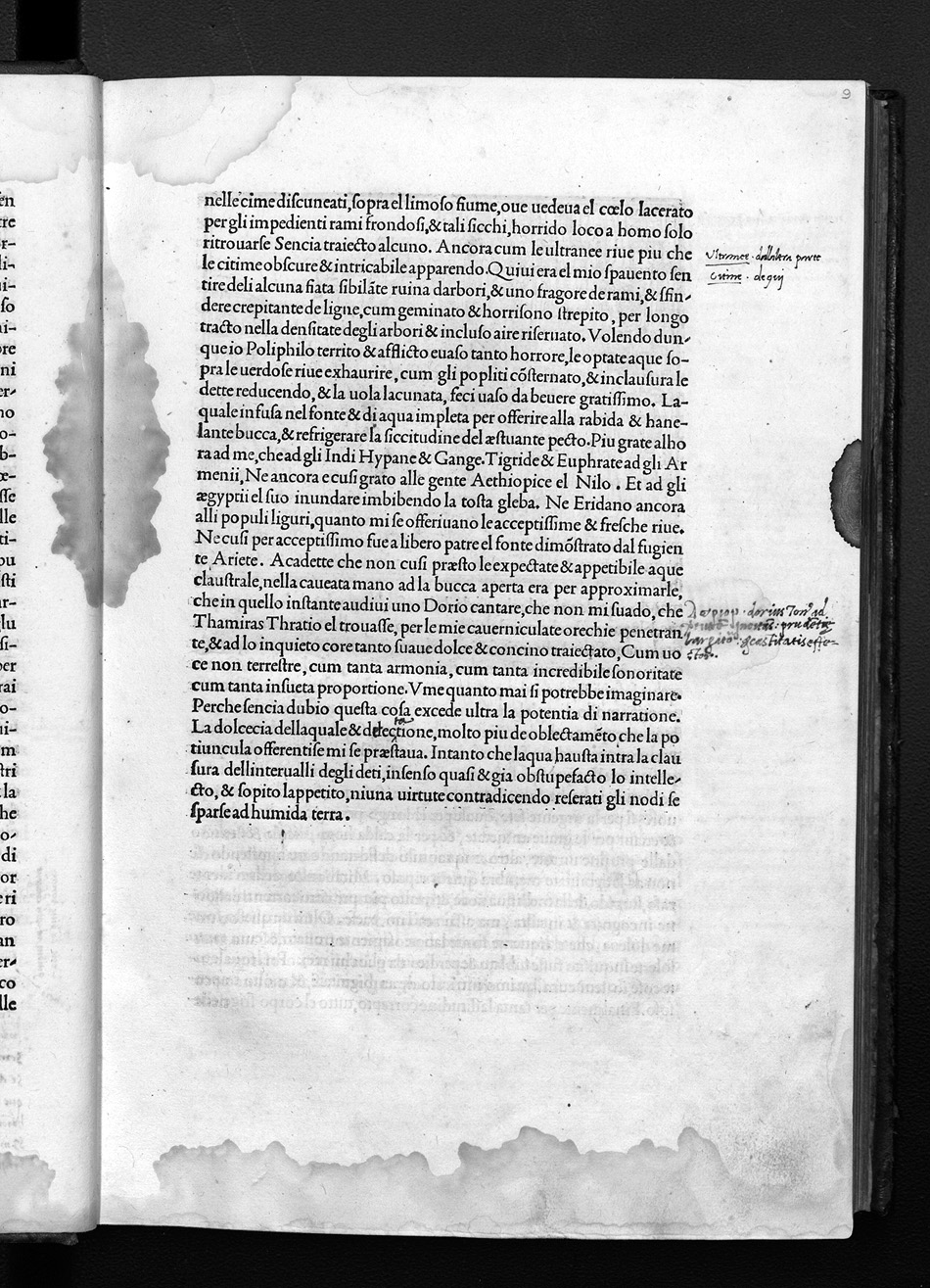
Biblioteca degli Intronati, Siena — O.III.38
HIGH Unverified
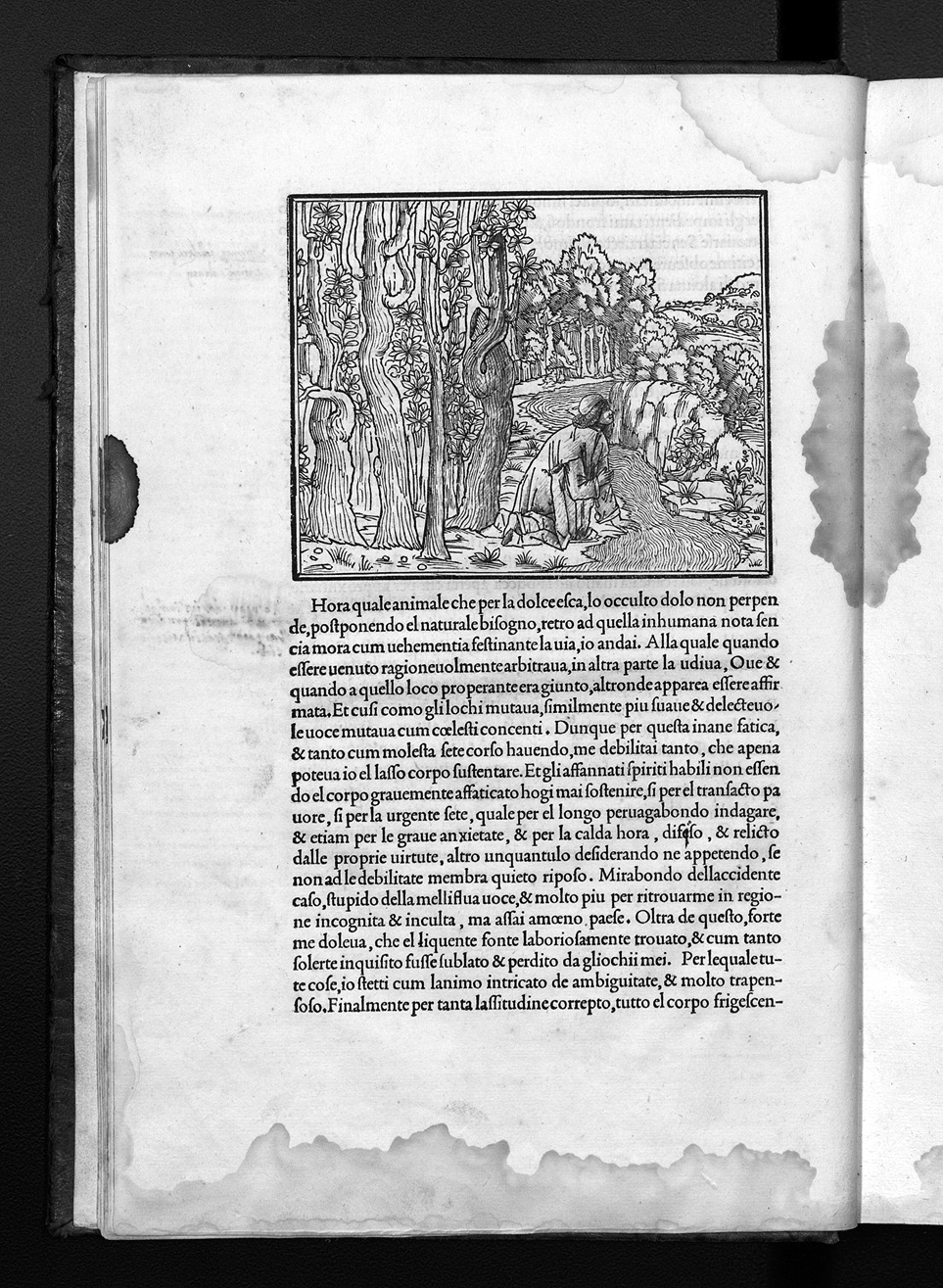
Biblioteca degli Intronati, Siena — O.III.38
HIGH Unverified
Vision Reading (Phase 3 deep analysis)
Primary hand: Multiple (3+) · Hands: 3 · Type: text_page · Sig: b3r
Transcription Attempts
top · Latin · LOW
[...] ultra [...] prompta [...] flores [...] nobis [...] Antici [...] 25 [...] Octonari [...]
'Antici' (ancients), 'Octonari' (octave/eightfold) — as seen on p.18 (photo 31). Reader tracking numerical/metrological concepts
right_margin · Latin · MEDIUM
Soph[...] Templi [...] [...] amphi [...] planete [...] XCvuators [...] Horatores [...] Lucis [...]
'Templi' (temple), 'planete' (planets), 'Horatores' (orators?), 'Lucis' (of light). The planetary reference connects to p.88. 'Lucis' (light) has alchemical significance
bottom · Latin/Greek · LOW
Sc [...] Phylotioti [...]
'Phylotioti' may be a Greek-derived term. Very faded
Scholarly Significance
Page 17 continues the pyramid/monument descriptions. The 'planete' annotation establishes that planetary symbolism was being tracked by readers well before the planetary palace on p.88. The word 'Lucis' (of light) has both astronomical and alchemical meanings (lux = the light of transmutation). This page shows the reader building a systematic interpretive framework across the text.
Cross-references: Photo 27 (p.14, Descriptio Pyramidis), Photo 29 (p.16, pyramid woodcut), Photo 101 (p.88, planetary palace)
Vision reading (Claude Code, Phase 3)
Annotations
CROSS_REFERENCE (2)MARGINAL_NOTE (4)
Hand D: Anonymous
Marginal Note
162
Detail, (a1r)
D: Writing in a careful Italian script, this hand responds to the comments of the first French
hand. In one instance, this annotator crosses off A’s comments and offers a more abbreviated
summary. D’s primary interest is in architecture. This hand switches to Latin when labelling
architectural features.
Detail, (b1r)
E: The final distinguishable hand, writing in Latin in a notably larger script than the other
annotators, applies an alchemical reading to ...
Russell, PhD Thesis, p. 173 (Ch. 7)
Hand D: Anonymous
Marginal Note
162
Detail, (a1r)
D: Writing in a careful Italian script, this hand responds to the comments of the first French
hand. In one instance, this annotator crosses off A’s comments and offers a more abbreviated
summary. D’s primary interest is in architecture. This hand switches to Latin when labelling
architectural features.
Detail, (b1r)
E: The final distinguishable hand, writing in Latin in a notably larger script than the other
annotators, applies an alchemical reading to ...
Russell, PhD Thesis, p. 173 (Ch. 7)
Hand D: Anonymous
Cross Reference
al structure to his work. The primary interest of the
hands in this copy also lies in the identification of Vitruvian sources.
It is in their approach to the use of Vitruvius that these annotators differ from those in
other copies. Benedetto and Paolo Giovio read widely through the HP, and marked
references to the De architectura as they perceived them to occur. The annotators of Buffalo
took an entirely novel approach by comparison. They made use of the woodcut of the Great
Pyramid ...
Russell, PhD Thesis, p. 180 (Ch. 7)
Hand D: Anonymous
Cross Reference
al structure to his work. The primary interest of the
hands in this copy also lies in the identification of Vitruvian sources.
It is in their approach to the use of Vitruvius that these annotators differ from those in
other copies. Benedetto and Paolo Giovio read widely through the HP, and marked
references to the De architectura as they perceived them to occur. The annotators of Buffalo
took an entirely novel approach by comparison. They made use of the woodcut of the Great
Pyramid ...
Russell, PhD Thesis, p. 180 (Ch. 7)
Hand D: Anonymous
Marginal Note
170
Detail (b1r)
Russell, PhD Thesis, p. 181 (Ch. 7)
Hand D: Anonymous
Marginal Note
170
Detail (b1r)
Russell, PhD Thesis, p. 181 (Ch. 7)
Hand D: Anonymous
Cross Reference
180
Detail, (b1r)
The multiple hands and variety of interests in this copy serve to confirm that the interests
and practices seen in other copies were not confined to those individual annotators. The BL
annotator was not alone in to inferring an alchemical subtext, nor were the Giovio brothers
the only respondents to the HP to take up the challenge of identifying sources in Pliny. Even
if prolific annotation was not the norm, recurring streams of thought are evident in annotators
...
Russell, PhD Thesis, p. 191 (Ch. 7)
Hand D: Anonymous
Cross Reference
180
Detail, (b1r)
The multiple hands and variety of interests in this copy serve to confirm that the interests
and practices seen in other copies were not confined to those individual annotators. The BL
annotator was not alone in to inferring an alchemical subtext, nor were the Giovio brothers
the only respondents to the HP to take up the challenge of identifying sources in Pliny. Even
if prolific annotation was not the norm, recurring streams of thought are evident in annotators
...
Russell, PhD Thesis, p. 191 (Ch. 7)
Hand D: Anonymous
Marginal Note
162
Detail, (a1r)
D: Writing in a careful Italian script, this hand responds to the comments of the first French
hand. In one instance, this annotator crosses off A’s comments and offers a more abbreviated
summary. D’s primary interest is in architecture. This hand switches to Latin when labelling
architectural features.
Detail, (b1r)
E: The final distinguishable hand, writing in Latin in a notably larger script than the other
annotators, applies an alchemical reading to ...
Russell, PhD Thesis, p. 173 (Ch. 7)
Hand D: Anonymous
Marginal Note
162
Detail, (a1r)
D: Writing in a careful Italian script, this hand responds to the comments of the first French
hand. In one instance, this annotator crosses off A’s comments and offers a more abbreviated
summary. D’s primary interest is in architecture. This hand switches to Latin when labelling
architectural features.
Detail, (b1r)
E: The final distinguishable hand, writing in Latin in a notably larger script than the other
annotators, applies an alchemical reading to ...
Russell, PhD Thesis, p. 173 (Ch. 7)
Hand D: Anonymous
Cross Reference
al structure to his work. The primary interest of the
hands in this copy also lies in the identification of Vitruvian sources.
It is in their approach to the use of Vitruvius that these annotators differ from those in
other copies. Benedetto and Paolo Giovio read widely through the HP, and marked
references to the De architectura as they perceived them to occur. The annotators of Buffalo
took an entirely novel approach by comparison. They made use of the woodcut of the Great
Pyramid ...
Russell, PhD Thesis, p. 180 (Ch. 7)
Hand D: Anonymous
Cross Reference
al structure to his work. The primary interest of the
hands in this copy also lies in the identification of Vitruvian sources.
It is in their approach to the use of Vitruvius that these annotators differ from those in
other copies. Benedetto and Paolo Giovio read widely through the HP, and marked
references to the De architectura as they perceived them to occur. The annotators of Buffalo
took an entirely novel approach by comparison. They made use of the woodcut of the Great
Pyramid ...
Russell, PhD Thesis, p. 180 (Ch. 7)
Hand D: Anonymous
Marginal Note
170
Detail (b1r)
Russell, PhD Thesis, p. 181 (Ch. 7)
Hand D: Anonymous
Marginal Note
170
Detail (b1r)
Russell, PhD Thesis, p. 181 (Ch. 7)
Hand D: Anonymous
Cross Reference
180
Detail, (b1r)
The multiple hands and variety of interests in this copy serve to confirm that the interests
and practices seen in other copies were not confined to those individual annotators. The BL
annotator was not alone in to inferring an alchemical subtext, nor were the Giovio brothers
the only respondents to the HP to take up the challenge of identifying sources in Pliny. Even
if prolific annotation was not the norm, recurring streams of thought are evident in annotators
...
Russell, PhD Thesis, p. 191 (Ch. 7)
Hand D: Anonymous
Cross Reference
180
Detail, (b1r)
The multiple hands and variety of interests in this copy serve to confirm that the interests
and practices seen in other copies were not confined to those individual annotators. The BL
annotator was not alone in to inferring an alchemical subtext, nor were the Giovio brothers
the only respondents to the HP to take up the challenge of identifying sources in Pliny. Even
if prolific annotation was not the norm, recurring streams of thought are evident in annotators
...
Russell, PhD Thesis, p. 191 (Ch. 7)