Signature A2r
Folio 174r, Quire a
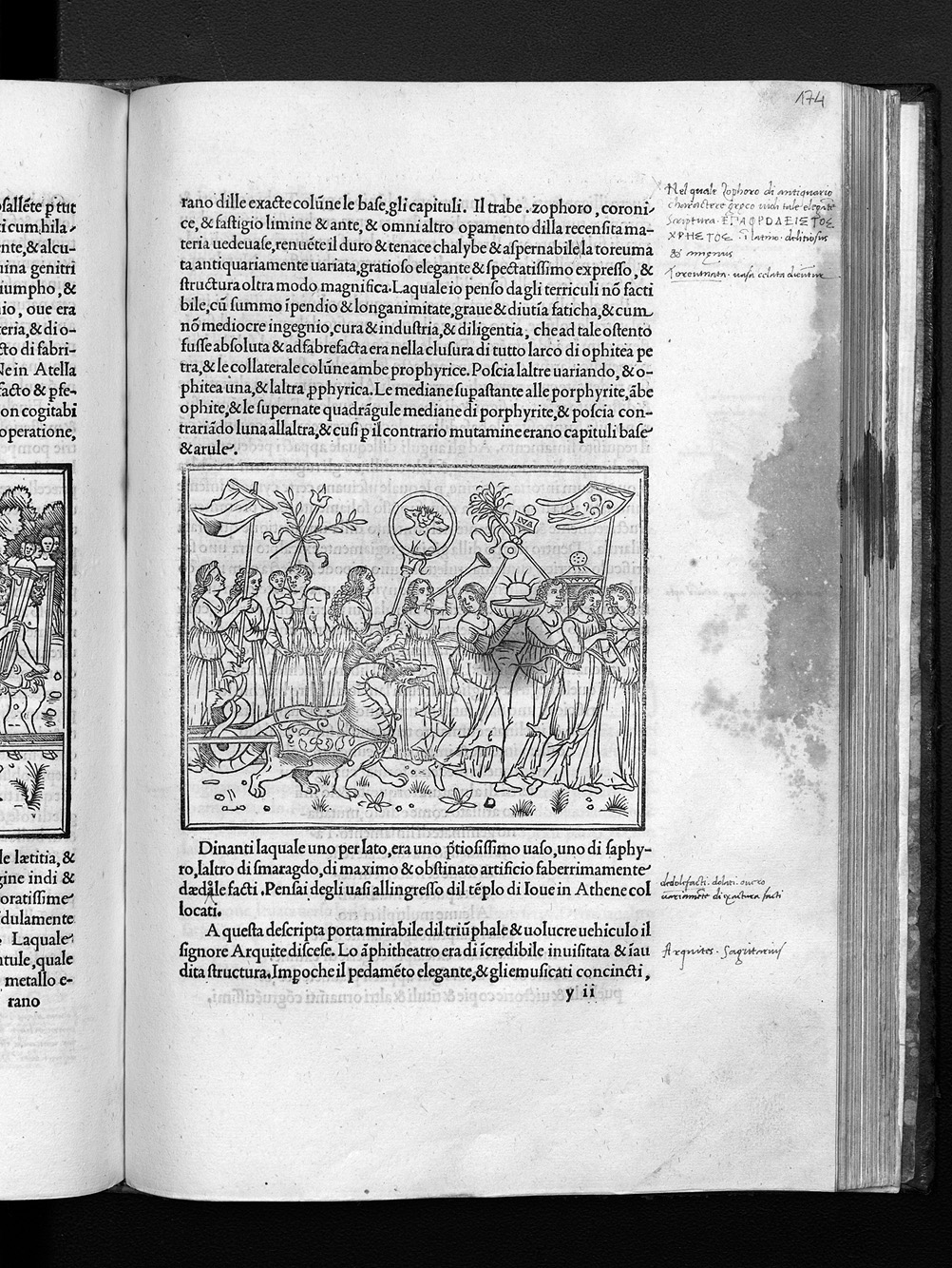
Biblioteca degli Intronati, Siena — O.III.38
HIGH Unverified
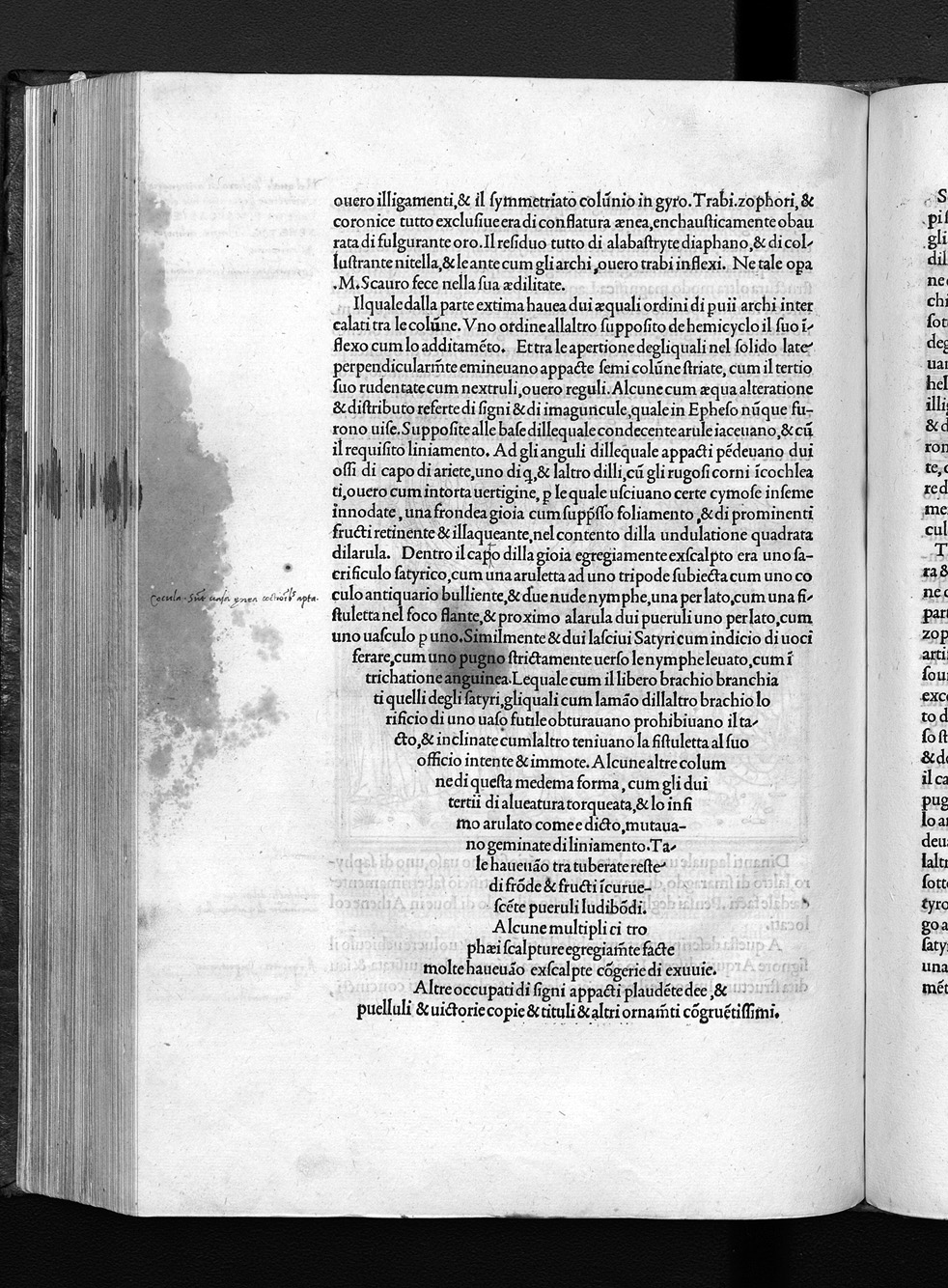
Biblioteca degli Intronati, Siena — O.III.38
HIGH Unverified
Vision Reading (Phase 3 deep analysis)
Primary hand: Multiple · Hands: 3 · Type: text_page · Sig: a2r
Transcription Attempts
top_left · Latin · LOW
longo [...] quam [...] latens [...]
Top annotations
right_margin · Latin · LOW
[...] in [...] negro [...] Aristotelem [...] in [...] delectorum [...]
'Aristotelem' — reader cross-referencing Aristotle. 'negro' could be color reference or alchemical nigredo stage
bottom · Latin · LOW
[...] autore [...] de [...] medicaribus [...] portiorum [...] falsa [...] non [...]
'medicaribus' (medical/remedial), 'falsa' (false). Medical vocabulary alongside judgment
Scholarly Significance
Page 3 continues the opening narrative. The Aristotle reference shows a reader situating the HP within classical philosophical tradition. The word 'negro' is ambiguous — it could be alchemical (nigredo = blackening, the first stage of the opus) or simply descriptive of the dark forest.
Cross-references: Photo 14 (p.1), Photo 18 (p.5)
Vision reading (Claude Code, Phase 3)
Annotations
CROSS_REFERENCE (1)EMENDATION (1)
Hand A: Anonymous (possibly Jesuit, St. Omer)
Emendation
“Lover of Polia”
Hand B traces the etymology of the names of Poliphilo and Polia. ‘Poliphilo’ is understood to
derive from the roots ‘Πολι-φιλο’, meaning ‘Lover of Polia’. The origin of Polia is more
difficult for this reader, but he or she recognises that Polia’s own narrative of her origins
implies that her real name is Lucretia.
Io degli superstiti lineali et prisca familia Lelia, alumna et prognata fui. Et postomi il prestante nome
della casta Romana, che per il filio del superbo Tarquino se occise. ...
Russell, PhD Thesis, p. 178 (Ch. 7)
Hand A: Anonymous (possibly Jesuit, St. Omer)
Emendation
“Lover of Polia”
Hand B traces the etymology of the names of Poliphilo and Polia. ‘Poliphilo’ is understood to
derive from the roots ‘Πολι-φιλο’, meaning ‘Lover of Polia’. The origin of Polia is more
difficult for this reader, but he or she recognises that Polia’s own narrative of her origins
implies that her real name is Lucretia.
Io degli superstiti lineali et prisca familia Lelia, alumna et prognata fui. Et postomi il prestante nome
della casta Romana, che per il filio del superbo Tarquino se occise. ...
Russell, PhD Thesis, p. 178 (Ch. 7)
Hand A: Anonymous (possibly Jesuit, St. Omer)
Cross Reference
“Mercuriale Moly”
168
Detail (A2r)
There is some dialogue between annotators on the origin of a term. For the term
‘Mercuriale Moly’ (a6r) Hand E offers an initial source in pseudo-Apuleius, but at a later date
he corrects himself, citing a source in Pliny.
Detail (a6r)
Moly Apuleius in herbario dicit Moly apud Cappadocas esse quae apud nos Ruta sylvestris aut
hortensis / vide Plin lib. 25 cap. 4 et 10 et homerum odyss 10 et eius commentatorem Spondeanum
ubi pulchra12
‘Moly’, Apuleius,...
Russell, PhD Thesis, p. 179 (Ch. 7)
Hand A: Anonymous (possibly Jesuit, St. Omer)
Cross Reference
“Mercuriale Moly”
168
Detail (A2r)
There is some dialogue between annotators on the origin of a term. For the term
‘Mercuriale Moly’ (a6r) Hand E offers an initial source in pseudo-Apuleius, but at a later date
he corrects himself, citing a source in Pliny.
Detail (a6r)
Moly Apuleius in herbario dicit Moly apud Cappadocas esse quae apud nos Ruta sylvestris aut
hortensis / vide Plin lib. 25 cap. 4 et 10 et homerum odyss 10 et eius commentatorem Spondeanum
ubi pulchra12
‘Moly’, Apuleius,...
Russell, PhD Thesis, p. 179 (Ch. 7)
Hand A: Anonymous (possibly Jesuit, St. Omer)
Emendation
“Lover of Polia”
Hand B traces the etymology of the names of Poliphilo and Polia. ‘Poliphilo’ is understood to
derive from the roots ‘Πολι-φιλο’, meaning ‘Lover of Polia’. The origin of Polia is more
difficult for this reader, but he or she recognises that Polia’s own narrative of her origins
implies that her real name is Lucretia.
Io degli superstiti lineali et prisca familia Lelia, alumna et prognata fui. Et postomi il prestante nome
della casta Romana, che per il filio del superbo Tarquino se occise. ...
Russell, PhD Thesis, p. 178 (Ch. 7)
Hand A: Anonymous (possibly Jesuit, St. Omer)
Emendation
“Lover of Polia”
Hand B traces the etymology of the names of Poliphilo and Polia. ‘Poliphilo’ is understood to
derive from the roots ‘Πολι-φιλο’, meaning ‘Lover of Polia’. The origin of Polia is more
difficult for this reader, but he or she recognises that Polia’s own narrative of her origins
implies that her real name is Lucretia.
Io degli superstiti lineali et prisca familia Lelia, alumna et prognata fui. Et postomi il prestante nome
della casta Romana, che per il filio del superbo Tarquino se occise. ...
Russell, PhD Thesis, p. 178 (Ch. 7)
Hand A: Anonymous (possibly Jesuit, St. Omer)
Cross Reference
“Mercuriale Moly”
168
Detail (A2r)
There is some dialogue between annotators on the origin of a term. For the term
‘Mercuriale Moly’ (a6r) Hand E offers an initial source in pseudo-Apuleius, but at a later date
he corrects himself, citing a source in Pliny.
Detail (a6r)
Moly Apuleius in herbario dicit Moly apud Cappadocas esse quae apud nos Ruta sylvestris aut
hortensis / vide Plin lib. 25 cap. 4 et 10 et homerum odyss 10 et eius commentatorem Spondeanum
ubi pulchra12
‘Moly’, Apuleius,...
Russell, PhD Thesis, p. 179 (Ch. 7)
Hand A: Anonymous (possibly Jesuit, St. Omer)
Cross Reference
“Mercuriale Moly”
168
Detail (A2r)
There is some dialogue between annotators on the origin of a term. For the term
‘Mercuriale Moly’ (a6r) Hand E offers an initial source in pseudo-Apuleius, but at a later date
he corrects himself, citing a source in Pliny.
Detail (a6r)
Moly Apuleius in herbario dicit Moly apud Cappadocas esse quae apud nos Ruta sylvestris aut
hortensis / vide Plin lib. 25 cap. 4 et 10 et homerum odyss 10 et eius commentatorem Spondeanum
ubi pulchra12
‘Moly’, Apuleius,...
Russell, PhD Thesis, p. 179 (Ch. 7)